This question was posed by an ACE user through the "Ask a question" function in Electoral Advice.
What are the advantages, disadvantages and comparative experiences of holding local elections simultaneously (all of them at the same time, all across the country) or separately (one region at a time)? Also, what are the advantages and disadvantages of holding local, legislative and presidential elections simultaneously?
Posted on 21 May, 2007
The main reason for staggering local or national elections is the security concern. It is likely to be easier to ensure that the security forces adequately cover all polling stations if the elections do not all happen on the same day. This is of course of greater concern where the security of the elections is a salient problem. On the other hand, it has been suggested that simultaneous elections may reduce the risk of disturbances and interference from the areas that are not holding elections that day.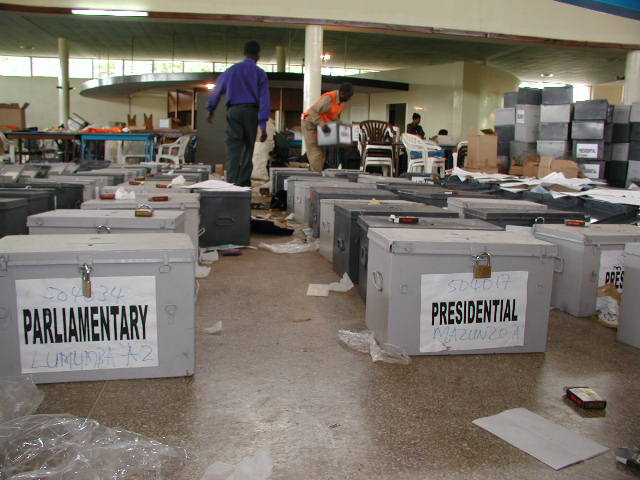 one. If national legislative elections are held at the same time across the country, holding presidential or local elections on that day is not likely to increase the burden significantly of observing, monitoring or protecting the actual polling stations or counting centres. Other security concerns may however require that the elections are not held simultaneously. If possible security concerns can be addressed successfully, there are great resource savings to be made by holding the elections simultaneously – as the recruitment, training and deployment of polling place staff can be done for all types of elections at the same time and voters lists, ballots and other materials can be delivered once instead of at separate occasions. However, despite the overall logistical and cost savings, the burdens of having to pull all the resources together at the same time may be too big for the country to handle. The decision to hold elections simultaneously or separately may also affect the results as campaign messages may be harder to get across when many elections are competing for attention at the same time, and it is important to consider the spill over effects between the elections; voters are more likely to use for example local elections to reward or punish a party for its performance in the legislature if elections are held simultaneously as opposed to separately. One last thing to consider is also how the simultaneous elections impact on the voters' understanding of the various elections in terms of the candidates and the actual voting process. If – as was the case in the recent elections in Scotland for example – different electoral systems are used with different types of ballots in the various elections, holding the elections simultaneously puts a large burden on the voter education programmes and the parties’ information campaigns and risks leading to high numbers of invalid votes.
Mehrnews.com - Mixed views on simultaneous parliamentary and presidential elections bill in Iran
It depends on the situation in the country. In 1996 they had in Bosnia first the plan, to hold presidential and municipal elections at the same time, but then they decided not to do it.
In Indonesia, they have held all the elections at the same time, for time and money reasons.
Best regards,
Thomas Dackweiler
Holding region-wise, phased elections allows optimization of the use of resources like security forces and increases the possibility of closer scrutiny and management from the central level EMB. India's General Elections have often been held in phases (staggered throughout the country) in recent years.
Simultaneous elections throughout a country reduce the possibility of disturbances and voter infiltration from constituencies where there are no elections. Guarding the borders is often an additional problem.
Local elections are contested more fiercely than the national elections. These elections have candidates contesting in smaller geographical areas and number of such candidates is very large. Security demands are also different. Therefore, it is difficult to organize both the elections together.
However, if it is possible to do them together with the national elections, it would definitely save repetition of efforts as mentioned above but one has to be careful.
If it is not possible to do them together, as will happen in most of the cases, I suggest that the preparation for the national election be done in such a way that helps conducting the local elections. For example, Afghanistan's presidential and parliamentary elections in 2004 and 2005 did not leave a voter list tying voters to polling stations that could be used for the local elections which means another 120 million USD - going by earlier expenditure figures for this work. A bit of carefulness could have helped avoid duplicate expenditure.
Best regards,
NM