
What percentage of registered voters makes a registration process acceptable?
What percentage of registered voters makes a registration process acceptable?
Facilitator - Sara Staino , November 15. 2006Original question:
I work for a non-governmental organisation based in Lusaka, Zambia. I am analysing statistics regarding voter registration in Africa and in other continents and regions. What I am trying to establish is the normal percentage of voter registration for emerging democracies.
Very specifically, my question is: would registration of approximately 75% of eligible voters be considered within the norms and as an acceptable and satisfactory result for an emerging democracy?
Looking forward to hearing from you.
Links to related resources:
- The ACE Encyclopaedia: Voter registration topic area
- Voter registration methods and participation
- Comparative data: Voter registration
Quote from the ACE Encyclopaedia on voter registration methods and participation:
"Voter registration is usually a prerequisite for voting. To be able to express their views in the democratic process, citizens must be registered. Election authorities often conduct targeted campaigns to register population groups that are less likely to participate in elections, such as youth, women, poor people or members of ethnic minorities.
This practice raises an important issue:
- Is the election authority responsible for ensuring that electoral participation is high or for minimizing differences in the participation rates of different population groups?
- Might it instead be the responsibility of political party activists to get out the vote at election time?
ACE Network Facilitator's response:
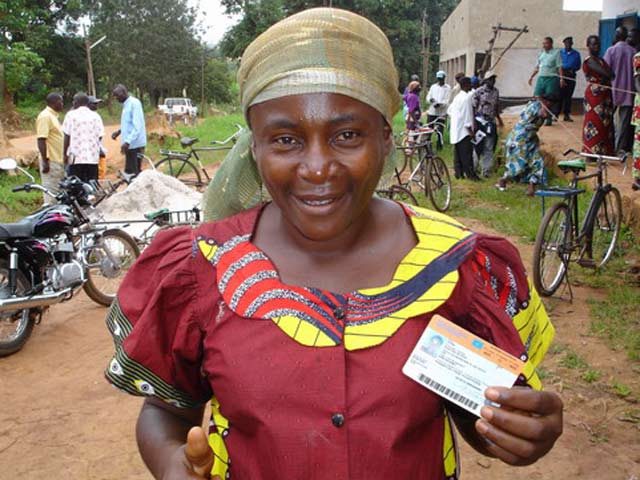 Many thanks for the very interesting question on what percentage of registered voters makes a voter registration exercise to be considered as acceptable.
Indeed, voter registration plays quite a critical role in an electoral process: if conducted effectively, it serves as a major indicator to measure the legitimacy of an electoral process; if instead it is conducted poorly, then the entire voting process is likely to suffer from a perceived lack of legitimacy. This means that, to be effective, a voter registration process has to meet a number of principles and to be designed to be fair, transparent, comprehensive and inclusive.
While the number of voters who have been registered could certainly serve as an important indicator for measuring the success of a voter registration system, at the same time it cannot be used as the sole indicator to determine how effective/acceptable - or otherwise ineffective/unacceptable - a voter registration process has been. Of course, the highest number of eligible voters there are, the better, but there are other important elements to be looked at.
These are:
- The accuracy of the captured data: is the data as accurate as it needs to be, so to ensure that a reliable voter register for future election is in place? Is there a system in place to ensure that eventual data entry mistakes and double entries are detected and properly corrected/removed?
- The freshness of the captured data: is the captured vote registration data up to date? Is there a system in place to ensure that all changes taking place between the end of registration and election day (change of residence, registration of death, etc) are reflected in the register?
- The reliability of existing population records on which the 100% estimate is based: Is the source on which voter registration statistics are based reliable and current?
- The reasons why citizen representation is not 100%: What are the formal or informal, direct or indirect causes that have resulted in excluding a segment of the population from voter registration? Were they bona fide - due to administrative/logistical deficiencies of the body responsible for the voter registration drive? Or otherwise mala fide - due to restrictive procedures and barriers that ended up disenfranchising specific population strata? Was there any political, ethnic, etc bias against any identifiable groups of eligible citizens)?
This to say that, while achieving high numbers of registered voters is always a positive factor, there are no set common standards to consider a voter registration process as acceptable exclusively based on the number of registered voters. Rather, it is the voter registration system (process + framework/procedures) that has to be assessed as a whole, not only its results.
In fact, and particularly in the case of emerging democracies, there are a number of important variables to be considered, such as:
- whether it is a mandatory or voluntary voter registration system;
- what is the context in which the voter registration exercise is taking place (in conflict or post-conflict elections registering high percentages of voters could simply be impossible and a low number - which in a normal situation could be insignificant - could instead represent an major achievement);
- whether it is an exercise to start a new voter register afresh (thus disbanding a previous one which was totally unreliable), so that an initial low number of registered voters could still be acceptable as a first step to lay down the foundation of a future voter register to be gradually expanded and consolidated.
In our opinion, in the context of an emerging democracy, we would certainly consider the registration of 75% of the estimated eligible voters as a quite satisfactory result, at least initially, still perhaps to be followed by (1) random accuracy checks on the voter register produced to verify how reliable and current the captured data is, and (2) voter and civic education effort targeting the missing 25% segment of the non-registered population.
The opinions expressed by the ACE Network Facilitator do not necessarily reflect those of the ACE Partner organizations.
ACE PRACTITIONERS' NETWORK
