Personal tools

Voter RegistrationVoter registration establishes the eligibility of individuals to vote. As one of the more costly, time-consuming and complex aspects of the electoral process, it often accounts for a considerable portion of the budget, staff time and resources of an election management authority. If conducted well, voter registration confers legitimacy to the process. The entire electoral process may be perceived as illegitimate should the registration system be flawed. Voter registration is both the most central and most expensive aspect of the electoral process. The task of registering voters and producing voters’ lists often accounts for more than 50 percent of the overall cost of administering elections. Various factors affect these costs, including the type of system used to register voters, the administrative capacity of the election management authority, and the country’s social, economic and demographic characteristics. The ACE topic on Voter Registration is divided into two main sections, general issues and specific administrative issues. The first section deals in depth with the three major voter registration systems namely: the periodic list, the continuous register and the civil register. It argues that there is no one better system of voter registration. It does this through a comparative perspective where each system has advantages and disadvantages that make it more or less effective in differing social, political, economic, and environmental contexts. Throughout this topic, the section also explores various issues to be addressed in designing a voter registration system. For example, the use of voter registration cards or national identity (ID) cards, the computerization of voters’ lists, allowing voter registration on election day, provisions for anonymous voters and special provisions for displaced persons. Lastly, the topic sections will examine the administrative planning and organization processes behind a voter registration exercise. These issues tend to be more focused, more detailed and applicable to all voter registration systems. Examples of these issues are procurement policies, the selection and training of staff, implementing the voter registration plan, maintaining the voters’ list and distributing the final voters’ list. IntroductionContextPrimary Uses of the Voters’ List The primary purpose of the voters’ list is to confirm the individual’s eligibility to vote in national and/or provincial, regional or local elections. A voters’ list enables the election management authority to separate the function of verifying eligibility from the function of controlling the legitimacy of the voting process. A registration effort determines eligibility in advance of Election Day; as a result, the election management authority can administer the election efficiently, while minimizing waiting times for voters. Procedures that reduce the effort voters must make to vote are important given the steadily decreasing turnout rates in many democracies. Extended Uses of the Voters’ List Voters’ lists have other uses that help justify the requisite investment in time, personnel and money. Among the extended uses are the following:
These uses go far beyond a strictly electoral function. While voters’ lists may lend themselves to many purposes, there are often strict limits on their use and the extent to which they may be distributed. The limits may be specified in the electoral code, with the intent of protecting the privacy of people on the list. Some voters may request that their information be kept strictly confidential and to not be included on the list provided to political parties. Known as “silent electors” or anonymous voters, they may make such a request because they are concerned about possible spousal abuse or other forms of domestic violence, or have other justifiable reasons. The election management authority may develop and maintain a completely separate voters’ list for silent electors. Anonymous voter registration is practiced in New Zealand and Australia, for safety purposes in most cases. A special voters’ list is created and maintained on the basis of application forms submitted to the election authorities. Responsiveness to Local Conditions To help make voter registration comprehensive and inclusive, the mechanisms used should be adapted to local political, social and economic conditions. In the design of a registration system, factors to be considered include:
Literacy Literacy rates directly affect the ability to communicate with potential voters. Where rates are high, communications with voters will be relatively efficient and economical, facilitating registration. In a country with high literacy rates and a continuous list of voters, for example, election officers may mail each voter a card showing his or her current registration information. The voter reads the card to review the accuracy of the information printed on it and, if necessary, sends amended information by return mail. This way of communication requires a dependable postal system with delivery to each household. However, not every country with a high literacy rate will have the necessary infrastructure. In addition, where literacy rates are low, communication by mail is still less appropriate. Instead, election officers must personally contact voters to complete the registration process. Community leaders would be required to step in to provide information about the registration of some voters. Even if the literacy rate is high and personal contact is not essential, it is important to ensure that registration forms are easy to understand and free of legal jargon that could confuse the average citizen. In other words, a voter registration form should not be a literacy test for registration. If the literacy rate is low, it may be best for election officers to fill out the forms for the people they are registering, either in door-to-door interviews or at registration centers. Climate In economically advanced countries, climate may have little effect on registration and voting. Much of the registration process may be handled through electronic means and be highly computerized. These countries often have well-developed administrative infrastructure, facilitating registration despite adverse climate conditions. But even such societies may customarily avoid holding elections at certain times of the year – for example, during the winter in countries with cold climates or during the rainy season in most African countries. This practice will in turn affect the scheduling of registration. No formal rule may prohibit calling an election during certain seasons but the preference of avoiding those seasons will influence election planning. In less developed countries, climate conditions may have a greater impact on the scheduling of registration and elections. Drought, rainy season, planting or harvest all could affect citizens’ ability to register and the likelihood that they will do so. Registration may have to be rescheduled accordingly. Administrative Infrastructure The success of registration efforts depends largely on whether the necessary administrative infrastructure is in place. This includes capacity for overall administrative and logistical planning or data collection; procurement policies and procedures; physical infrastructure; worker selection and training procedures; and the staffing necessary for all these aspects of the process. Establishing and maintaining the administrative infrastructure is costly and time-consuming. However, without it, the electoral process may lack legitimacy and integrity. The administrative infrastructure should be maintained on a continuing basis, not created anew for each election. Unavailability of required documentation In many countries such as South Africa, in deep rural areas, particularly pre-1994, potential voters may not have had the necessary documentation required for registration such as birth certificates, marriage certificates etc. It is necessary to identify other sources of verification in such cases such as the local traditional or community leader attesting to the person’s eligibility. This is the practice in the Central African Republic, whereby a representative of the village council or the district council is required to issue a written testimony for potential registrants. Legal provisions were also made for people without the required documentation in South Sudan for the 2011 Referendum. This is necessary so as not to exclude voters who have not had access to or the resources or the need to obtain such documentation at the time of birth, etc. Political Environment A country’s overall political climate can obviously have an impact on voter registration and elections. The political environment may be completely peaceful, with all parties accepting the legitimacy of the electoral process; or the atmosphere may be tense because of domestic or international conflict. Between these two extremes are endless possibilities. The ideal is for registration and voting to be conducted in a harmonious political climate, but this is not always available. When it isn't, questions of fairness or legitimacy are almost certain to arise. The most useful response to a less than ideal political environment is to do the utmost in order to ensure that election administration is, and is perceived to be, fair and impartial. Also useful is to ensure maximum transparency by providing all political parties with opportunities to observe the administration of the election. Special challenges confront the election management authority in a post-conflict situation. It may be necessary to develop or administer policies on such matters as out-of-country voting, the identification of voters who have no documents such as refugees and internally displaced persons (IDPs), voter registration in refugee camps and sometimes the actions of political parties or other groups seeking to disrupt the election. OverviewThe right of all adult citizens to participate in the affairs of their government is one of the cornerstones of democracy. Perhaps the most fundamental form of participation is voting in free, fair, and regular elections. For citizens to exercise their democratic right to vote, relevant authorities need to establish a comprehensive and inclusive voters’ list, also called a voters’ register. The list should be carefully maintained to ensure that each eligible citizen is registered to vote once and only once in an election. A voters’ list makes it possible to separate two of the most important functions of the election management authority, namely verifying voter eligibility and controlling the legitimacy of the voting process. The list may also be used for several purposes such as in voter education, and should be provided to political parties and candidates to aid them in their campaigns. While elections may proceed without it, a voters’ list offers advantages that readily justify its use. By confirming that voters have met all eligibility requirements, the voters’ list helps confer legitimacy on the electoral process. Conversely, the legitimacy of the process will immediately be called into question if there are problems with the registration of voters, and particularly with the integrity of the voters’ list. Voter registration, therefore, is one of the most important tasks of election administration. High Cost of Voter Registration Voter registration is both the most central and most expensive aspect of the electoral process. The task of registering voters and producing voters’ lists often accounts for more than 50 percent of the overall cost of administering elections. Various factors affect these costs, including the type of system used to register voters, the administrative capacity of the election management authority, and the country’s social, economic and demographic characteristics. Political Equality and Inclusiveness Voters’ lists support democratic principles by fostering political equality for all citizens and actively promoting the inclusion of eligible voters in the election process. Differences arise over how much effort election management authorities would require to register voters from groups that historically have lower-than-average levels of registration and voter turnout. These include: women, members of visible and ethnic minorities, youth and first time voters,the poor, the homeless, people with a disability, prisoners, voters in hospitals, and the elderly. Some countries try to develop focused and targeted registration campaigns to increase the participation of these groups. Other countries take a more passive approach. Officials make it equally possible for all individuals to register and vote, but do not specifically seek to increase the registration of any particular group. Despite these differences, there is consensus that for a system to be considered democratic and representative, it must provide equal opportunity for everyone to participate in an inclusive voter registration process. Legal and Administrative Exclusion Voters may be excluded from a voters’ list through either legal or administrative means. In the representative democracies that emerged in Western countries during the 18th and 19th centuries, people’s eligibility to register and vote was determined according to criteria such as property ownership, wealth, literacy, race, gender and “moral fitness.” Anyone not meeting the criteria was excluded. These legal exclusions were gradually removed and today most are no longer viewed as legitimate. However, many countries still legally exclude people on the basis of age, (Several countries around the world [1] have set the minimum voting age at 18, although the age requirement is sometimes lower, as in Indonesia where people younger than 17 are allowed to vote provided that they are married or have been married once [2]. The voting age is higher in certain countries. For example, Italy has gone as far as setting the minimum age at 25 years for the election of Senators [3]. Citizenship, residence, conviction of a criminal offense or mental incompetence are also used to illegally exclude people [4]. The military has also been excluded from voter registration and voting in certain countries, in an attempt to ensure neutrality of this group of voters [5]. The exclusions are usually written into a country’s constitution or electoral law by political leaders and have then to be adopted by administrative officials. Administrative exclusion involves excluding people who are ostensibly eligible to vote. They may be excluded simply by personal choice or habit. For example, potential voters may not wish to register because they have little or no interest in politics or the election. A voter may be incorrectly registered, or not registered at all because of a change of address or a change of name. Exclusion may also be the result of shortcomings of the voter registration system, such as insufficient efforts to publicize the deadline for completing the registration process. A proper registration system seeks to prevent, or at least minimize, the exclusion of eligible voters. The priority should be to register all eligible voters. In practice, this cannot be fully achieved, but it should provide the impetus for setting very clear performance criteria by which to measure success in approaching universal registration. Complexity of Voter Registration In making decisions about voter registration, electoral administrators must take into account conditions in their country, state or region. Among the questions that they face are:
The answers to these and similar questions will help determine the kind of voter registration system best suited to a particular political context. Three Options for Voter Registration Democracy in general, and voter registration in particular, may take many forms. In deciding how to give substance to the principles of electoral democracy, it is important to choose a system that is:
In the case of voter registration, there are three options:
The election management authority must choose one of these, or a combination, as the basis on which to design a voter registration system. Periodic List A periodic register of voters, or periodic list, is established for a specific electoral process and produced anew for each election. Electoral administrators do not intend to maintain or update the list for future use. Normally, the list is drawn up immediately before the election, although this need not be the case. This system is relatively expensive and time-consuming since it requires direct contact with all eligible voters before the election. It may be particularly useful where infrastructure is lacking to maintain a continuous list, where population mobility is high or where there is opposition to the maintenance of lists of citizens by the government. The periodic list may also be preferred by quasi-governmental agencies, such as electoral management bodies or commissions. This system was used for example in Malawi for the 2014 Presidential, Parliamentary and Local Council elections [6]. Continuous List A continuous list of voters is maintained and regularly updated by the electoral administration and is a list of current eligible voters. This system depends on an appropriate infrastructure to maintain the list. Maintenance typically involves adding the names and other relevant information of people who satisfy eligibility requirements, updating details of eligible voters who are on the voters’ list and deleting the names of those who no longer meet the requirements (e.g. through death or change of residence). Since the continuous list is updated on a regular basis, there is no need for a final registration drive immediately before an election, although a period is often designated for revising the list during the election campaign. The continuous list may be maintained either locally or nationally. A continuous list is kept current because it is updated on a regular basis. The cost of registering voters is spread over the entire period between elections, so it is likely to be less costly than other systems of registration. To facilitate list updates, many election management authorities form data-sharing partnerships with other government bodies like in Argentina, Australia [7], Canada [8] and France [9]. For example, when citizens change their place of residence, they may inform the tax bureau, the post office, the housing authority or the health system. In many countries with a continuous register, partnerships allow the election management authority to receive regular updates of changes to these bodies’ files. This makes it possible to update the electoral register without any direct contact between the voter and the election management authority. The federal agency in charge of maintaining the national population register and issuing national ID cards in Argentina sends local election management authorities the names of 16 year old citizens who reside within their voting districts [10]. The local election management authorities add these individuals to the national voters’ register. In some cases, on learning about a change of address, the election management authority may send the voter a new voter registration card with a request to update and confirm the information that appears on it. Having updated information may rely on the voter to ensure that this information is sent to the relevant authorities. Civil Registry A third option for registering voters is the civil registry. This may contain a variety of information on all citizens, such as name, address, citizenship, age and identification number. In certain countries, particularly in Europe (Norway, Germany, Spain) and Latin America (Argentina and Peru), the voters’ list is produced from information contained in the national civil registry [11]. In countries with a civil registry, a major question is whether the body responsible for it (often the interior ministry) should be responsible for the voters’ list. Some countries give the same institution responsibility for both registries, while others choose two agencies, each with responsibility for one of the lists. If a civil registry is in place, producing a voters’ list is relatively efficient and cost-effective because the major costs are borne in the first place by the body responsible for the civil registry. While it is relatively expensive to maintain a civil registry, the information recorded may be used for multiple purposes, reducing the government’s overall data management costs. The major drawback of this system is the great level of power it gives to the state. Even though the high cost is justified, data sharing among government institutions may give rise to controversy. Concerns may be expressed about the loss, or potential loss of privacy. If the concerns are widespread, a civil registry may be simply unacceptable despite its usefulness.
[1] For a complete list of countries see: http://aceproject.org/epic-en/CDTable?question=VR001 [2] Law 8/2012 on General Election of the Members of House of Representatives, People’s Representatives Council and Regional House of Representatives, article 19 (1). Available at: http://aceproject.org/ero-en/regions/asia/ID/indonesia-law-8-2012-on-general-election-of-the/at_download/file [3] See more at: http://aceproject.org/epic-en/CDCountry?set_language=en&topic=VR&country=IT#VR001 [4] For a complete list of countries see: http://aceproject.org/epic-en/CDTable?question=VR002&set_language=en [5] For example, up to 2014, members of the armed forces were disqualified from voting in Tunisia, Oman, Kuwait, Guatemala, Honduras, Colombia and Dominican Republic. See more at: http://www.ipu.org/parline-e/mod-electoral.asp [6] European Union Election Observation Mission, Final Report on the Presidential, Parliamentary and Local Council Elections held in Malawi, on 20 May 2014, p. 16 - 17. See more at: http://www.eueom.eu/files/pressreleases/english/EUEOMMALAWI2014_FinalReport.pdf [7] The Australian Electoral Commission provides electoral roll and geographic products to a range of federal government authorities, private organisations, medical researchers and members of the public subject to legislative entitlements. See more at: http://www.aec.gov.au/About_AEC/AEC_Services/roll.htm [8] The National Register of Electors is updated continually with information from the Canada Revenue Agency, the Citizenship and Immigration Canada, the National Defense, the Provincial and territorial driver's licence agencies, the Provincial and territorial vital statistics agencies, etc. See more at: http://www.elections.ca/content.aspx?section=vot&dir=reg/des&document=index&lang=e [9] Electoral Code: "Code électoral/Partie réglementaire", article r16. Available at: http://aceproject.org/ero-en/regions/europe/FR/france-code-electoral-francais-2012/at_download/file [10] Electoral Code: "Código Electoral Nacional", article 17. Available at: http://www.elecciones.gov.ar/normativa/archivos/codigo_electoral_nacional_19945.pdf [11] Data extracted from ongoing survey by International IDEA on the Use of Information and Communication Technologies in Electoral Processes.
Guiding PrinciplesVoter registration is the process of verifying the identity of potential voters, and entering their names and other substantiating information on a voters’ list. For registration to be fair, comprehensive, and inclusive, potential voters must be aware of the registration process and have reasonable opportunities and relatively easy access to complete it. Voter education campaigns foster the necessary awareness by emphasizing on the importance of registration, explaining citizens’ responsibilities in becoming registered, and presenting information on how to complete the registration process. Some EMBs, such as South Africa's, undertake a specific voter registration drive by providing information in the media and other avenues to encourage voters to register in an election year. Inclusiveness Registration must be inclusive – which means accessible to all groups and categories of eligible citizens. There should be no systemic bias against any identifiable group. However, social or economic status makes registration more difficult for some citizens, such as:
Special measures may be required to break down barriers and make the registration system truly open to these groups, enabling them to take part in the democratic process. Bona fide efforts on the part of electoral administrators is required because electoral exclusion works through formal as well as informal mechanisms.
Administrative Exclusion of Eligible Voters Working against inclusiveness consists of the administrative exclusion of eligible voters. They may be administratively excluded when the registration system does not encourage or facilitate their registration, and particularly when administrative barriers exist for eligible citizens to register to vote. Voters may be administratively deprived in various ways, all of which endanger electoral legitimacy. The following are some causes of administrative loss of the right to vote and its possible solutions:
Voluntary Versus Mandatory Registration Is voter registration an obligation and responsibility of citizenship, or is it a right of citizenship to be exercised at the discretion of each individual? The answer to this question determines the administrative procedures to be put in place for voter registration. If the prevailing view is that voting is an obligation and responsibility of citizenship, registration would therefore be mandatory as in the case of Australia or Indonesia. For these instances, the state must make voters aware that they are required to register, and/or to update their information on the continuous voters’ list. If voting is viewed as a right rather than an obligation, registration is an option to be exercised by voters at their own discretion, as is the case in the US and Guatemala. Consequently, the state doesn't need to make the same effort to encourage voters to register. Who Is Responsible - Citizens or the State? Different systems may use differing registration methods and assign varying responsibilities to electoral administrators and citizens. Sometimes registration is primarily the responsibility of citizens, who must initiate the process by contacting the election administration. This is the practice in countries such as the US, Guatemala, Bahamas, Belize, Burundi, and Mexico. In other cases, officials are responsible for maintaining continuous voters’ lists or developing new lists as it is for instance in Japan, Argentina, Australia, Belgium, Germany, Peru, and Sweden. They may meet their responsibility by conducting door-to-door registration like in Great Britain and Indonesia or by establishing local registration centres. In practice, the responsibility is often shared. For example, in a country with a continuous voters’ list, the election management authority may make registration accessible by establishing thousands of voter registration centres, including mobile units and informing voters about the voter registration drive and the establishment of registration centres. It is still up to citizens, however, to visit the registration sites and formally initiate their registration. On the one hand, where voters initiate registration, experience has shown that greater convenience can significantly increase participation. On the other hand, a state-initiated system might be more suitable as it would increase the level of registration of voters with special needs such as the illiterate, the homeless, prisoners, voters in hospitals, the poor and voters with disabilities. In the final analysis, it is a question of access: how much responsibility does the state have for enabling citizens to register without undue hardship? The answer is that the state must assume considerable responsibility for ensuring that registration is not an administrative barrier to citizens’ participation in democratic elections. At the same time, cost is usually a factor in deciding on the scale of voter registration efforts. Performance Criteria Clear performance criteria helps to measure the overall utility and cost-effectiveness of a voter registration system. For periodic voters’ lists, the criteria would include accuracy and comprehensiveness, or completeness. Comprehensiveness is measured by the proportion of eligible voters included on the voters’ list. Accuracy is measured by the rate of error in entering data on individual voters (name, address, gender, age, citizenship and any other variable). With a continuous voters’ list or a civil registry, accuracy often depends on the currency of the data provided and making sure that the information is updated in timely fashion. The primary concern is that the most recent data changes should appear in the list on election day so that it contains information reflecting voters’ current circumstances. Specific performance targets for each area will promote better voter registration. One senior election official suggests that a continuous list should aim to be 90 percent complete, 85 percent current and 97 percent accurate. In other words, the system should be expected to have 9 out of 10 eligible citizens on the list, current information on voters in 8.5 instances out of 10, and data entry errors in only 3 records out of 100. Once these targets or benchmarks are identified, the incremental costs for achieving them can be calculated. As the proportion of registered voters increases and as efforts are made to meet the other performance targets, the marginal cost of registering additional voters escalates. The first voter registration exercises are relatively inexpensive. Voters may have been at home when the registration officials called, or they responded without delay to a mailed request for updated information. If they had no changes to their record, the information about them on the voters’ list remains current and accurate. In the case of potential voters who do not meet these conditions, the costs of gathering and updating data may rise. Also, it may take more than one attempt to contact some voters who are difficult to reach. The more comprehensive, accurate and current the voters’ list becomes, the more expensive it will be to produce. For example, some countries maintain a continuous list including voters who live abroad. If the target is 90 percent for comprehensiveness, they may find the expense prohibitive. A cost-conscious solution might be to develop a separate registration system for nationals living abroad – a practice followed by some countries such as Norway, France, Georgia and Latvia. Instead of being kept on the active national voters’ lists, citizens living abroad must register at their own initiative for each electoral process. Concerning currency of information, such as the addresses of voters listed in the register, different areas of a country commonly have quite different rates of residential mobility. People may more often move to densely populated urban centres, and the mobility or transience rate may be high among younger voters, such as college students or migrant workers. Ensuring an 85 percent currency rate would probably require more frequent updating of the voters’ list in certain areas; in others, the list might remain current at that performance level for considerably longer. For this reason, national (or regional) average mobility rates may prove more useful than highly localised rates. Cost and its Relation to Performance Criteria The better the performance on these three criteria, the higher the cost of a voter registration system will be. Obviously, it costs less to register the “easiest” potential voters than the more “difficult” ones. Difficult-to-register voters may:
At some point, the cost of registering such voters may even become prohibitive. Exactly where that point is reached will vary for each jurisdiction. General IssuesThis section examines advantages and disadvantages of various voter registration systems, including the three major types:
There is not a best type of voter registration system for all countries and circumstances. It is important that a country chooses the system that is most suitable for its context. The section also discusses key issues that arise in the administration of voter registration systems. They include:
Technology is increasingly playing a central part in the voter registration process in view of EMB’s use of technological solutions. Aside from computers, other technologies are useful in voter registration, particularly technologies for data collection, compilation, entry, matching, recognition, sharing, storage and transmission. Various types of technologies are for instance used to capture physical features of voters in the biometric registration process. Magnetic tapes, disks and drives are used to store biometric particulars of voters. Imaging technologies are the type of technology used to capture or match data of specific voters. In addition to being utilised to assign voters to specific geographic locations, geographic information systems (GIS) can also be used to ensure the integrity, quality and security of voters’ data.
Alternative Methods- Pro and ConThere are three general types of voter registration systems:
Each system has strengths and weaknesses. There is not a best system for all countries and circumstances. It is important that a country chooses the system that is most suitable for its own set of circumstances. The periodic list is the simplest in many ways. A new list of eligible voters is generated for each electoral process. There is no need to maintain this list as current, accurate or complete beyond the current election. Consequently, the periodic list requires minimal ongoing administrative support between elections. Creating the list involves a major effort by the election management authority in the period leading up to an election, often using temporary personnel. This system is used in Ghana, Malawi and Liberia. The continuous register or list builds on previous registration efforts, with the aim of maintaining a list updated regularly. This involves significant ongoing administrative effort. The result is that the election management authority will need a larger staff throughout the electoral cycle (that is, the full period from one election to the next). Updating necessitates tracking population changes, per example citizens who have reached voting age; deaths; people who have lost the right to vote because they were convicted of a criminal offence; or changes of address. Many jurisdictions have no formal or legal requirement for citizens to report a change in status to the election management authority within a specified time. To obtain the information it needs for updating entries in a continuous list, the authority typically seeks data-sharing agreements with other government ministries or public agencies, such as the driver’s licence bureaus (motor vehicle registers), tax departments and the post office as it is common practice in Argentina, Australia, Canada and France. Updates through data sharing are facilitated if each citizen is assigned and uses a citizen identification number; without that, it can be difficult to match files. Algeria, Burkina Faso, Chad, Tanzania and Mozambique have all adopted the system. Even greater administrative effort is required for a civil registry. This is a population register that includes the name and other identifying characteristics of citizens, such as the citizen identification number, date of birth, address and gender. It is used for various public purposes. One of these is to generate a voters’ list for elections. The civil registry is maintained by authorities other than election management authorities – perhaps the taxation department. Citizens must keep their information up to date in the registry in order to continue receiving various social benefits, including education, health care and employment benefits. The election management authority plays little or no role in updating the voters’ list, simply receiving this database from the body in charge of the civil registry. This gives the election management authorities much less responsibility and control over the quality of the list than it would have if it was maintained in a continuous register. Periodic ListA periodic list is a voters’ list established for a specific electoral process. It is developed for a one-time use and developed every new election. It is not an ongoing list, to be updated or otherwise adjusted between elections. It is produced in the period immediately preceding the election, normally within a relatively short time frame. There are two ways of establishing a periodic list:
In the first case the election management authority goes to the people as it is the case in Japan, Benin, Argentina, Cape Verde, Australia, Belgium, perhaps by conducting door-to-door registration as in Sierra Leone. This is an effective system for developing a current, accurate and complete voters’ list. It involves hiring and training large numbers of registration officials, who will work for a relatively short time. They must have procedures to follow should residents not be home on the registration officers first or subsequent visits. Planners should decide what information to provide registration officers at the start of their work: simply a list of addresses, or details about the occupants of each residence as noted in the voters’ list for the previous election. In the second case, people go to the election management authority and registration is initiated by the citizen as practiced in Botswana, Burundi, Mexico, Ghana and Senegal. The election management authority establishes voter registration centres as in Namibia and Uganda, which it staffs and keeps open long enough so that all eligible voters have an opportunity to present themselves and register to vote. There should be enough centres, conveniently located to make registration easy for any citizen. Special provisions may be necessary to reach some voters: residents of remote areas, who would have to travel long distances to a registration centre; the aged and physically challenged; voters who live outside the country; homeless voters; refugees and IDPs. It may be a good idea to use the same facilities as voter registration centres and later as voting stations. If election dates are not set by law, there is uncertainty about when the next election will take place and when the voters’ list must be developed. The result may be that the list is developed during the official election period. The period may therefore be lengthened to accommodate this effort. In this situation, advance planning is particularly important to ensure that enumeration can be completed rapidly. Periodic Lists and Performance Criteria Three criteria are used to evaluate the performance of a voters’ list: currency, accuracy and completeness. Currency concerns the extent to which the information on a voters’ list is up to date on Election Day. In other words, have citizens who reached voting age by Election Day been included on the list? Have the names of those who died been deleted from the list? Does the list contain the latest residential address, particularly for anyone who moved since the last election? The closer a voters’ list is developed to Election Day, the more likely it is to have a high performance rate on currency. The earlier it is created, the more likely it is to be weak in terms of currency. To score well on currency, the voters’ list should be created relatively close to an election and it should be updated or revised still closer to Election Day. Accuracy pertains to the extent to which the information listed for registered voters is correct and free from error. In the case of a periodic voters’ list, the information is gathered either in door-to-door registrations or at voter registration centres. This means it must be recorded by an official and transferred to a voter registration database used for the extraction and printing of a voters’ list, or else transferred directly onto a voters’ list. If the periodic list is being developed over a very short time, there is greater chance of random errors or errors of transcription committed when information is entered into the database and onto the list itself. The problem may be mitigated by the relatively large staff available to catch errors. Completeness concerns the extent to which the voters’ list contains information on all eligible voters at the time of the election. For door-to-door registration, the list is likely to be more complete if:
For systems that use voter registration centres, completeness will be highest if:
Cost Factor A periodic list involves registering all voters within a relatively short time frame. The investment of time and money during that limited period is substantial. In the language of election administrators, the development of a periodic list has significant cost spikes. Periodic List - AdvantagesThe periodic list offers a number of advantages:
Of the three performance criteria of currency, accuracy and completeness, the periodic list performs particularly well on currency. Periodic List - DisadvantagesThe periodic list has a number of disadvantages:
Continuous RegisterA continuous register or list is a list of all currently eligible voters, adjusted to take account of voter registration changes between electoral processes. The continuous list is maintained by electoral administrators unlike the civil registry, or register of citizens, maintained by other government authorities. The continuous list avoids the spike in activity involved in developing a periodic list; instead of being concentrated in the period immediately before an election, the work of developing the voters’ list is distributed throughout the electoral cycle. The continuous list also takes advantage of computers’ ability to store, maintain and distribute data; Computers records information from previous electoral processes for the use in present and future voter registration exercises. In order to update the information, the continuous list also draws on data gathered by other civil agencies, such as motor vehicle, driver’s registration bureaus, tax departments and housing authorities. Update Methods Regular updates to the list allows to add the names of people who have reached voting age, become citizens or otherwise become newly eligible to vote (e.g. through release from prison) and who have moved from one electoral district to another. Updates remove the names of people who were on the list but have died or ceased to meet eligibility requirements. Some election management authorities update the list annually. The disadvantage of this approach is that the list is already several months out of date when it is finalised and it becomes increasingly outdated over the following year. Given the very high mobility rates in many societies, up to 20 percent of voters could well change addresses within a year. The result would be a voters’ list with some significant problems of currency. Another approach is to update voter information far more frequently. In some instances the election management authority updates the list daily as it receives information through channels such as "electronic registration" or gets notified directly from the voter. Updating may also take place monthly as the election management authority receives information from agencies with which it has data-sharing arrangements or during a special registration drive a few weeks before an election in order to allow the election management body to correct the list should there be a need. Data-Sharing Agreements A continuous list necessitates data-sharing agreements between the election management authority and other government bodies to which citizens report changes in their personal information that might affect their voter eligibility. For example, voters’ lists usually include information on each voter’s residential address. In countries in which elections are organised on the basis of separate constituencies or electoral districts, a voter is eligible to vote only in the district where he or she has permanent residence. This is why the election management authority needs change-of-address information to maintain the continuous list. A person who has moved has probably reported the information to a civic agency – the driver’s licence bureau to update a licence, the tax department when completing a return or the post office to redirect mail. Election management authorities maintaining a continuous list seek access to the information provided by voters to other civic agencies. They then use that information to update voter registration information. These arrangements are in use in Argentina, Australia and the province of Quebec in Canada. This involves a number of challenges, including the following:
Internal and External Benefits of the Continuous Register With the work of developing a voters’ list spread across the entire electoral cycle, the election management authority can foster training and expertise among its staff. The proportion of employees in professional and ongoing positions will be higher than it would if a periodic list was used. This opens the opportunity to build enhanced voter education into the voter registration process. For example, some countries that use a continuous list anticipate the need to register people newly eligible to vote by developing a provisional register of voters. If the voting age is 18, young people may be placed on the provisional list at age 16 or 17 as in the case of Argentina and Australia, and transferred to the general list on their 18th birthday or once they reach voting age. Registration thus takes place at a younger age, and the election management authority can work with the high school system to develop a voter education programme focusing on voter registration. Continuous Register - AdvantagesThe continuous list offers a number of advantages as follows:
Continuous Register- DisadvantagesThe continuous list has a number of disadvantages:
Civil RegistryA civil registry is a list of basic information on all citizens (e.g. name, gender, nationality, age, marital status and address). It is maintained by the state. Inclusion on the list is mandatory and citizens are required to report any change of information to the officials who maintain the list (typically the ministry of the interior). Normally, states that maintain a civil registry use it to generate a voters’ list. The result is that for any citizen who is eligible to vote, inclusion on the civil registry ensures inclusion on the electoral register. A civil registry is almost always based on a national citizen identification number; a continuous list usually is not. Cultural issues seem to play a major role in the decision on whether to adopt a national citizen identification number. In societies that have decided in favour, the use of this identifier allows information about citizens to be managed coherently and comprehensively. Apparently, use of the number correlates strongly with the maintenance of a list of citizens. Other societies appear unalterably opposed to the use of a national identifier and often place restrictions on the sharing of identification numbers, such as social security or social insurance numbers among government bodies. Societies that decide against national citizen identification numbers also often choose not to set up civil registries. The Danish Experience Denmark’s Ministry of the Interior describes the Danish experience of linking the national civil registry with the voters’ list in the following terms: It is a prerequisite for voting that the prospective voter is registered in the electoral register (the voters’ list). The computerised electoral register is based on information already available in the national civil registration system (also administered by the Ministry of the Interior), to which the municipal authorities continuously convey basic, administratively relevant information about citizens, including the acquisition of voting rights, changes of address, and death. Thus, inclusion on the electoral register and changes related to a change of residence, etc. takes place automatically and continuously. As a result, the register is permanently updated, and only people living abroad . . . have to take the initiative. They have to send a request to be on the register of the municipality where they were permanent residents before going abroad. A printout of the permanently updated, computerised electoral register is made with 18 days prior to an election as the reference day. Prospective voters who move to the country after this date cannot be included in the register before Election Day and are therefore not allowed to vote. People who move to another municipality less than 18 days before a general election remain on the electoral register of the initial municipality until after Election Day. Changes in the electoral register because of (1) emigration, (2) death, (3) issue (or withdrawal) of declarations of legal incompetence, and (4) people losing or obtaining Danish citizenship, which are reported to the local authorities less than 18 days before an election, are entered manually in the electoral register printout. [1] Using a civil registry as in Denmark requires a great deal of effort. Officials must maintain the data needed for elections as well as the vital statistics data normally kept in a civil registry. Typically, all citizens are required to inform the civil registry authorities of a change in their basic information within a specified time perhaps 30 days from the date of the change. Updating the information in the civil registry will involve some delay, as it does in the case of the continuous register. The same update is then made to other lists based on the civil registry, including the voters’ list. The Civil Registry and Voter Registration In some countries or jurisdictions with a civil registry, such as Sweden, citizens don't need to do anything to be registered to vote. The local taxation office maintains up-to-date files on voter eligibility, and anyone listed on the civil registry is automatically registered to vote. In other countries, such as Senegal, citizens must apply for voter registration even though the state maintains a civil registry. When a separate voters’ list is drawn from the civil registry, the task can be performed much closer to an election. Because the civil registry provides information such as the date of birth, gender and/or name, that information doesn't need to be collected again for the voters’ list. This considerably cuts the time needed to perform data entry and compiling the list. Developing and maintaining a civil registry is a major administrative undertaking and it is likely to be expensive. The merit of the system is that once high-quality data are available for the population as a whole, the information can be used for a wide variety of purposes without significant financial cost to other agencies. For example, using the civil registry in order to develop a voters’ list simply involves adding voter eligibility criteria to the registry and then downloading the data to the election management authority. That body’s role in the process is usually limited to scrutinising the registration data for errors and omissions, and undertaking revision and production of the final list used on Election Day. With an up-to-date civil registry, the voters’ list can be created with just a little additional cost. NOTES [1] Folketing (Danish Parliament), “Parliamentary Elections and Election Administration in Denmark.” Civil Register - AdvantagesThe civil registry offers a number of advantages:
Civil Register - DisadvantagesThe civil registry has a number of disadvantages:
Administration ConsiderationsVoter registration initiatives may use varying procedures but they all must address certain common issues and concerns:
Encouraging RegistrationTo perform well on criteria's of currency, accuracy and completeness, a registration system must be simple and user-friendly. Voter registration should not be a literacy test. As far as possible, it should not impose on voters direct financial burdens such as fees. If it does, its legitimacy will be questioned and it will not perform as well on the three criteria. Following are some of the ways of encouraging registration:
If citizens have no formal or legal obligation to register, the voter registration system is voluntary. In these circumstances, election management authorities may choose from two approaches for registration:
While both approaches have adherents among electoral administrators, active voter registration initiatives may raise thorny questions. The election management authority must be non-partisan and independent of both government and opposition parties. If historically under-represented groups tend to support one party over the others, efforts encouraging them to register and vote may favour that party. Election management authorities must expect such issues to be raised and be prepared to defend this active approach. Characteristics of Eligible VotersIn a democracy, all adult citizens must be eligible to participate in elections. This means that eligibility requirements must be broad enough so that all or virtually all adult residents having citizenship can register to vote. There should be no systematic exclusion of any group whether women, physically challenged persons, members of ethnic or linguistic minorities, poor or homeless people, or residents of remote areas. Eligibility rules focus on age, citizenship and residence. The exact requirements may vary from one democracy to another. For example, all representative democracies limit voting to the adult population. They differ in their definition of the age at which someone reaches adulthood but the range generally is quite small, from about age 18 to 21. In most democracies younger adults (aged 18 to 30) tend to participate less in electoral politics than do their elders. Many advanced industrial democracies have seen a sharp decline in the electoral involvement of young voters over the last two decades. They have responded with voter education and registration initiatives aimed at younger citizens. The citizenship requirement historically has permitted voting only by adults who can demonstrate that they are citizens residing in the country where the election is being held. Some countries are becoming more flexible on this requirement, allowing foreign nationals to vote in local and national elections if they meet certain basic residence conditions. Certain countries restrict voting to people who have resided in an electoral district for a specified minimum time; others allow their nationals living abroad for a limited time to register and vote. In post-conflict situations, it is increasingly common to extend the right to register and vote to nationals living abroad. This practice may necessitate the involvement of foreign election authorities: they may assist in registration and voting for such voters, or they may monitor the arrangements to ensure that they are fair and effective. Voter eligibility rules are normally set by the legislation or a country’s constitution, not by electoral administrators. Instead, their task to apply the rules and policies that have been set. Qualifications and IdentificationThe qualifications for voter registration should parallel the basic qualifications for voting. These are normally set out in a country’s constitution, or in a bill or charter of rights. Most countries that aspire to be democracies try to maintain universal suffrage for all citizens who have reached adulthood, customarily age 18. There may be residence requirements for registration and voting, especially in a system based on separate electoral districts. Many countries restrict voting by citizens whose rights have been suspended because they have been convicted of a crime or deemed mentally incompetent. Fewer Barriers to Registration and Voting In the past, there were many more criteria for determining eligibility to participate in democratic decision making, such as property ownership, race, gender and “moral fitness”; anyone considered not to meet the criteria was excluded. Over time these criteria have lost their legitimacy and been dropped. A similar liberalisation may be seen with some current qualifications. For instance, some countries allow foreign nationals to vote in local elections provided they fulfill specified residence requirements. In countries such as Mauritius, both nationals and persons from Commonwealth countries living are allowed to vote in elections. In New Zealand, foreigners holding permanent residence are allowed to vote, even if they are abroad at the time of the election. Increasingly, countries have allowed their nationals living abroad to vote; recent examples are South Africa, Bosnia and Herzegovina, and Iraq. Citizenship Requirements as a Barrier to Registration Newly emerging states or countries with borders that have recently changed or been disputed often must struggle with the question of when a resident attains citizenship status and, with it, full democratic rights. This is not merely a question for the election management authority. Instead it is a political matter that brings up fundamental issues of governance, such as the relationship between nation and state and the nature of citizenship in the new state. But there is a direct impact on elections if rigid citizenship requirements prevent a large proportion of a country’s residents from registering to vote. In an age when most elections around the world are monitored by election observers, including international and citizen observers, and representatives of political parties, erecting barriers to registration may easily lead to charges of violating the democratic principles of free and fair elections. Identifying Qualified Voters
Electoral administrators may choose from different methods to confirm that potential voters have met citizenship qualifications and can identify themselves. In countries with a periodic voters’ list, the method used is often door-to-door registration or the establishment of voter registration centres, or a combination of the two. The procedure may be more complicated when potential voters present themselves to electoral officials. In countries where residents normally carry personal identification, such as a birth certificate, passport, civil identity card or driver’s license, simply producing that identification is often sufficient. If residents normally do not carry personal identification, particularly in less developed countries, a sworn statement may be needed to establish someone’s identity, or another citizen may even have to vouch for that person. In countries with a continuous list, the procedure varies depending on whether someone is registering for the first time or changing information already on the list. First-time registration differs little from the method used for a periodic list. For example, to prove identity and eligibility, someone who has newly reached voting age may show his or her birth certificate together with photo ID, while new citizens may show immigration documents. If it is a matter of changing the information for someone already on the list, it may be necessary to show the relevant identification perhaps a marriage certificate for a change of name or a driver’s license for a change of address. In countries with a civil registry, the identity of a potential voter is normally established by using that person’s identification number to check his or her civil record. Information can be transferred from the civil registry to the voter registry on a regular basis so that all changes to the civil registry will be reflected in the voter registry. Voting Away from Normal Voting Station Many electoral systems require voters to be registered at a particular voting station and limit voting to people registered at that location. It is often necessary to make exceptions, however, for voters who must be away from their normal place of residence during the election. One solution is to allow early voting for anyone who will be away during the normal voting time. Another solution is to provide a certified transfer of registration to someone who will be absent for reasons deemed to be valid and legitimate. The reasons may be defined very narrowly to open this method of voting only to election officers and/or military personnel absent on official business; or they may be defined more broadly to cover anyone who finds voting on election day inconvenient, like in countries such as Botswana and South Africa Exemptions from Voting Election management authorities usually try to register everyone who is eligible to vote. But in countries where voting is mandatory, people may wish to be excused from voting. In Brazil, for example, voting is mandatory for all citizens aged 18 to 70, unless they are illiterate, in which case it is optional. Voting is also optional for people aged 16 or 17, or anyone over age 70. A registered voter in Brazil who wishes to be excused from voting must apply for permission to an electoral judge in his or her electoral district.
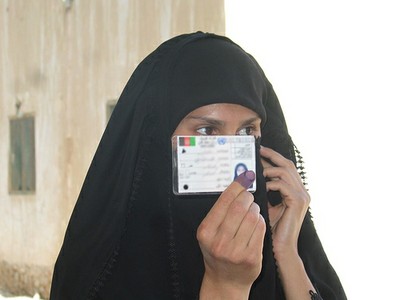
Afghan Elections 2009 (Kandahar City) / Élections Afghanes 2009 (Kandahar) by Canada in Afghanistan / Canada en Afghanistan is licensed under a Creative Commons Attribution-Noncommercial-No Derivative Works 2.0 Generic License. Identification for Registration PurposesThe identification of voters is the process of verifying the eligibility of potential voters and entering their names and other substantiating information on a voters’ list. The process should be fair, comprehensive and inclusive. This requires effective measures to ensure that potential voters are aware of the registration process and have reasonable opportunity to complete it. One of these measure is the voter education campaign. Voter education emphasises the importance of registration, explains voters’ responsibilities and provides information on how to register. Who Is Responsible - Citizens or the State? Different systems may use differing registration methods and assign varying responsibilities to electoral administrators and citizens. Sometimes registration is primarily the responsibility of citizens, who must initiate the process by contacting the election administration. For example, they might have to complete a voter registration form at a voter registration centre, fill out a form obtained on-line from the election management authority’s web site, or (in a country with a civil registry) complete a change in registration form and submit it to the civil authority. In other cases, officials are responsible for contacting potential voters; often gathering registration information using registration officers who visit residential addresses either in all areas or targeted areas. Still, another method relies on data sharing between the election management authority and other civil agencies, such as the post office or the housing authority. When notified of a change to a citizen’s information, the election management authority may send voter registration material to that person for verification of the change. In practice, citizens and state often share responsibility for initiating contact. In Mexico, for example, which has a continuous voters’ list, the election management authority makes registration accessible by establishing thousands of voter registration centres, including mobile units. It is still up to citizens, however, to visit the registration sites and formally initiate their registration. When voters initiate registration, experience has shown that greater convenience can significantly increase participation. In the final analysis, it is a question of access: how much responsibility does the state have for enabling citizens to register without undue hardship? The answer is that the state must assume considerable responsibility for ensuring that registration is not an administrative barrier to citizens’ participation in democratic elections. At the same time, cost is usually a factor in deciding on the scale of voter registration efforts. Cost and Comprehensiveness - A Trade-Off Policy makers strive for comprehensiveness in the voter registration process but they may need to weigh the effort against the overall cost. Developing a voters’ list tends to be less expensive when the bulk of the responsibility for registration lies with voters. In these circumstances, the role of electoral administrators is to ensure that voters are aware of the registration requirements and the procedures they must follow to register. Administrators may choose not to assume responsibility for identifying potential voters who do not register at their own initiative. This approach results in creating voters’ lists that tend to be less comprehensive than those compiled through state initiative. In addition, certain groups of citizens are often less likely to identify themselves as eligible voters and to register. Examples are youth, the aged and physically challenged persons, poor or illiterate people, and residents of rural areas where transportation is a problem. Voter's Proof of Identification
Most countries face challenges in identifying eligible voters when they appear at the voting station. The election process must be structured to ensure that only legitimately registered individuals vote and that persons who turn out at the voting stations to vote are in fact who they claim to be. When potential voters come to the voting station on election day, they must usually identify themselves to election officers before they receive a ballot. This allows election officers to check the names of voters against the voters’ list and ensure that they are included. Each name is then checked off or crossed out, or the voter is asked to sign the register. In some cases, when there are concerns about the possibility of multiple voting, voters may be required to dip a finger in indelible ink to indicate that they have voted. When the Norm Is to Carry Identification There are various ways that voters may prove their identity. In countries where it is the norm for citizens to carry identification (e.g. national identity card, driver’s license, employment ID card, health care ID card), the election administration may not need to issue its own identifying documents. In a country where voter fraud is unlikely to occur, registration offices may not ask for any identification; voters simply sign the voters’ list or register. And with the switch to computerized files, often there is no original signature for comparison. Mailed voter identification cards give voters the information that appears about them on the voters’ list and also present voter education material. Sent to all citizens on the voters’ list, this simple card contains their personal information as it appears on the list, together with the date of the election and location of the voting station at which they are registered. At the voting station, voters identify themselves by presenting the card and simply stating their name and address, or showing a piece of photo ID, such as a driver’s licence. When the Norm Is Not to Carry Identification In other countries, proving identity for elections can be far more complex and even cumbersome for election officials. This is particularly true in a country with no civil registry, where it is not the norm for citizens to carry personal identification. This situation places a considerable financial and administrative burden on the electoral administration, which must provide proof of identity to all potential voters. In some cases, voters themselves must bear some of the costs of producing Voter Identification Cards or other identification. Security Considerations With the use of voter identification cards, a major concern for effective election administration is security, and foremost among security concerns is the threat of forgery. Mindful of this threat, in August 1990 Mexico adopted security-enhanced voter identification cards. To prevent forgery, nine security features were incorporated into the card’s design, making it almost impossible to duplicate or alter. The security features include a bar code, hologram, photograph and molecular fusion. Another concern is security of storage and distribution. This was an issue in the June 1995 elections in Haiti. Of the 4.2 million voter identification cards produced, the electoral commission announced that 1 million were missing. But although this number was widely reported, it was never confirmed. [1] Still another issue with voter identification cards is the question of having the capacity to issue cards to the entire population of eligible voters. This was a challenge in the El Salvador elections of 1994, as well as in Nicaragua throughout the 1990s. The tasks of registering voters and issuing voter identification cards are greatly complicated if the election is being held in a country experiencing an armed conflict; this happened in Nicaragua, Angola, and Bosnia and Herzegovina. Last, if the costs of producing identification cards are passed on to voters, the impact will be substantial, as Senegal found in its 1993 elections. The relatively minor costs were prohibitive for many potential voters, barring their participation in the electoral process. Features Available for Voter Identification Cards Voter identification cards may have a wide variety of features, both simple and complex. Security features generally increase the cost, sometimes sharply, but they are not always necessary. In one case, forgery was prevented by producing the card as a tear-off portion at the bottom of the registration form itself, bearing the same pre-printed voter registration number as the form. This virtually ruled out producing forged cards or stealing blank cards since the same name and identification number had to appear on both the card and the voters’ list. It was also decided that simply presenting the card at the polls was not enough. For the most part cards issued at the time of registration were sealed using a cold lamination process, so that any attempt to remove the laminate would damage the card. Accurate records identified which forms were issued to which voting stations. Still another security measure used in this case was fingerprinting on the registration card as well as the detachable registration form. Concerns About Administrative disenfranchisement Although voter identification cards have been adopted around the world, it is especially important to ensure that they do not lead to the administrative disenfranchisement by some voters who find the associated costs prohibitive. Administrative disenfranchisement occurs if a citizen formally and legally has the right to register to vote and to vote, but is prevented from exercising that right because the costs of doing so are too high. In some cases, the costs of obtaining a voter identification card have been perceived as causing administrative disenfranchisement. For example, in one country the government did not charge any fee for issuing a national identity card, but voters still had to pay for photographs and official stamps, and they faced loss of wages for the time spent acquiring the card. In the end, the real cost was prohibitively high for many. The predictable result was the administrative disenfranchisement of otherwise eligible voters. NOTES [1] International Republican Institute (IRI), Haiti: Pre-Electoral Assessment of the June 25, 1995, Legislative and Municipal Elections, Washington: IRI, 1995, Appendix VI.
The Voter Identification Card: Advantages and DisadvantagesVoter identification cards may range from relatively simple to highly complex. At one end of the spectrum, the election management authority mails cards to all eligible voters advising them that they are registered to vote in a certain electoral district, and explaining when and where they can vote. A voter presents the card at the voting station on election day, with or without an additional piece of identification (such as a driver’s licence with a photograph of the voter). The purpose of this type of card is mainly to provide information to the voter; generally it is used in countries where there is little expectation that voters will attempt to multiple voting or otherwise commit electoral fraud. In other countries, the voter identification card is a much more important instrument in preventing electoral fraud. For this reason the authorities may make extra efforts to integrate security features into the card, including:
A voter identification card offers a number of advantages:
In addition, there may be other, less tangible reasons for favouring voter identification cards. For example, according to a study of photo ID cards, the cards were said to convey to voters a feeling of pride in their right to participate in the electoral process. The voter identification card has a number of disadvantages:
Voluntary versus Mandatory RegistrationVoluntary registration is based on the principle that voting is a right of citizenship, and that voters may choose to register or not. Inevitably some voters will choose not to register, thereby effectively depriving themselves of the right to vote. If there is a random distribution to the likelihood of registering to vote that is, if all types of citizens register in equal proportions, whether men or women, young or old, urban or rural, rich or poor, highly or poorly educated, and so on the conclusion might be that voluntary registration has no impact on the outcome of an election or on the selection of representatives and governments. Across a wide range of democracies, however, disparities may be seen in who chooses to register and who does not. For example, men are more likely to choose to participate than women, although the gap has been narrowing in many countries over the past generation. Young people are considerably less likely to register and vote than middle-aged and older citizens. Urban voters typically register in higher proportions than residents of rural areas. Rich are more likely to register than poor, and the highly educated are more likely to register than the poorly educated. If those who participate at higher rates have values, attitudes and political preferences differing from those less likely to participate, the result is that participation and voluntary voter registration will have an impact on the electoral outcome by favouring people more likely to register and participate. If the population that registers to vote is systematically biased or unrepresentative of the population as a whole, the election outcome may lack legitimacy. Mandatory and Quasi-Mandatory Registration Mandatory or quasi-mandatory registration is based on the principle that voting in a democracy is not simply a right but a responsibility of citizenship. Choosing not to register and vote is viewed as a dereliction of duty. If voting is mandatory, as it is in Australia, it follows that registration is also mandatory even though it may not be legally enforced. Countries where voting is compulsory always have much higher voter turnout than countries where voting is voluntary. In addition, if voting is compulsory, the election management authority has a greater obligation to make it easy for individuals to register and vote. Where the state takes responsibility for initiating the voter registration process e.g. by conducting door-to-door registration or maintaining a compulsory civil registry registration is near-mandatory. For example, a citizen may refuse to answer the enumerator’s questions, but the enumerator’s official request for information constitutes an extra pressure or incentive to respond and register. In countries with a civil registry, citizens often have a formal, legal obligation to report changes in their personal status to the civil authority. Thus a voters’ list based on data from a civil registry may be viewed as produced through de-facto mandatory registration. Mandatory registration provides a more comprehensive listing of all eligible voters and allows more accurate assessment of voter turnout as a proportion of eligible voters. The true measure of voter turnout in an election is the number of people who voted in relation to the voting age population. This proportion may indicate the effectiveness of a voter registration program. In a mandatory registration system, citizens understand more fully that voting is a civic duty and responsibility. The implication of a system of mandatory registration and voting is that each citizen has an obligation to vote both for himself or herself and for the community as a whole. In other words, citizens have an obligation to vote for the health of the democratic system, not only for the chance to have their personal preferences represented. Self-initiated versus State-Initiated RegistrationSelf-Initiated Registration Like voluntary registration, self-initiated registration is based on the view that voting is a right of citizenship. Consequently it is up to citizens to contact the election administration to ensure that they are registered. The difference is that voluntary registration may be initiated by either the individual voter (in which case it is self-initiated) or the election management authority (in which case it is state-initiated). A self-initiated system of voter registration is likely to be adopted as a matter of necessity rather than principle. Sometimes there are significant practical barriers to state-initiated registration. For example, the postal service may simply be unable to effectively reach all or even most voters. High costs may rule out door-to-door registration. Self-initiated voter registration systems may take many forms:
With a self-initiated system, registration rates tend to be lower than with a system in which the state initiates contact. This is largely because registration is voluntary. Despite that, there are ways of increasing registration:
State-Initiated Registration State-initiated registration is based on the view that electoral administrators have a responsibility to attempt to register all voters. They may meet their responsibility by means of door-to-door registration to develop a periodic list, or by maintaining a full, complete and current continuous list or civil registry. State-initiated registration is bound to cost more than self-initiated registration because the state must make the effort to contact all citizens. For the system to be comprehensive and inclusive, the state must also reach hard-to-contact voters, including those who frequently move, those in non-traditional homes and those who do not respond to initial requests for information. The Canadian state puts requisite funds at the disposal of local election officials to conduct door-to-door voter registration drives in specific areas hosting a high number of unregistered voters. Although more expensive, however, a state-initiated system will produce a more complete list of eligible voters than will a voluntary registration system. To a certain extent state-initiated registration presupposes a greater capacity on the part of the electoral administration to locate all citizens. This capacity is likely to exist in an economically advanced country, for two reasons:
A Mixed Strategy There is also a third option, in which citizens and the state share responsibility for registration. The state takes steps to facilitate registration, and citizens must do their part to complete the process. This mixed strategy lends itself to less economically advanced countries that seek to increase registration rates but have limited resources and infrastructure. Under the strategy, the government fixes dates for a well-publicised registration period, and establishes a large number of registration centres, including mobile units. Citizens still must take the initiative of going to one of the centres to register. But if the election administration adopts a forward-looking and inclusive approach, it can reduce the time that citizens must invest to register and can make the system easier to understand. In fact, even in more economically developed countries, voter registration systems often follow a mixed strategy, with the election management authority initiating contact and citizens bearing some responsibility for ensuring that their voter registration information is accurate and up to date. For example, in a country with a continuous register, the election management authority may conduct door-to-door registration in a high-mobility area as part of a targeted registration initiative. If no one is at home when the registration officers visit an address, they may leave a card for the resident to complete and return to the election management authority. At the same time, the election management authority may make forms publicly available, perhaps at the post office or on its Web site; anyone wishing to vote then can complete a form and return it. Both citizen and state thus take some responsibility for voter registration. Resident versus Non-resident VotersBecause voting almost always has citizenship and residence requirements, most voters reside in the country and the electoral district where they are eligible to vote. However, some citizens temporarily living abroad may retain the right to vote and thus to register. In addition, some eligible voters will be in the country but away from their electoral district at the time of an election; they too retain the right to register and vote. Further, in a post-conflict situation there often is justification for extending voting rights to people now living outside the country as displaced persons, refugees or with some other status in their new country of residence. Until recently, members of the armed forces stationed abroad were the citizens most commonly allowed to retain voting and registration rights while out of the country. Since these voters normally continue to maintain a residence in their home country, they can usually be assigned to a voting station. Greater labour mobility has expanded the number of a country’s citizens who go to work abroad, particularly in the European Union, and this trend has swelled the ranks of non-resident voters. People may even have voting rights in their country of nationality as well as the country where they currently reside such as in Australia. Citizens’ increased ability to travel and work abroad makes the task of organising registration and voting more onerous. Temporary Absence Abroad At any time, a number of a country’s nationals will be making brief trips abroad. Such persons may still be allowed to register. Some countries permit registration to people who go abroad for specified reasons, such as study or business; a vacation may not be an acceptable reason. Procedures must be designed to accommodate eligible voters who are out of the country during registration or voting; these may include advance registration or registration by mail. Aside from military or other specially designated personnel, such as nationals posted in diplomatic missions, historically there have not been many provisions allowing citizens who reside abroad to vote. But this is changing. Citizens who are outside the country now are often permitted to apply for registration and vote by special ballot. Sometimes they may even vote by proxy. Enabling them to vote may be expensive but the trend is to regard voting while out of the country as a right of citizenship. Post-Conflict Absentee Registration and Voting Recently, in a number of post-conflict situations, citizens living abroad have been granted registration and voting rights in their country of origin. Administering free and fair elections in these circumstances is challenging, particularly because many of the citizens living abroad cannot prove their status by showing official, original documents from their country of origin. Without official documents such as birth certificates, passports or identity cards, the election management authority may need to rely on whatever documents may be available for example, documents from international agencies confirming individuals’ refugee status. In several cases the international community has become involved, assisting with voter registration and voting in a foreign environment. Sometimes national election management authorities have been called on to administer elections for foreign nationals living in their country. In one recent instance, voter registration for an election was initiated by telephone. Intending voters supplied details of their identity and were then sent a computer-generated registration form, to be signed and returned together with photocopies of any documentation they possessed. Anyone whose application was rejected could appeal to a respected international agency. Political Parties and Interest GroupsVoter registration involves various stakeholders. The most obvious are citizens and the government’s election administration apparatus. But others as well have an interest in the outcome of the voter registration process since it may affect an election outcome. These stakeholders include the government, the military, political parties, interest groups, social and religious institutions, foreign governments, and international organisations. Political Parties and Voter Registration Political parties have a strong interest in voter registration because the system used may directly affect the amount of support they obtain. One well-recognised strategy for winning an election is to control who turns out at the polls: through encouraging or discouraging registration by voters or groups of voters, a party may improve its chances. The three key performance criteria for a voters’ list are currency, accuracy and completeness. Sometimes the election management authority may have difficulty meeting performance targets because political parties see it as in their interest to limit the size of the electorate or exclude certain types of voters for example, people from certain regions, or certain ethnic or linguistic groups. If the party attempting to interfere with voter registration is the ruling party, the challenge for the election management authority is even greater. Of course not all parties seek to influence the character of the voters’ list, but electoral administrators must be mindful of the possibility that some will. Political parties have a more particular interest in the voter registration process. Election management authorities have an interest in political parties, for the following reasons:
Foreign Interests Foreign governments, foreign non-governmental organisations and international organisations make an important contribution by providing assistance in democratic election administration, and by supplying international election observation personnel and services. Their stamp of approval may do much to ensure that an election is viewed as a legitimate and definitive statement of the will of the people. National Interests Domestic stakeholders other than political parties may feel they have a greater interest than international observers in the election process and outcome, and rightly so. At issue is control of the government. Some stakeholders may be tempted to become directly involved in the campaign instead of providing oversight and helping promote the legitimacy of the process. Wherever possible, it is best to encourage all national stakeholders to work for development of fair and impartial election administration machinery and practices. The international community may advocate on behalf of this approach, with the assistance of international election observers. They can help convince national stakeholders of the wisdom of focusing on implementation of fair and impartial practices. Citizen election monitors today play a growing role, often working with international observers to provide election oversight and safeguard legitimacy. Voting locationA principle of effective election administration is that the location of a voting station should not provide an advantage or a disadvantage to any political party or group. The voter registration exercise can help in choosing fair and politically neutral locations for voting stations. Following are ways in which voter registration may influence voting location:
Anonymous registrationAnonymous registration is also known as the registration of “silent” voters. It is the practice of placing certain individuals on the voters’ list in such a way that their names or other characteristics (e.g. addresses) do not appear in any published or circulated version of the voters’ list. In some instances, the election management authority provides for anonymous registration by creating and maintaining a separate list of silent voters. Anonymous registration is in use in Australia and New Zealand. Voters may wish to remain anonymous for various reasons. Perhaps the most common is that they have been subject to domestic violence and are concerned that making their location known could jeopardise their personal or family’s safety. Similarly, victims of crime may fear that a perpetrator released from prison will become aware of their location and seek revenge. In providing assurances of anonymous registration, the election management authority must be able to fulfill its commitment. Further, it is widely felt that individuals should not be deprived of their democratic rights as a result of having suffered from domestic abuse or a criminal act. At the same time, anonymous registration appears not to be consistent with the principle of openness and transparency in the electoral process. At least in theory, a silent list could be a cloak for large-scale electoral fraud if very large numbers of voters are involved, and the list cannot be reviewed in the customary manner by citizens, political parties or their agents. As in many aspects of election administration, the best solution lies in striking a balance between the privacy needs of a relatively small number of individuals with legitimate reasons for wishing to remain anonymous, and the need for openness and transparency in election administration. The election management authority may require anyone wishing to be placed on a silent voters’ list to provide evidence that their personal safety and security otherwise would be at risk. The election management authority may also make the list of silent voters available for scrutiny by a small number of electoral agents who have declared an oath to maintain the confidentiality of the list. Eligibility for simultaneous electionsIn many countries, people live in multiple jurisdictions, each of which may hold elections. For example, someone may live within the jurisdiction of a municipality, a county or regional authority, a provincial or state authority, a national authority, and in some instances even a super-national (or international) authority. To conduct an election, each jurisdiction must have a list of eligible voters. It is inefficient for each to develop and maintain its own separate list; doing so would involve significant duplication of effort, although some jurisdictions go ahead despite this. But in fact election management authorities in places where there are multiple jurisdictions have a range of options open to them:
Legal provisions to prevent fraudElectoral fraud takes various forms. In some cases it may be committed by citizens acting individually or in organised groups; in other cases it may be committed by a government intent on rigging the outcome of an election. The election management authority must have the necessary independence to ensure fair standards in combating election fraud by citizens; and it must have an assurance that the government will not resort to fraud. Electoral fraud committed by individuals
Electoral fraud committed by groups or governments
Exclusion from the voters’ list: To be free and fair, an election must allow all voters who meet the eligibility criteria to express their preferences by voting. Attempts may be made to exclude some groups of citizens from the voters’ list, particularly if they are known to support a particular political party. The election management authority needs to be aware of plans for any such attempt and must ensure that it does not succeed. The risk is that by trying to include a certain group of people on the voters’ list, the election management authority may be perceived as seeking to influence the outcome of the election in their favour. Secondary uses of voter registerThe primary purpose of developing a voters’ list is to separate the function of verifying voter eligibility from the votingprocess. Voter registration involves certifying that a person is eligible to vote, as well as informing the person of the voting station where he or she may vote and the electoral district (if applicable) in which the vote will be counted. It is not absolutely essential to separate verifying voter eligibility from voting, and some elections, including national elections, have been held without any voters’ list. However, it is far easier to manage election day activities if certification has already been completed and used to produce a voters’ list. It is also preferable to have a voters’ list of eligible voters as this assists in preventing electoral fraud as only registered voters whose name is on the list can vote. In addition to certifying the eligibility of persons, the voters’ register has other uses that provide further justification for its cost. Among the areas in which it has a secondary use are the following:
Multi-part formsForms for voter registration come in a wide variety of shapes and styles. Sometimes voters can register on-line and the form exists only as an electronic file. Sometimes, the form is posted on the election management authority’s web site, but it must be downloaded, printed, completed manually, and returned either in person or through the postal service. Sometimes only a paper form is available from the election management authority or another public body acting as distributor. And sometimes the form is to be completed not by the voter but by an registration officer, a registration centre employee or other such official. Where possible and practical, election management authorities often choose a voter registration form with several tear-off sections. One reason is that this style of form can include a voter identification card, to be detached and handed to the voter on completion of registration. The card shows the voter’s name and address, the election date, the voting station location and hours of operation, and (in some cases) a voter identification number. The personal information on the detached card exactly matches the information on the part retained by the election management authority. Various security features may be built into a multi-part voter registration form. For example, a registration number may be printed on the part retained by the election management authority as well as on the tear-off voter identification card (numbering helps officials monitor the distribution of forms). Both parts may carry the voter’s photograph or fingerprints. Some jurisdictions require the signature of one or more witnesses, also registered voters, who attest to the identity of the individual completing the voter registration form. Another security feature is a laminate coating; this serves as well to protect the voter identification card from damage. The laminate can be applied with either hot or cold techniques, depending on local conditions. Multi-part forms may simplify data sharing. For example, to report a change of address to the post office, someone may complete a form in duplicate or triplicate. One copy of the form then goes to the election management authority, efficiently updating the voter’s information. OutsourcingSecurity in Voter Registration In general, voter registration requires a relatively high level of security. There are often controls on the use of the voters’ list, and improper use is a punishable offense. Often use of the electoral register, along with the voters’ list on which it is based, is limited to the election management authority and through it to political parties. However, the parties, candidates and their workers usually have restricted access to the voters’ list, are often provided with a few copies, are allowed to use the list virtually only for election campaigning, and generally cannot distribute the list. Even stricter controls are placed on the use of the “silent” voters’ list: It is not made available for public review, nor is it distributed to political parties for campaign activities. The Outsourcing Option Despite these security restrictions, not all work related to the voters’ list needs to be handled by employees of the election management authority. Some tasks could be completed, to acceptable standards, through outsourcing to other government bodies or the private sector. However a contract or agreement with the relevant agency or institution should include a confidentiality clause to protect information and personal details. Following are some examples:
As the use of technology becomes more popular in creating a voters’ list and for registering voters many EMBs may receive requests from a range of different companies to purchase their equipment. EMBs will need to look into what is being offered, value for money, its usability in the long term, check with other EMBs about their experience etc, before purchasing any equipment relevant to voter registration. Safeguards for Outsourcing The election management authority continues to be responsible and accountable for the performance of key functions, even when they are outsourced. Safeguards are available to minimise the risk that may arise from decreased control over aspects of the registration process:
ComputerisationSince so much of the work of election administration involves gathering, storing, validating and updating data on the identity of voters, election officials in different countries have begun to computerise many of these processes. The advantages are clear and often compelling. Computers offer election officials the capacity to securely store large amounts of data, to process and sort the data in various ways, and particularly to alter features such as electoral boundaries by referring to computerised files on voter populations. In some cases, however, the social, economic or political environment may make computerisation difficult or even impossible. Despite this, there should still be ways to undertake registration initiatives that perform well on the criteria of currency, accuracy and completeness. Although computerisation of registration is now increasingly common in economically advanced democracies, computers came into use mostly within the past generation and especially the last decade. Before the 1980s and 1990s, computers were far less efficient, effective or affordable as registration tools. Where practical, electoral administrators now find that computers can make aspects of registration more efficient and cost-effective. In fact, they face mounting pressure to “modernise” registration, which may lead them to adopt computerised systems. The urge to computerise is often driven by rising expectations about speeding up registration, as well as the need to sort voters’ lists in various ways (e.g. by geographic units such as voting divisions). It is important, though, to recognise the costs involved in developing and maintaining computerised registration files. It is not simply a matter of developing and installing computer hardware and software: there will be an ongoing need to service and upgrade the system, and to have skilled and highly trained personnel to operate it. What is required is a careful evaluation of advantages and disadvantages, along with a realistic appraisal of the capacity to sustain the system into the future. Advantages and Disadvantages of Computerisation Computerisation of various components of the voter registration process can lower costs and greatly increase the reliability of data. Computerisation is particularly useful for the following tasks:
Computerisation also has disadvantages:
Getting Started There are no off-the-shelf computer programmes for large-scale voter registration initiatives, but election management authorities planning to computerise the voters’ list do not need to start from scratch. Often, considerable assistance is available from election management authorities in other countries that have successfully computerised. The key is to find a suitable system that can be applied with reasonable effectiveness and efficiency. Concerns and/or misunderstandings are widespread regarding the capabilities and use of computers. When computerisation was discussed in one setting, for example, a common concern was that the computer could reveal a voter’s political affiliation or ethnic group membership. In another setting, the fear was that election results could easily be manipulated by election management authorities or the government. In a third setting, advocates of computerisation asserted that the computer could rectify errors in data entry, or correct falsified or poorly completed records. A well-publicised pilot project can do much to remove misconceptions. TechnologiesVoter registration involves activities that may benefit from the use of technology. For example, recording and storing names and other personal identification (address, citizenship, age, gender, etc.); printing lists, sometimes using multiple selection criteria; tracking changes in information over time; or data sharing with other government bodies. The most important and widespread use of technology for voter registration is the computerisation of voters’ lists and production of a Voter Identification Card. This is particularly useful in countries where an identification book or any other kind of national identification is not in use. Other technologies have also been adopted to enhance the voter registration system, including the following:
Technology that may be of interest to election management authorities is widely available. Also available within the community of electoral administrators is considerable expertise and experience in evaluating the goods and services on the market. Consultation with colleagues may be helpful when deciding whether to use different technologies or upgrading these technologies or making recommendations on their use to the government. E-registrationIn many cases the election management authority posts voter registration materials on its website. It may choose from several options for e-registration that is, providing registration materials electronically. Among the options are the following:
Targeted registrationTargeted registration is a registration initiative trying to reach an identifiable group of voters, usually because that group has lower registration rates than the general population or because such group of people live in very remote rural areas. Among the groups that may be targeted are young voters, members of ethnic communities, poor and homeless people, women, voters living abroad, high-mobility urban voters and displaced persons. Mexico and Peru deploy mobile registration units to rural areas. South Africa resorts to door-to door registration officers to areas with low registration rates as well as to prisons to register or update personal details of incarcerated voters. In Australia, Australian election officials target students by visiting college campuses. Young Voters Since voting levels have historically been lowest among young people, the election management authority may launch an initiative to increase registration of young voters. As part of the initiative, it may develop a voter education program focusing on youth; this could also be used as a component of high school civic education programs. To interest young people and involve them in the voting process, the election management authority may organise public performances, such as the “Rock the Vote” events held recently in some countries. The election management authority may also develop a provisional register of young people who will reach voting age within one or two years; once they do, they can automatically be transferred to the general voters’ list. Members of Ethnic Communities Members of ethnic communities may face significant language barriers to electoral participation. They may also have little or no understanding of the democratic process or their right to register and vote. To deal with such challenges, the election management authority may make election information available in multiple languages. Registration forms, information and outreach materials for voter registration should preferably be made available in the languages of ethnic groups, especially in areas where such languages are broadly used. Dialogue with leaders of an ethnic community can help to identify strategies for actively involving that community in the election process. Poor and Homeless People Poorer members of society are less likely to register or participate in political life. Sometimes registration rules require voters to have a fixed address; people who cannot meet the requirement may effectively be prevented from registering. A solution may be to allow these people to use the address of a homeless shelter in their community. In a city with more than one electoral district, homeless people may be assigned addresses at shelters throughout the city; the result will be that they are registered in roughly proportionate numbers in each electoral district, equalising the effect of registering this group of voters.
Women Some societies still maintain social and cultural, if not legal, barriers to women’s political participation. A registration campaign targeting women may try to give them access to voter education materials encouraging them to register and vote, the materials are placed in locations where women are likely to see them. Many election management authorities work with women’s organisations to get the message out effectively. Campaign initiatives of this nature were undertaken in Zambia in preparation of the 2011 Tripartite elections; Voters Living Abroad Increasing numbers of people travel far from their home in search of employment, in many cases going to foreign countries. Some people leave spouse and children behind while they work abroad for lengthy periods. Despite their absence, they maintain close ties to their home country and identify with it, with many sending regular financial contributions to their country of origin. Targeted registration efforts for such people may include special visits by the election management authority to foreign jurisdictions to register voters, or a voter education programme advising them of their right to register and vote as well as how to do so or collaboration between the election management authority and the International Organisation for Migration (IOM). Electoral management authorities can also post information on how to register or where external voting locations are and requirements for voting on their website. High-Mobility Urban Voters In large urban centres in economically advanced democracies, up to 20 percent of people change their address each year. In a country with a continuous list, the election management authority must make considerable effort to track such changes in the time between elections. As an election approaches, many such voters (who may disproportionately be young) are bound to be registered inaccurately. A targeted registration initiative for this group may involve a voter education campaign combined with highly focused door-to-door registration as well as information on the electoral management authority website. Some electoral authorities, such as South Africa, hold specific election registration weekends a few months before the election to reach out to voters to encourage them to register. Displaced persons People could be forced to leave their usual place of residence by moving to new residential areas (camps or temporary shelters) within their own country (Internally Displaced Persons) or by leaving their home country (refugees) as a result of social upheavals, civil wars, armed conflicts and natural disasters. The election management authority, in collaboration with the IOM and the UNHCR, would formulate strategies and put in place measures for special targeted registration initiatives for these groups provided that out-of-country voting is permitted by law in the afflicted countries in the case of refugees, or make special arrangements for IDPs should voter registration and voting be directly linked to voters’ usual place of residence. People with a disability Potential and already registered voters with a disability may find it challenged to access voter registration centres. Electoral management authorities need to ensure that all efforts are made to accommodate the needs of people with a disability when reaching out to voters to encourage them to register Voter registration methods and participationVoter registration is usually a prerequisite for voting. In this case, to be able to express their views in the democratic process, citizens must be registered. Election management authorities often conduct targeted campaigns to register population groups that are less likely to participate in elections, such as youth, women, poor people or members of ethnic minorities. This practice raises an important issue: Is the election management authority responsible for ensuring that electoral participation is high or for minimizing differences in the participation rates of different population groups? Might it instead be the responsibility of political party activists to get out the vote at election time? Electoral administrators have varying views on the issue. For some, ensuring high voter turnout is among their primary responsibilities. It follows that as many people as possible need to be included on the voters list and they must be broadly representative of the population as a whole. Electoral administrators who take this view are likely to make use of targeted voter registration initiatives, and to develop voter education programmes intended to increase the awareness and political involvement of all members of the community. The opposite view is that electoral administrators should provide the opportunity to participate but not pressure anyone to take that opportunity. In other words, the role of the election management authority is simply to offer a level playing field for all citizens, to direct its messages to all members of the public and to make voter registration procedures available equally to all potential voters. Proponents of this view often note that they are non-partisan electoral administrators and must be perceived as being unbiased. A targeted registration campaign, or an effort to increase the participation of some but not all voters, is likely to have the effect of helping some parties more than others. If that is really the case, any initiative of the type jeopardises the political independence of the election management authority. Many electoral management authorities target all voters, but make special efforts to encourage those voters who are not easily reached or encouraged to register, to do so. This is a contentious issue and no one answer is right for all electoral administrators in all circumstances. Where possible, it is useful to codify the principles under which an election management authority operates so that a change in its leadership does not bring a dramatic change in its activities. Cost ConsiderationsVoter registration is often the most costly part of conducting an election, at least for electoral administrators. Of course parties and candidates may spend vast sums in their election campaigns but they often raise this money privately. In some countries, parties do receive public funding to cover part or all of their operational and campaign expenses. Nonetheless, voter registration is often the single biggest budget item for registration and election administrators. Registration is costly because it involves a wide range of responsibilities. Current information must be collected on every single eligible voter within a population that may range from tens of thousands to hundreds of millions – a sizable task. Added to this is the need for registration to be comprehensive and inclusive, and the critical role played by effective voter registration in conferring legitimacy on the electoral process. Further, voter registration often takes place in the heated atmosphere of an election campaign, when scrutiny is particularly close and mistakes may be magnified in importance. In a jurisdiction with a periodic voters’ list, registration costs are incurred within a relatively short time rather than spread over the electoral cycle, as they are in a jurisdiction using a continuous list or a civil registry. The costs involved in generating a periodic list may be a major component of overall election costs but they appear less heavy when compared against the costs of maintaining a continuous list. In short, whether a periodic or a continuous list is used, voter registration costs will account for a very considerable share of the election management authority’s budget allocation. With a civil registry, registration costs are also very high (perhaps much higher than with either of the other two forms of voter registration) but the costs are not borne directly by the election management authority. The cost spikes involved in the use of a periodic list certainly are a major factor to be weighed in deciding on one or another type of voter registration process. Other factors to be considered are ability to use a computerised registration process and the capacity for data sharing between government bodies and the election management authority. The continuous list depends on data-sharing partnerships that enable the election management authority to receive changes in personal information reported by citizens to other public bodies, such as the post office, taxation agency or driver’s licence bureau. Use of this information to update the voters list helps make a continuous list cost-effective. Determining Costs In the development of comprehensive and inclusive voters lists, numerous questions arise that could affect costs. How many registration centres should be established, for example, and how many workers must be trained to staff them? Are voter identification cards necessary or do most citizens already carry sufficient personal identification to make the cards superfluous? If cards are used, should they include photographs, fingerprints and other security features? If the cards must be laminated, is cold lamination acceptable, eliminating the need for electricity? Are there other sources of data on voters that can help in updating lists, especially data on high-mobility urban voters? Another issue is how costs are distributed in the first place. Are they concentrated in the periods between elections, higher in election years or spread out over the entire electoral cycle? The answers to these and many other questions have important implications for the overall cost of the registration process. Costs of Computerisation The costs involved in computerising the voter registration system are likely to be substantial. First, building the computer system requires initial investments in hardware, software and skilled support staff. Next are the costs of ongoing operation and maintenance of the system. Maintenance alone may be a major cost if it includes upgrading the hardware and software as new releases and performance improvements become available. Also ongoing is the cost of training operators and support personnel to handle upgrades, as well as the cost of using the technology between and during electoral events. Finally, if the administrative functionality, that is, the structure for operating the entire voter registration initiative, is built into the computer system, contingency plans are needed for a possible system failure. The plans may call for generators, additional batteries, alternative networks and other back-up systems, as well as round-the-clock support services provided by contractors. Budgeting for Registration Costs It is difficult to provide an overall country-by-country comparison of the costs of voter registration for periodic and continuous lists since budget presentation may vary, as may the types of expenses included under voter registration. More useful would be to treat voter registration as a process involving a number of identifiable components, and to develop a budget that focuses on achieving its deliverables within a pre-established framework and agreed method of registration. Registration costs can easily escalate to consume an ever-growing proportion of the election budget. Much of the costs will be for items used by local registration offices but paid for by the central election management authority. The items include essentials such as:
The central election management authority may control registration costs by imposing ceilings on salaries, working hours and materials. It may put constraints on the total size and quality of office space as well as equipment leased or purchased for offices. It may set rules specifying what items are eligible expenses. At the same time, the election management authority may need some flexibility in its budgeting for voter registration so that it can accommodate unforeseen expenses. For example, in a jurisdiction using a continuous list, it may become evident during the revision period that the list contains incorrect information for a larger-than-expected number of voters. This could make it necessary to take certain steps, including hiring and training extra staff, leasing extra equipment and negotiating more service contracts, with the result that registration costs climb above target. Because the registration effort is so important to ensuring the legitimacy of the election, the extra costs must be accepted for the short term. With good planning guided by past experiences, it may be possible to minimise the impact of such unanticipated events. Factors Contributing to High Costs The following are some of the factors that can drive up the cost of the registration initiative:
Cost Savings and Efficiencies Some rules of thumb can promote greater efficiency and cost savings in voter registration. They include the following:
Specific Administrative IssuesThis section looks at the common functions that need to be addressed in all voter registration systems, whether using a periodic list, a continuous register or a civil registry. It highlights the importance of advance planning to deal with challenges that arise in developing registration systems and notes some of the difficulties inherent in responding to those challenges. Among the issues addressed in the section are the following:
PlanningPlanning methodology will largely be determined by whether the type of system is a periodic list,a continuous register or list or a civil registry.Whatever system is used the work always involves a set of detailed, complex and time-consuming tasks. Following are some of these tasks:
Each system may approach these tasks in a number of ways. Planning for a Periodic List A system using a periodic list of voters must have considerable administrative flexibility to create a new list for each electoral event. The election management authority must plan how it will contact each eligible voter, certify his or her identity, add the voter’s name to the register, and in some cases issue a voter identification card. It must also allow time for printing the preliminary voters list, making the list available for public inspection and dealing with objections. The planning must take into account population size and density, the authority’s staffing and material needs, the available budget and the timeline for completing all tasks. One advantage of the periodic list is that it may not require the ongoing administrative structure common to systems that use a continuous list or a civil registry. Since the periodic list is not updated on a continuing basis, between elections the administrative structure can be relatively modest. When a list is being developed, however, the election management authority must be able to put in place a large administrative structure with trained staff. This takes advance preparation of all the elements involved, including training manuals, a training programme, office infrastructure, and position classification and responsibilities. Planning for a Continuous List The planning process differs for a system using a continuous list of voters. The election management authority must distinguish between tasks involved in gathering the initial registration data and tasks required to maintain the list by adding voters as they become eligible, removing others as they lose eligibility and changing voter records to reflect changes of address. With a continuous list, much of the data gathered in the initial registration will need to be re-used. This makes it important to begin by considering how the information will be gathered and stored so that it can later be updated. The list may be organised on the basis of individuals (increasingly mobile) or residential addresses (highly static). Most administrators find that geographic organisation on the basis of addresses makes it easier to update a continuous list. Planning for a Civil Registry Some countries gather information specifically for their civil registry. The authority responsible for the civil registry collects the information and uses it to develop the civil registry database. In other instances, the authority integrates information collected by other bodies. It concentrates on overseeing the integrity of the information provided by those bodies rather than directly gathering information itself. To choose between the two approaches, the civil registry should first assess the quality of the information that would be available from other sources, using the three performance measures of currency, accuracy and completeness. This assessment will indicate whether major changes would be needed in the way that information is gathered and how challenging it would be to make such changes. Legal and Administrative FrameworkLegal Framework The legal framework governing the electoral process usually provides guidelines for voter registration. The legal provisions may be found in the constitution, electoral law or legislation enacted specifically for voter registration. Normally the provisions are established before registration begins, preferably with public involvement, including political parties, in their development. Voter education programmes explain the guidelines on voter eligibility. Other guidelines concern how the registration process is to be administered. For example, they may require advance notification of the dates, hours and locations for census or registration, or may specify the personnel or officials to be involved in the registration effort. Administrative Framework - Organisational Levels Two organisational levels are involved in the administrative framework for designing and implementing effective voter registration procedures. First is the central election management authority, which may be a national organisation or (especially in a federal system) or a combination of national and regional/local bodies. Normally, the central authority is a permanent government body or an arm’s-length commission having overall responsibility for electoral events. The central election management authority designs the voter registration system, including forms, computer hardware and software operations, and policies and procedures. It also designs training manuals and oversees the professional implementation of all aspects of the system. When administration is handled by an electoral commission, this body exercises oversight to ensure that the system is implemented in a standardised, uniform and impartial manner. The electoral commission can also carry out voter registration and not just have an oversight role (South Africa, Botswana, Zambia). The second organisational level is local. Since registration activities may be highly decentralised, there should be a well-developed local administrative structure to deal with local issues. Particularly in systems using a periodic list, almost all local registration tasks are usually performed by staff having only a short-term connection with the election management body. Typically, many have little or no previous experience with election administration or voter registration. This underlines the need for personnel able to oversee local implementation of the system, as well as for tried and tested protocols to provide support. In some jurisdictions, however, local personnel may be permanent employees of the government or administration who have been assigned to undertake registration duties or personnel that the electoral management authority regularly calls upon during a voter registration exercise. In addition to the central and local organisational levels, there is often a regional component that is given responsibility for ensuring standardized implementation locally and for coordinating the information communicated to the central election management authority. Importance of Early Planning The electoral or registration authority can carry out its responsibilities effectively only if it has adequate material, human and financial resources. The budget is set in advance by senior management, ideally without political interference. The officials responsible for registration must be perceived as professional and competent. If they are not, the legitimacy of the entire voter registration process may be compromised. Administering a voter registration system involves:
Personnel Management Registration staff must be well trained and known to be honest and impartial. They must also be perceived as free of political motivation and not subject to influence in the performance of their duties. If professional civil servants or government employees serve as registration officials, the election management authority must determine whether they might intimidate voters or have been known to do so in the past. At the regional level, a registration official normally is designated to provide liaison between the central election administration and the local organization. Different titles are assigned to this official in different countries and jurisdictions; here we will use the title “regional registration director.” Normally this individual is responsible for overall implementation of the voter registration initiative in the territory under his or her jurisdiction. The regional registration director directly or indirectly supervises staff performing important functions. In a system with a periodic list, registration generally requires the following functions:
Office Infrastructure Normally the regional registration director oversees:
Clear guidelines from the central election management authority will assist the regional registration director in this task. In some countries it may be necessary to adapt to whatever facilities are available. For example, it might not be possible to set up fully equipped offices throughout the country or in some locations because of cost, geography or lack of equipment. Registration Material Most, if not all, of the actual registration materials are normally produced by the central election administration and shipped directly to local offices for their use. Key issues involved in distributing registration materials are the integrity of transportation and storage facilities, and the accuracy of forms and documents. Clear protocols for these issues can be set well in advance of registration. In a system using a periodic list, registration takes place within a relatively short time, often with an election looming. A poorly administered registration exercise may cast doubt on the entire electoral process. Many components of the administrative framework can be established well before registration starts; accordingly, it is highly advisable to spend time and resources on building the framework early, when work pressure is relatively light. Many election administrations are not given sufficient resources for planning; in contrast, spending controls tend to be greatly relaxed during the election period itself, as if for crisis management. But crisis management tends to be expensive. Appropriate budgetary allocations in the period between elections can alleviate some of the pressures involved in managing registration. In fact, carefully planned spending between elections can yield substantial efficiencies and savings. In a system using a continuous list, the voter registration process may be unobtrusive. For example, the election management authority may use registration officers only for very limited and targeted initiatives, and may not establish voter registration centres except during the revision period following publication of the preliminary list. Such a system has far more substantial requirements for ongoing administrative support but tends to avoid the spikes of activity found in systems using a periodic list. Logistics
A successful voter registration process depends on successful planning and the ability to implement plans effectively. Plans will differ depending on whether the jurisdiction uses a periodic list of voters, a continuous register or a civil registry. Logistics planning has to be flexible and give thorough consideration of possible contingency measures that may be required. Poor logistical planning will threaten the validity of the election process.
Logistical Planning - Periodic ListA system using a periodic list must organise a registration drive before an electoral event to produce a voters list for that event. One person, or one position, must have overall responsibility for the detailed planning and implementation of local voter registration exercises. This is normally the registration officer or official. Some countries also use independent commissions at the regional and/or local level, paralleling the structure at the national or central level. In this case, it is necessary to have clearly defined responsibilities and a reporting protocol in place. Working within the legal and administrative framework of the country or sub-national unit, the registration officer must specify the tasks to be accomplished on each day of the voter registration exercise. Typically, plans must realistically assess:
Also needed to be estimated is the time required for processing each voter’s information and (where appropriate) the time for entering the data in some type of recording format, whether electronically on computer or by hand or on typewriter. Sometimes the data will then be forwarded to the central election administration. Alternatively, data and records may be retained at the local level for the production of the voters list, in which case the central election management authority will have no involvement in preparing the list. The registration officer may require sufficient resources for unforeseen emergency measures that might be needed to complete the voter registration exercise on time. Door-to-door registration normally requires a detailed breakdown of the homes , hospitals, prisons where applicable, to be visited each day by each registration officer or pair of registration officers. Where registration centres are used, plans should identify the location of each, and should specify mobile registration units (if any) and their location throughout the registration period. The goal is to ensure that the registration centres are fully equipped when registration begins. In practice, this may not always be possible. The longer the delay, however, the less efficient the process may be. For all categories of election workers, recruitment methods and training procedures should be stipulated. All training materials are usually prepared before registration begins and training of staff conducted in advance or the registration exercise.. A contingency plan may be required for training workers who were unable to attend the scheduled training sessions, as well as for finding and training replacements. Close attention should be given to population density, literacy rates, ethnicity, language, local customs and the urban-rural population split. Plans should be adjusted as dictated by these factors. The voter registration process must be broken down into manageable geographic units. In the case of door-to-door registration, for example, the norm is an administrative unit of approximately 250 to 500 voters. Each unit is then further analysed in terms of the distances it involves, the location of boundaries, the number of households it contains and similar issues. If enough time is allowed for door-to-door registration, the administrative units could be larger. There will be significant administrative inefficiency if door-to-door registration is undertaken without specifying geographic units. If required mobile voter registration stations must be anticipated and provided for. The methodology for collecting voter information is normally set well in advance of registration. Also to be specified are procedures for reaching voters who were not at home when registration officers visit, or for dealing with other contingencies. Lines of authority must be clearly defined, along with the steps involved in delegating authority. Step-by-step procedures must be set out for each major component of the registration exercise. A communications policy must be developed for all members of the electoral administration, both permanent and temporary staff. Typically, communications policy will specify how the registration officer should maintain contact with the central election administration during voter registration, who is the contact person for media inquiries, and how and to whom regular updates should be provided on the registration exercise. Scheduled hours of work must be established, along with rates of pay for various job classifications and the method of payment for all workers. All officials should receive information about their compensation package before they start their work. Choice of staff may be an issue in some countries. While many countries rely on civil servants in other countries identifying temporary staff may be a sensitive issues where an electoral management authority may need to take into account inclusivity, gender or other requirements. A system using door-to-door registration should specify the steps involved in terminating registration officers’ employment on completion of the project. A system using registration centres should specify the steps for dismantling the sites. Logistical Planning - Continuous RegisterThe first steps for preparing a continuous list of voters are similar to those for compiling a periodic list. The key difference between the two systems is that after the initial registration, the information gathered becomes the backbone of the continuous list, and subsequent efforts focus on verifying the accuracy of the data and regularly updating the list. The type of information collected can make it easier to maintain the list. For example, it is common to find more than one person with the same name.Unique identifiers (e.g. birth date or citizen identification number) are therefore needed to distinguish each voter. In contrast, the periodic list is developed for one specific electoral event. It sometimes uses information from past lists but there is no standing list of voters in a system with a periodic list, as there is in a system with a continuous list. Reduced or Increased Number of Registration Centres After the initial registration drive to establish a continuous list, the election management authority may dismantle most registration sites but keep open a small number for people needing to register or update their registration information. Despite the limited numbers, registration centres often represent a significant cost component of a continuous list system. The cost can be reduced with new electronic list maintenance methods that draw on a variety of data sources – an approach resembling that of data collection for a civil registry. Normally there is one registration centre for each electoral district or county. When an election is called, the election management authority may increase the number of centres or set up mobile units to visit areas where registration rates have been low in the past. The election management authority should develop valid performance measures (based on currency, accuracy and completeness) and systematically attempt to improve performance. Timely Updating a Must A continuous voters list may become out of date. Performance measures – for example, of list currency – can help identify shortcomings and indicate how to achieve improvements. For example in Britain, the deadline for submitting voter information changes is in the Fall (Autumn), and the preliminary voters list is published at the end of November each year. A time is then allowed for presenting claims and objections and the final voters list is published approximately 4 months later on February 15. This list remains in effect from February 16 until February 15 of the following year, or 16 months after the deadline for submitting information changes. Voters who have moved to another electoral district in the interim cannot vote in their new district – a classic case of administrative loss of right to vote. The jurisdiction has introduced changes to allow more frequent updating of the voters list. Although this jurisdiction is officially described as using a continuous list, in fact it takes a yearly snapshot of the electorate and defines voters’ eligibility on the basis of information collected at the time of the snapshot rather than continuously throughout the year. This example is something of a hybrid between a periodic and a continuous list. Other jurisdictions with a continuous list update it far more often. They may conduct monthly data-sharing activities with other public bodies or make daily updates to integrate information supplied directly by voters. Across the United States, the deadline for registration is 30 days before an election, and most jurisdictions require certified voters lists to be produced no later than two weeks before the election. Logistical Planning - Civil Registry
In developing a civil registry, the first step is to assess the quality of information available from other sources. In some cases, existing data sources are quite suitable and efforts can focus on transferring the appropriate data to the election management authority. Role of Local Government Local governments are often responsible for maintaining the civil registry, starting with registering births. When even such basic information is not available, the government must organise an initiative to collect data for the civil registry. This is similar to a registration drive for the purpose of compiling an initial continuous voters list or a periodic voters list. In contrast to a periodic list, with both a civil registry and a continuous list, the information gathered initially becomes the backbone of the list (see Logistical planning – Continuous Register), and subsequent work then verifies the accuracy of the data and regularly updates the list. The civil registry itself may be used for various purposes, such as maintaining basic population data, tracking the uptake and impact of government support services, keeping tax records, and identifying persons due to be conscripted into the military. The same basic data gathered for these purposes may be used for electoral purposes. Unlike a civil registry, a continuous list focuses solely on electoral data and is used for electoral purposes only. Registry Listing Key to Participation in Civil Life At any moment, a civil registry can provide a certifiably valid voters list for use in an election. Listing is normally mandatory for the civil registry, while it usually is voluntary for a continuous or periodic voters list. Because the civil registry has multiple uses, someone not listed in it cannot vote and also is effectively excluded from many aspects of civic life. According to Dr. Felipe Gonzalez Roura of the National Electoral Court of Argentina, exclusion from the civil registry entails a drastic loss of rights: Aside from the purely civic motivations of exercising the right to vote and fulfilling the obligation of military service, anyone who fails to comply with this obligation does not have an updated identity document and suffers a kind of civic death. Such a person cannot work legally, vote, or carry out almost any transaction. He cannot leave the country, register in any institution of learning, or collect social benefits and so on. [1] Thus, in both its scope and central role in public life, the civil registry has a significance far beyond that of the voters list. In Sweden, for example, each resident must be listed in the population register, which provides the data for compiling the voters list. The name of anyone entitled to vote appears in the voters list even if that person prefers not to be listed. Status Versus Individual Responsibility Planning for the civil registry should take into account its central role in public life. Because it is usually compulsory for citizens to be listed, the state should take the lead in supporting the development and maintenance of the registry. To do this, the state must have an operational infrastructure capable of gathering the necessary data and maintaining the registry. High-tech computer equipment is not an absolute must. In some countries with populations in the tens of millions, the government has successfully maintained a civil registry using simple file cards. However, computerisation makes it far easier to manage the volumes of data typically included in a civil registry. While the state takes the lead in maintaining the civil registry, citizens are still often responsible for informing the state or relevant state departments of changes to personal information. In South Africa, for example it is mandatory to report births within 30 day period to the Department of Home Affairs, which is the authority that maintains the civil registry. This is another way in which the civil registry differs from other types of voter registration. In addition, registration for a periodic or continuous list may be valid for a limited time. With a periodic list, all eligible voters must register for each election, whether or not they voted in previous electoral events. Even with a continuous list, many countries require validly registered voters to renew their voter identification card or re register after a certain time. With the civil registry, however, a citizen’s registration to vote never expires without express reason. Citizen Identification Number Whether viewed as a single list used for multiple purposes or as multiple databases shared for multiple purposes, the civil registry has one key feature: it depends on information sharing across government agencies or departments, or across functions within a single agency. To facilitate sharing, a tool is needed that can serve as a link between databases or administrative units. This tool is the citizen identification number. Virtually all systems using the civil registry assign to each citizen a single, lifelong number, either when a birth is registered or on registration as an adult (usually between ages 16 and 21). The number is the glue that unites the various databases providing information to the registry. Unique identifying records can be stored centrally, all linked through the identification number. This eliminates the need to issue voter identification cards to citizens in the run-up to an election, yielding substantial cost savings. The Election Management Authority in a Civil Registry System In a system with a civil registry, there are various options for how the election management authority should operate. If democratic practice is well entrenched, the election management authority could be located within a government ministry, such as the tax office – although normally as a separate administrative unit. If democracy is less well rooted, it is clearly inappropriate to give the executive branch of government control over election administration. The key question is where the election management authority should be placed so that it can provide an independent check on the validity of the data used for voter registration. The answer varies from one context to another. NOTES [1] Dr. Felipe Gonzalez Roura, “The Electoral Register of Argentina,” in The Electoral Registers, paper presented to the Second Conference of the Association of Electoral Institutions of Central America and the Caribbean, Santo Domingo, Dominican Republic, November 23–26, 1987.
Registration Data CollectionWhen planning for voter registration, it is essential to identify what kind of information is needed. Usually a country’s constitution or electoral law specifies the information to be collected. This always includes each voter’s name, residential address if any and citizenship status, as well as age or date of birth (partly to ensure that the voter has reached voting age). Normally the voter’s gender is also recorded, although privacy concerns may make this information difficult to collect. Information on date of birth and gender often helps to verify the accuracy of the data gathered in the registration process and detect duplicate registrations. A signature might be required, depending on the literacy rate. If the plan is to issue voter identification cards, the cards’ requirements could affect the type of information collected. In particular, the authorities must decide whether to include identifying features on the card, such as a photograph or the voter’s fingerprint. Action Plan After determining the information to be gathered, election administrators can proceed with developing a detailed action plan, taking into consideration factors such as:
While developing the action plan, the central election administration can also give attention to the training sessions required for successful implementation of the plan, as well as the materials to be produced for personnel training. And of course the plan must cover producing materials needed for registration itself, such as registration forms, reminder cards, mail-in cards and data entry record forms. Data Gathering with a Periodic List In a system using a periodic list, there are various options for collecting and handling registration data. The action plan must be designed according to the options selected. Will the data be gathered through door-to-door visits by registration officers, for example, or will registration centres be established where voters must present themselves to register? Will registration be possible by mail, either as the sole option or as a back-up to registration centres? Will the registration take place through a face-to-face meeting between the registration officer and the voter? If not, how will the election management authority be able to confirm that the information collected is accurate and valid? What kind of identification will be required to confirm voter identity? Will voter identification cards be issued and, if so, what will appear on the card? Will it include a photograph? Will it be laminated and, if so, will a hot or cold lamination process be used? Data Gathering with a Continuous Register In a system with a continuous list or register, the methods used to collect data for initial construction of the voters’ register differ from the methods used for ongoing updating. Initial construction may involve data-gathering methods very similar to those used for a periodic list – that is, door-to-door registration, registration at centres established for that purpose or registration by mail. After initial construction, however, there is a significant shift in the approach to data collection. In particular, the election management authority tries to obtain changes in voter information on an ongoing basis so that it can incorporate changes of address, add newly eligible voters, and remove the names of deceased people or individuals who have otherwise ceased to be eligible to vote. To maintain a continuous register, an election management authority may negotiate data-sharing agreements with other public bodies. These give it access, for example, to changes of address reported by citizens to the tax office with their annual income tax declarations, or perhaps reported to the housing authority. With the development and ongoing management of data-sharing arrangements, an election management authority using a continuous register must undertake tasks significantly different from those required for producing a periodic list. Data Storage Once information has been gathered, it must be securely stored. The storage method most familiar today is a computerised database. Registration personnel transfer data from the voter registration forms to computerised files. The files can then be used to produce voter identification cards and the voters list itself. Information may also be recorded by hand or typewriter. Voter files then are sorted according to various criteria (e.g. alphabetically or by street address). Appropriate precautions put in place in prior to the registration process starting, will maintain a secure environment for the files, whether or not they are computerised. A more challenging but equally important task is storing source documentation, such as voters’ fingerprints, signatures and photographs. These often serve as vital checks of list accuracy and provide legal verification for voter registration. Another task may be transferring computerized files from local election offices to the central election management authority for final compilation of the voters lists. If files are not computerized, it may still be necessary to transfer data from the voter registration forms to the voters list, often with the intermediate step of producing a preliminary voters list. Both registration data including, voters’ fingerprints, signatures, photographs, forms and voters lists must be stored securely. Simple, Clear Procedures and Structure A large-scale, comprehensive voter registration drive often occurs within a short time before or after the calling of an election. Plans for the drive should give priority to establishing an open and transparent registration system. A rule of thumb is to keep procedures simple and take reasonable security precautions. The voter registration form itself should be straightforward, not a test of literacy or competence. Its purpose is simply to gather basic information and reveal whether the individual completing the form is eligible to vote. The sheer magnitude of the voter registration process and the inevitable time pressure are challenges enough. If the procedures chosen are kept simple, the task will be more manageable. Equally important is a clear and well-articulated structure to smooth functioning. A supervisor should directly oversee the work of seven to nine data collectors or registration officers, a regional deputy registrar should be responsible for perhaps seven to nine supervisors, and so on up the administrative ladder. Lack of foresight will produce inefficiencies; they can be minimized with a well-defined organization. ProcurementParticularly with a periodic list, voter registration tends to be a materials-intensive activity. A large amount of information must be gathered within a short time, necessitating the use of a large volume of materials. Typically, these include:
In many cases the materials must be transported on short notice across the country. In addition, election officials must usually rent or lease office space for a relatively short time, fully equip this space for registration, and then dismantle the office at the end of the registration period. The various needs raise the risk of spending inefficiencies and cost overruns. Controlling the risk takes clear policies on procurement, preferably with spending limits for each category of goods/services and each electoral district/region. Local circumstances partly determine the materials to be used for voter registration. Overhead projectors, data projectors and fax machines, for example, make sense only in areas with reliable electricity supply and telephone service. In their absence, greater use must be made of paper-based materials. Organisational Structure At the national level in most countries, a centralised election management body is responsible for the overall integrity of the electoral system, including voter registration. The central authority typically has responsibility for designing the registration system to meet legal requirements. It also develops appropriate support elements, such as training manuals, policies and guidelines, and official forms and proposes the type of registration eg biometric etc.. In a system with a periodic list, the registration period usually sees this central body expand dramatically to include large, decentralized local administrations. The local organisations assume the tasks of gathering registration data and then putting the data into a form suitable for the development of preliminary and final voters lists. Almost without exception, employees of the local organisations are hired for very brief periods and often have no training in election administration. Procurement Policies The central or regional registration authority may handle much of the purchasing, with cost savings achieved by buying in bulk. The local level is likely to handle short-term rental of office space, furniture and communications equipment. It must operate within tight spending limits. Clear procurement policies will provide valuable guidance to the local electoral organisation; the policies and procedures must comply with the standards accepted for other procurement needs within the jurisdiction. In general, each country or jurisdiction will have its own procurement policies suited to its circumstances. Policies must reflect the legislative framework for voter registration, as well as procurement policies for other government activities. Security Registration with a periodic list requires the movement of a large volume of materials within a short time to many locations. The materials must be kept secure during both transportation and storage. Appropriate security measures therefore are crucial to the success of registration. Reports of lost forms or stolen voter identification cards, for example, can undermine public confidence in the integrity of the registration process and thereby compromise the legitimacy of the election. Identification cards, however, are not essential in a system using a periodic list and are less likely to be issued to voters. Formal voter identification cards are more commonly used in a system relying on a continuous register. Procurement with a Continuous Register With a continuous register, the election management authority must make longer-range procurement plans to provide for regular updating of the list. For example, it must determine the kind of infrastructure it will need to manage the list. This is likely to include a full, ongoing staff of data entry operators and systems personnel, plus sophisticated computer systems. A periodic list involves a massive spike in voter registration activity and expenditures, and the election management authority must plan accordingly. A continuous list eliminates or at least flattens the spike, thus lessening the need to secure large amounts of equipment only to dispose of it after a short time. Instead, a continuous list may require a number of regional and local centres or offices to be set up as contact points for updating and maintenance of the voters list. Computer Rentals and Systems Support With either a periodic or a continuous list, proper equipment enables administrative employees to adequately perform their duties and implement effective, efficient procedures. If a sharp activity spike is expected – either because of an intensive voter registration campaign to develop a periodic list or because of a revision period in which a significant number of voter information changes will be processed – it might be preferable to rent computers rather than buy them, and to outsource the systems support functions. Cost and performance efficiencies can usually be achieved if the central election management authority negotiates the rental agreement. For e-registration initiatives, the election management authority must purchase or develop a mix of materials and support services. Apart from this, members of the public must themselves have the appropriate technology to access the authority’s website. When developing plans to allow downloading of forms and other materials from its website, the election management authority should aim to ensure access even for someone with a computer functioning at a low level. Operational InfrastructureMuch of the operational infrastructure for registration can be identified by the central election management authority well in advance of an electoral event. The head of the local election management authority (e.g. the regional registration director) can then set up the infrastructure in the time immediately before the start of registration. The challenge is to quickly put in place office facilities that may be used for only a few weeks or months, along with a staff generally lacking experience in voter registration. Operational Needs Building an operational infrastructure normally involves:
Advantage of a Geographically Based Continuous List A continuous list may organise, store and track data on the basis of geography (addresses) or individual voters. Residential addresses are one of the least changeable features of the electoral environment, and a list based on them has the advantage of stability: people increasingly change where they live but homes normally do not move. A continuous list organised on a geographic basis facilitates the development of a highly distributed, localised election infrastructure able to track information in each locality. Linking Existing Data Sets In a system with a continuous register or a civil registry, the election management authority often relies on data sharing with other public bodies to update information in the voters list. This presents significant challenges because each data set has been collected by a different organisation for a different purpose. The election management authority must find or develop a common element for linking and rationalising all these data sets. Among the tasks that may be involved are the following:
Voter EducationIn a typical year or even a typical electoral cycle, the election management authority may have little occasion to contact the electorate directly for the purpose of voter education. During a registration initiative, however, the election or registration authority must communicate certain facts and messages to voters and this gives the registration authority an opportunity to add a voter education component to their initiative. The first priority is to present basic information about voter registration – who is eligible to register, how to register and so on – but it is suitable to add messages about the importance of voting. Messages may even target certain groups of voters, such as youth, women, ethnic communities and homeless people. Factors That Affect Education Programs The form of voter registration being used will determine the focus of voter education messages. If registration is conducted through door-to-door registration, the emphasis will be on explaining why this is happening and what it involves. Messages will tell people that election or registration officials will be coming to their homes, that the officials will show identification and that these registration officers are going to gather some information needed to add eligible residents of each home to the voters list. The focus is different in a system using registration centres. Messages will explain to voters the requirements for registration and will tell them when and where to register. In a district served by a mobile registration unit, messages will inform voters of the dates when the unit will be operating in their vicinity. Door-to-door Registration If a door-to-door registration is the method chosen for registering voters, the education programme must publicise the dates and hours when it will take place – particularly since the time when registration officers will make their rounds is often fairly brief. Another facet of voter education resides in the card that registration officers leave at an address where they find no one at home. The card can explain further steps for registering voters at that address; for example, it may give a date when registration officers will make a return visit, or leave a telephone number to call for information. Security is an important issue in conducting a door-to-door registration. Since voters are asked to open their doors to registration officers, an impostor might seek to gain illegal or unwanted access to a home. The voter education program should explain how to recognize bona fide registration officers and what identification these officials will carry. Equally important is providing for the security of the registration officers . A common safeguard is the requirement that they work in pairs. This might raise costs and necessitate further efforts to find registration officers who can work together harmoniously, but the security benefits are substantial. Registration guidelines themselves may require that two registration officers work together, with each representing a different political interest and/or nominated by a different political party. Registration Centres In a system using registration centres, voter education will emphasise the importance of registering and will explain the dates,times for registration and the locations of centres. Other messages may tell voters what documentation they need to bring to the registration centre (e.g. proof of identity, address or citizenship), whether they can register family members as well as themselves, or what to do if they cannot visit a registration centre during the publicized hours of operation. Security is also a key here. Each registration centre must be assessed by the registration authorities and security officials. Registration centres may be categorised into hot spot, moderate risk and low risk areas. In this way, security can be deployed according to the thread rating. Voter Education Partners Voter education programmes should seek to involve the major media outlets in publicising important information, through paid advertising or free public service announcements. In a country where the only major media outlets are state- or government-operated, it may be a considerable challenge to ensure political impartiality. If that is so, community organisations, non-governmental organizations and political parties themselves may help to publicise why voter registration is important and how to register. In newer democracies, foreign-based non-governmental organizations may provide assistance for voter education. In these (as well as most) cases, the central message may simply be “You must register to vote.” Continuous Register and Civil Registry For the initial development of a continuous list, voter education requirements are similar to those for the development of a periodic list. The difference is that the periodic list is used for only one electoral event, and whether or not someone is listed has no bearing beyond that event. In contrast, the success of an initial registration drive for a continuous list helps determine the longer-term success of the register and thus of the democratic process. Education efforts should communicate this point to potential voters so that they fully understand the implications of choosing not to register. Civic education about registration also has a role in a country with a civil registry system. Since participation in the registry is usually mandatory, messages should inform citizens about any new requirements and the penalty for non-compliance. Citizens also need to know how compliance or non-compliance affects their civic and/or democratic rights. For example, if they fail to register by the announced cut-off date before an election, they might have to pay a fine and might have no way to establish their eligibility to vote in that event. Scale of Education Efforts The scale of a civic education program depends on a country’s previous experience with collecting information about its citizens and holding democratic elections. If there is a tradition of maintaining civic records and organising free and fair elections, voter awareness will generally be well developed and the education program may be modest. A greater effort is needed if the registration system has recently been revamped, or if the country has little experience with registration and democratic elections. Staff Selection and TrainingThe effective management of a voter registration campaign involves staffing and training at headquarters and in local offices. The central election management authority is more likely to be staffed by permanent, long-term employees, with conditions of employment set by civil services guidelines. Alternatively, these positions may be under the authority of an electoral commission that is formally independent of the government. Locally, the task of hiring and training registration staff is probably the most important mission of administrative officers before actual registration begins (whether through a door-to-door registration , registration centres or the mail). In a periodic list system, most of the registration workers will be hired for a short time. Many positions can be filled by people who don't require to be highly skilled. However, the calibre of local registration staff is likely to be an early indicator of the success or integrity of the election itself. For example, field office workers have very specific responsibilities during the brief registration period. Having to repeat any step of the registration process would be inefficient and would raise suspicions of questionable behaviour. Data collectors, registration officers and other staff at local registration centres are usually the only election officers whom voters meet. They are the public face of the entire election management body. They must behave properly toward the public. At the same time they must be prepared to deal with people who engage in improper behaviour. For example, someone may attempt to circumvent registration procedures by misleading a registration official. Local officials need to be able to answer the questions most commonly asked. They also need to know when and how to pass questions to their supervisors.
Types of Workers The types of workers required for registration will depend on the method of data collection. A system based on a door-to-door registration involves a somewhat different approach from a system using registration centres. In some countries, the political parties or candidates may provide names of potential registration officers. Safeguards may be put in place to ensure the impartiality of those hired; for instance, they may work in bipartisan teams. When voters register by mail, registration workers may function in a more anonymous atmosphere. There are, however, some common staffing requirements for each registration method. At the head of the local organisation is a registrar or lead registration officer – whatever the official title may be – who has overall responsibility for the successful completion of registration in that district. The registration officer may be assisted by an assistant registration officer, deputy registrar or assistant office manager. There are three separate functions under the responsibility of the lead registration officer and a separate team of workers may be assigned to each. They are:
Hiring One of the key responsibilities of the local election management authority is to hire local staff. Some of the responsibility may be delegated to different staff members. Hiring procedures may vary; for example, in some places, registration officers are selected from various lists of names submitted by the party offices, while in other places this approach would be viewed as overly partisan. What matters is that voters have trust in the system of registration, and see it as fair and impartial. If the selection of workers from a list of names submitted by parties is viewed as illegitimate, it should simply be avoided. In any event, each person hired must clearly understand that working as an election officer is a non-partisan activity. Other methods may include general advertising for staff, seeking staff from other state agencies. No matter what the method of selection is for successfully applying, it needs to be transparent. Temporary staff engaged should be employed on a cost-effective contract basis and with a clear understanding that their employment is temporary. Training Training should be conducted in suitable venues and use appropriate training aids. The election management authority can facilitate staff training by providing training manuals and organising training sessions. When planning for training, the following considerations need to be taken into account:
Each employee’s responsibilities should be clearly outlined and the way the responsibilities are to be implemented should be reviewed and discussed. The training session is an excellent opportunity to remind workers that they are very important for the overall integrity of the election. Remuneration The local election management authority is responsible for ensuring that employees are properly paid for their activities, according to a fair and standardised scale. The remuneration protocol should set out the rate of pay for each position, as well as expectations regarding hours of work and for completing tasks. The protocol should make clear whether the remuneration is based on performance or simply on an hourly rate. A performance-based system, for example, might provide registration officers with a fixed payment for each completed registration form, perhaps in addition to a set hourly rate or a flat fee. Performance-based remuneration might be intended to increase work quality by making it in employees’ interest to complete the registration of as many voters as possible in their division or administrative unit, but the danger is that registration officers might be encouraged to add names fraudulently in order to receive a higher payment. Travel Expenses Flexibility is important as some voter registration initiatives may require travel by employees or volunteer workers. For instance, they may be asked to make door-to-door visits outside their immediate neighbourhoods, in order to establish a registration centre in another locality or to operate a mobile registration unit. When travel is required for work purposes, especially, if long distances are to be traveled, it is unrealistic to expect the staff to function effectively within the next few hours. Overall the remuneration package should set out a system of reimbursement for travel costs. Usually this includes a standard payment per kilometre of work-related travel, a standard amount of funds that can be used for accommodations and a per diem allowance for food and miscellaneous expenses. Limits and standards help ensure that funds are spent responsibly, in accordance with the overall policies of the election management authority. Honesty and Integrity Local election workers play an essential role in safeguarding the legitimacy of a voter registration system as well as the election itself. They must be reminded of the importance of performing their duties with honesty and integrity, not to mention the consequences of dishonest or illegal conduct. All employees and volunteers may be required to take an oath or affirmation of service, formally agreeing to be bound by lawful and ethical conditions and standards to their duties.
Continuous Register In a system with a continuous list, staff selection and training may differ in a number of ways:
ImplementationIn compiling a periodic list of voters, the implementation (i.e. registration) period is very brief, ranging from a weeks to months. In contrast, the planning can take months or even years. To a considerable extent, the success of implementation will depend on successful planning. It should also be borne in mind that public interest in the electoral event is much higher during the implementation period and mistakes or difficulties resulting from poor planning may assume extra importance and could cause more embarrassment. It may also affect the perception of the credibility of the electoral process. When registration takes place during an election campaign, it attracts more attention from the media, political parties, candidates and the electorate, and the interest grows as election day approaches. In the implementation stage, major differences emerge between the periodic and continuous voters list systems. With a periodic list, most of the work is concentrated in the run-up to an election campaign or during the campaign itself. Pressure is inevitably high during this time, requiring peak performance from the registration system and the employees who operate it. In a system using a continuous list, a goal is to separate most aspects of the registration process from the election period, with its pressures and intense scrutiny. Registration occurs instead between elections, when list maintenance can be undertaken in a calmer atmosphere. Implementation is easier if a voter registration initiative is planned as an overall campaign involving specific outcomes, each with its own deadline. For example, there should be a firm date for producing the preliminary voters list, whether the source is a periodic list, a continuous register or a civil registry. Once that target date is set, planners can work backwards to determine when each element of the registration process needs to be completed. For example, if registration centres are to be used, how many need to be established and how many voters need to be processed each day to meet performance targets? What materials need to be delivered to the centres? Where will they be stored before and after registration? If computers are used, how will the data be entered electronically? If a new voter registration system is being introduced for the first time, eg biometric etc? How many workers need to be hired, in what job categories, with what amount of training and in what time frame? All these questions must be answered to establish the necessary timelines. And similar planning is required for the period of review and revisions to the preliminary list and production of the final voters list. Plan for Problems No matter how detailed and comprehensive the implementation plan is, there will inevitably be questions, concerns and problems arising. If they are foreseeable, they can be addressed in the plan itself. Following are some of the questions that often need to be anticipated in a voter registration initiative.
Contingency Planning The implementation plan should provide for contingencies. For example, it may allow back-up support if regular personnel encounter difficulties they cannot solve. In such a case the first step should always be to contact the immediate supervisor (e.g. the registration supervisor or registration clerk supervisor). Following are other situations in which planning should anticipate problems:
Computerisation Computerisation has greatly facilitated the task of producing and updating a civil registry. In both advanced and less developed countries, computer technology has come to play an important role in registration because it offers long-term storage capability, eases the task of maintaining data (including implementing changes and revisions) and helps in integrating multiple databases. Of all the registration systems, the civil registry has the most to gain from computerisation because it has multiple uses and relies on ongoing records maintenance. But computerisation alone cannot solve all the difficulties encountered in the voter registration process. A computer system may readily flag discrepancies in identifying voters but the election management authority must still decide on how to resolve the issue. There often is more than one solution to the same problem. For example, every election management authority must confirm the identity of each registered voter. In some jurisdictions the authority does this by requiring a voter’s completed registration form to be witnessed by one or two other registered voters. In other jurisdictions, the election management authority accepts a declaration by the voter himself or herself attesting to the accuracy of the information on the form; no witness is required to sign. The first solution rules out full e-registration, since technology isn't readily available for electronic witnessing. The second solution is compatible with e-registration. Compiling Registration DataVoter registration is largely a process of gathering, verifying and organizing information to produce a list of eligible voters. Accordingly, one of the key tasks is compiling the registration information. With the periodic list, normally this involves determining well in advance exactly what information is required from voters, and then developing forms or other mechanisms to gather the needed data. Usually a country’s law or regulations will specify the information that needs to be collected. Normally this includes the voter’s name, address, citizenship status, date of birth and gender. Voters may also be required to supply a photograph or fingerprints. Generally, election administrators collect information essential for positively identifying the voter and verifying the voters list. Administrators may have to balance the need for information identifying voters with an individual’s right to privacy. Election officials are sometimes asked to collect information unrelated to the election process. They may prefer not to do this since it might discourage people from giving their names for voter registration purposes. The process of initial data collection for a continuous list or civil registry is similar for a periodic list. The difference is that the information is updated for continuous list or civil registry. Usually the election management authority negotiates agreements with other government bodies that collect information identifying citizens; under these agreements, the information is regularly transferred to the election management authority. For example, when a voter informs the tax bureau of a change of address, the information can be forwarded directly to the election management authority. The major challenge involved is matching people in the database of another organisation with people in the voters list. In countries that assign to each citizen a unique citizen identification number, that number makes it easier to combine the information from various data sets. In countries that do not use citizen identification numbers, many election management authorities use geography (i.e. residential addresses) as the basis for organizing the electoral register. Door-to-door Registration A door-to-door registration is usually performed by registration officials, registration officers or data collectors, who go from door to door, carrying blank forms on which they record the information given to them by residents at the addresses they visit. They may leave a copy of the form for the resident as confirmation of registration. Sometimes registration officers carry forms pre-printed with the names of voters registered at each address at the time of the previous door-to-door registration – an approach combining features of the periodic list and the continuous register. The completed forms are handed in to the registration office, where the information is processed either manually or electronically. Registration officers may also carry a control sheet on which they mark actions taken at each residence listed. The information on the control sheet is used in return visits to any address where the registration process could not be completed on a first visit. Sometimes addresses are listed in advance on the control sheet. This involves pre-defining an inventory of legitimate residential addresses within each administrative unit – a task that may be difficult in a remote area with a traditionally nomadic population or large numbers of refugees. Because of the difficulty and expense entailed, the practice is uncommon. Registration Centres At a registration centre, voter registration forms may be completed by voters themselves or by registration clerks. Literacy rates will affect the choice of procedure. If voter identification cards are used, generally they should be available at the centre for distribution to each voter on completing registration. However, this may not be the best choice if voter fraud is a concern: it might be too easy for someone to register at a number of different registration centres, receiving an identification card at each. Registration by Mail Registration by mail is usually a less expensive option than either door-to-door registration or the use of registration centres. The main challenge with this registration method is ensuring that all eligible voters have a registration forms. The least expensive form of voter registration is registering all voters at the polls on election day. But this method usually results in long lines and lengthy waiting times for voters. E-registration There are several types of electronic registration, or e-registration, of voters. In the simplest form, the election management authority maintains a website on which it posts information about voter registration but not actual registration forms. In a more elaborate version, the website has forms that can be downloaded, printed, completed, and mailed or otherwise returned to the election management authority. A third option allows someone who has registered to log in to the website, review his or her own registration information, and enter changes while on-line; someone not yet registered may initiate the process. In cases where the law provides for registration from abroad, electronic registration, or e-registration is ideal as is cost effective, saves time and resources, see Voting abroad registration forms - Spain. Checks on Data Sharing Data-sharing arrangements enable the election management authority to update the information it has on record without the expense of gathering this information directly from voters. Before integrating the information into its voter registration database, the election management authority might wish to check its accuracy. One way of doing this is to contact voters (for example, by mail if voters have mail addresses otherwise other ways of communication need to be identified), asking them to confirm that the reported change in information is correct. Storing Registration DataWith a periodic list, registration involves managing a large volume of records. This can be done efficiently with computers, but using them may not always be practical or possible. Whether or not a system is computerised, it must perform a number of key tasks:
Short-Term Storage Every system must provide short-term storage of the completed registration forms while the voters list is being developed, verified and finalised. Many countries require the electoral management authority to retain the original forms. If registration officers are used, they are responsible for the forms in their geographic areas. They compile the list for the area or names assigned to them. Working from the registration officer’s lists, other registration officials usually compile the master list for the region. In many jurisdictions there may be no national list. In a system based on single-member districts (i.e. that each elect one representative to the legislature), the list may be maintained at the local level. The voter registration forms may be used to verify signatures on nomination forms, as well as on initiative and referendum petitions (which are particularly common in a system with a continuous register rather than a periodic list). Both voter identification cards and blank forms must be stored securely. Data Transfer Data will have to be sent from local data collection points (the registration centres or the local registration offices if door-to-door registration is used) to the central election management authority for development of the national voters’ list. A centralised computer database makes it possible to transmit the data through a transaction processing, with a high level of integrity checking to ensure completeness in the sending and reception of each record. There are various ways of electronically transmitting data between local and regional or national offices of the election management authority. Where the infrastructure exists, transmission may be via wire-based or wireless internet, telephone lines, or even satellite. Alternatively, postal or dedicated delivery systems may be used to move data kept in physical form (e.g. printed copies of the voters’ list) or stored on a variety of devices (e.g. diskettes, CDs or memory sticks). Whichever method is used, the aim is secure and timely delivery. If computers are not used, a typed or handwritten voters list may be transmitted. Policies must be developed specifying where and how the data should be delivered and in how many copies. Producing Voters Lists Where there is a national voters’ list, use of computers makes it easy to transfer data from the local site to the national election management authority. Centralised information may be needed in a country where voting is not organised by electoral district and representatives in the legislature are instead chosen on the basis of the proportion of votes each party receives. In other systems, however, the list may cover only a specific geographic area – particularly in a country where voters elect a representative from each electoral district. In such a case, voters usually vote only in the area where they reside and the list could be maintained even at the voting division level. In Canada’s provinces, the periodic list is maintained only at the level of each electoral district. Collecting large volumes of voter registration data and producing voters’ lists are laborious and highly involved procedures. Today these tasks can be fully automated with specially developed computer software. Voter registration software invariably is custom designed to local specifications at considerable expense. Production of Preliminary Voters ListAfter collecting registration data on the voter registration forms, election officials can produce a preliminary voters’ list. This is given to political parties and candidates for their campaign use. The election management authority uses it to estimate the number of people eligible to vote in each geographic area; that estimate helps in establishing voting districts. In addition, voters can check their information as it appears in the preliminary voters’ list, and can file claims or objections with the aim of changing their entries or being added to the list. In the past, preliminary voters’ lists were typically posted for public inspection or made available in a public place, such as a government office or a public library. Privacy concerns have led many countries to stop publicly displaying the list. Instead, some form of verification (e.g. a postcard) generally is handed or sent to voters to confirm that they are registered and to explain where they should vote. In some jurisdictions, voters may check their registration status by going to the office of the election management authority in person, contacting it by telephone or visiting its website. The preliminary list enables citizens to check whether they are duly registered to vote in the next electoral event or need to contact the registration office to request a change in their listing. The list also allows political parties and candidates to determine whether there are inaccurate or fraudulent entries and whether many of their supporters are unregistered and therefore need to be encouraged to apply for registration. If registration officials receive no requests for changes, the preliminary list becomes the final voters list used on Election Day. This outcome would be surprising, however, since it is very unlikely that officials succeeded in contacting every eligible voter in the first round of registration. More commonly requests for changes are received, making it possible to use the preliminary list as the basis for assessing how the registration process has performed in terms of currency, accuracy and completeness. The necessary changes are incorporated to produce a revised (i.e. final) voters list. The preliminary voters’ list also serves at least three other purposes:
Role of Political Parties The preliminary voters list is normally made available to political parties for their review – an additional verification of the quality of the list. Political parties have a vested interest in reviewing the list and confirming its accuracy. Their participation in the voter registration process is crucial:
Privacy Concerns External checks on the list must not compromise the privacy of the people listed. In some countries, many privacy concerns have been raised in connection with voter registration information and procedures. Personal safety reasons may require that the names of certain registered voters be suppressed from the public rolls; for example: judges, police officers and people who fear attack by an abusive former spouse or partner. Such persons may be placed on a list of anonymous or “silent” voters. Sometimes only limited information is available to third parties, that is, anyone other than the election management authority or the individual citizen. Some jurisdictions restrict the display of citizen identification numbers or other identification; some do not reveal age or street address. Most jurisdictions ban usage of the lists for anything other than election purposes; in particular, they ban commercial use in order to ensure that people who register to vote are not thereby exposed to a barrage of sales offers. Preliminary List with Different Registration Systems In preparing the preliminary list, there is one significant difference between the procedure in a system with a periodic list and a system with a continuous register and that is the time when this task is performed. In some periodic list systems, the election management authority develops the preliminary list in the official election period by mounting a registration initiative. In a continuous list system, the election management authority completes most of the work in developing the preliminary list well before the start of the election campaign; if the work was done properly (that is, scoring well on the three criteria of currency, accuracy and completeness), there should be relatively few changes to the list during the election period. Electoral administrators describe this way of working as “managing the spikes.” Of course, not all spikes in activity can be eliminated from the voter registration process – except in a country using the civil registry system. In such a system there is no need for a preliminary list if the registry has been properly created and maintained. Usually it is mandatory for citizens to be listed in the civil registry, and the information it contains can be used for various purposes, including for elections. Typically registration is required at the time of birth or naturalisation; thereafter, citizens must promptly report changes to their registration information – for example, changes of name, address or marital status. The list is consequently continually updated and is always kept current. Consequently, there is no need for a preliminary voters list when an election is called. Method of ProductionThere are several stages in the production of the preliminary voters list. Data Gathering and Entry As the information is gathered by registration officers or at registration centres, clerks begin entering the data on preliminary voters’ list forms or into the computer for an automated generation of a voters list. For either procedure, the data can be entered on a district or national basis. If national, the data can later be reopened on a district basis. On occasion, the information is processed manually. The information is entered by hand into a master ledger or record, and the voter is issued a receipt. Data gathering for voter registration is normally organised on the basis of small geographic units. In the absence of formally defined administrative divisions (sometimes referred to as polls, voting areas or voting divisions), a unit may be a community, village, ward or even the area served by a voting station. Usually it is impractical to try to sort tens of thousands of registrations and file them on a list manually. Even with computers, huge lists can be a problem. When computers are used, the preference is often to sort entries geographically by street and building numbers. This is particularly useful for campaign activity. At the conclusion of the period of gathering data through a door-to-door registration or registration centres, there may be a period allowed for registration by mail. If the registration system is computerised, this period coincides and concludes with the final stage of data entry for production of a preliminary list. In a system that produces the voters’ list manually, all the source documents must be collected before the transcription of information to a list can begin. The list may be compiled by hand or typewriter, and then reproduced by photo-offset printing or photocopying. Actual List Production In a list production, the usual approach is to start with a geographic framework – that is, assemble all the registrations for a geographic unit, then print or create a list of registered voters for the unit, then print or create a list of registered voters sorted according to a predetermined order. For manual lists, sorting is generally on the basis of family and given names. It can also be on the basis of community, street, building number if any, family name and given names. The preliminary voters list may indicate the gender of each registered voter, as well as other information such as occupation, age and telephone number. The list may need to group entries by geographic area or identifier, such as street. Where applicable, the grouping may be by town, village or other populated place, or the list may simply be in alphabetical order. Each step in list production is critical. Delays, inputting or typing mistakes, and printing errors may significantly lessen overall success. Adequate reproduction facilities and supplies must be organized in advance. Contingency plans must identify back-up methods to be used if any step in production fails. Difficulties can raise the costs or call into question the integrity of the list. When voter registration is carried out during the election period, every step of the process should be considered time-sensitive. Locally or Centrally Produced? A key question is whether to produce and print the preliminary list locally or centrally. It is useful to follow the same procedure planned for the final list; printing the preliminary list then serves as a test of the plan’s effectiveness. If lists are printed locally from a centrally held database, there must be an effective data transmission facility, together with appropriate local printing facilities and back-up. If lists are printed centrally, there must be an appropriate distribution system. In all cases, substantial volumes of data must usually be transmitted back and forth between local and central election offices. To meet the ongoing data management requirements, there must be some secure data transmission facilities through reliable physical or electronic networks. Voters’ Register MaintenanceA continuous list of voters must be regularly maintained after its initial creation. Since voter registration is not usually compulsory (except in countries with a civil registry), the election management authority needs to obtain changes in voter information – for example, changes of address or eligibility to vote. In some societies, up to 20 percent of the electorate might change address in any given year and the figure may be even higher in certain urban areas. If voters are not required by law to notify the election management authority when they move, the voters list may quickly lose currency. Updating the Voters List The following are techniques used by election management authorities to update a continuous register of voters:
Mail-In Forms Since registration by mail is relatively cost-effective, it has been adopted globally for gathering census information. Applied to voter registration, this method can significantly increase the proportion of eligible voters who register, a result that can be viewed as justifying the costs. The most expensive method of maintaining a continuous list is through door-to-door visits, with election officials contacting each household in person. This entails considerable personnel costs. They can be controlled by staggering door-to-door visits and going to homes only in selected communities in each registration period. But the problem remains that changing lifestyles and growing safety concerns are lowering the success rate of door-to-door visits. Given the high cost and declining effectiveness, other methods of contacting voters should be considered. The most common method of updating the voters list is by making mail-in registration forms easily available. For example, the form may be inserted in telephone directories. The return rate will be higher if the form is pre-addressed and postage-paid. The costs may be substantial but they are far lower than with other methods of voter registration. Deletions from the Voters List Additions to the voters list are often made in response to requests from the people concerned; deletions usually are not. This is not surprising since a deletion may need to be made as a result of an individual’s death, criminal conviction or emigration. Although there might be family members who can submit the appropriate form, they often fail to do so. For this reason, the election management authority generally relies on other agencies to provide information for removal of voters who no longer qualify. List maintenance procedures can be designed to incorporate data from sources such as government vital statistics offices, the obituary page in newspapers, funeral homes or relatives. The courts usually provide data on criminal convictions; health authorities supply information on mental incompetence. List Purge A controversial list maintenance procedure used in some systems is what is called the “non-voting purge.” This is the removal from the voters list of individuals who have not voted in a certain number of consecutive elections, normally two. If someone hasn't voted during a prescribed time, one or more mailings must be sent and elicit no response before the name can be removed. Alternatively, the name is removed and the voter is mailed a registration form or information on re-registration. Advocates of the non-voting purge regard it as an important cost-saving device since it reduces the number of voters to whom the election management authority must mail official voter registration material. They also see shortcomings in the methods for identifying people who have died, moved away from an electoral district or otherwise lost their eligibility. In their view, the non-voting purge allows the production of a more accurate list of people currently eligible to vote. On the other hand, critics of the purge see it as depriving people the right to vote who are less likely to participate in politics and vote in elections. The non-voting purge disproportionately eliminates the names of people who are more difficult to register, more likely to be socially and economically marginalised. Opinions differ about the usefulness of non-voting purges. Some kind of purge may be necessary to prevent problems with list currency. Inflated voters lists do nothing to enhance the reputation of election administrators and distort voter turnout rates. Automatic non-voting purges may be somewhat harsh, but some observers see strong justification for notifying people that they may be removed from the list unless they respond within a specified time. Promotion StrategiesOnce the preliminary voters’ list has been produced, interested parties must be able to review it. Wide availability of the list is essential for election integrity. To publicise the list, the election management authority should adopt some appropriate communications strategies. Publication of the preliminary voters list can also provide significant opportunities for voter education. Media Strategies Various communications strategies may be used to publicise the list. These strategies include, television and radio campaigning; billboards, newspaper ads, handbills and posters can supplement this or be the main campaign channel where electronic media outlets do not exist. With the creation of social media and other social networks, these can also be used to publicise the list.The campaign informs all electoral stakeholders which includes voters themselves that the preliminary list is available and also tells them when and where they can go for inspection – perhaps at the registration office or another centre. There may be limits on the information that the voters are allowed to see. To protect privacy, for example, voters may be able to check only their own information, not the entire list. Publicising the list can be expensive, especially if it involves large-scale advertising. Another option for informing voters that they can inspect the list is the use of public service announcements. These often cost less than regular advertising but may have less prominence. The basic message to be communicated is “You are registered if the following is true. . . .” Voters are not always required to verify that they are on the list. A voter may be given a receipt on registration, or mailed a card confirming registration and indicating when and where to vote. Differing circumstances calls for different promotional strategies. In countries with a long history of free and fair elections and democratic governance, this strategy may be limited to public service announcements together with an information card mailed to all registered voters. In countries where elections and democracy are more recent innovations, the strategy may have a larger budget and linked to voter education efforts. Non-Media Strategies Apart from media-intensive strategies, there are other ways to highlight the availability of the preliminary voters list. One is simply to post a notice about the list in a public building or other public places. In some societies, the announcement could be made through the beating of drums or through theatrical performances. In addition, copies of the list are normally sent directly to the political parties (as required by law) or other interested groups. In short, there are many ways to publicize the list and constraints, if any, are likely to be financial. Safeguarding the List A voters’ list should normally be used for electoral purposes only, and no promotional strategy should violate this principle. A problem with displaying the list in a public place is that it may be torn down or defaced. Many jurisdictions have list revision stations, with personnel who will check a person’s listing on request. The challenge is to confirm registration with minimal inconvenience to voters and without straining the resources available for this purpose. Gathering Changes to Preliminary ListOnce the preliminary voters’ list has been compiled and made widely available to voters and political parties, the next step is to gather changes on the list. Various reasons may necessitate revision of the preliminary list:
In short, there are many reasons why the preliminary voters list might lack currency, be inaccurate or incomplete. The revision period provides an opportunity to improve the quality of the list. This enhances the credibility of, and public confidence in, elections and provides increased legitimacy of the electoral process. Removing Names from the Preliminary Voters List Someone may be removed from the preliminary voters list if there is evidence that the person does not fulfill the eligibility criteria, which is often clearly laid out in the electoral law of the country.Normally, the name is deleted through a judicial or quasi-judicial process to prevent fraudulent removal. Registration officials should remove the name of anyone who was placed on the list but has since died. Usually, they require a documented proof of death to remove the name; a data-sharing arrangement with the vital statistics office can supply this necessary information and proof to the election management authority. In general, a voter cannot request the removal of someone else’s name from the voters list. This is a safeguard to stop partisans of one party from removing the names of their opponents. Claims and Objections As far as possible, the addition of names or the correction of information on the preliminary list should remain an administrative task rather than a judicial or quasi-judicial responsibility. However, appropriate procedures must be followed when deleting names from the list. Often a revision court, or a similar quasi-judicial body, is mandated to hear challenges to the preliminary voters list; it has the authority, sometimes together with the lead registration officer, to alter the list on the basis of the hearing. Many jurisdictions treat the hearing of challenges as an administrative duty of election officials instead of a responsibility of the judiciary. The lead registration officer ensures that each person whose eligibility to vote is being challenged is informed of the date and location of the revision hearing, as are all parties bringing challenges. All have the right to be present and submit materials or statements to the revision court. The court is the final arbiter of challenges to the preliminary voters list. Two points should be noted:
Production of Final Voters ListThe final voters list is generated through a computerised process or by manually transcribing information from the preliminary voters list, together with information from the revision court. In either case, lists are often produced for small administrative units, of which there may be 100 or more in an electoral district. The list will then be arranged either geographically (i.e. by addresses) or alphabetically, or in some combination of the two approaches. Central or Local Production In some places the central election management authority generates the final voters’ list, particularly if it is computerised. The local election management authority forwards files to the central election management authority, which assembles the data into a unified list of registered voters. This can then be printed in its entirety or by electoral district or voting station. However, the list often isn't centralized. Time constraints rule out centralized production of a periodic voters’ list for which registration was held during the election period. If voter's lists are maintained and printed locally, the local offices must have the computer systems and printing facilities required to successfully complete the task. The voting station, or division, is generally the smallest electoral unit, often numbering up to around 400 electors. In administrative terms, it is the most manageable unit for organising and printing the voters list. In other places, the local electoral district office generates the final voters’ list to be used locally. The local office may send a copy of this list to the central election management authority but it remains responsible for processing the list. No Separate Voters’ List with Civil Registry Countries with a civil registry have no separate department or agency responsible for the voters’ list as distinct from the registry, and they may even have no separate, physical voters list at all. In one country, the local tax office maintains civil registry records for all residents in its area. There are population specialists on its staff but it does not have a separate election unit. Further, no definitive voters list is printed. Instead, the voters’ list is a subset of the records kept in the population register. The register never closes because it plays an essential role in providing civic information to government departments and agencies, as well as to the private sector (e.g. banks and insurance companies). However, there may be a cut-off date for determining someone’s eligibility to vote and the electoral district where the person can vote. Changes after this date may be recorded in the civil registry but would not affect a person’s ability to participate in the election or the voting station at which he or she may vote. Distribution of Final Voters ListOn Election Day, a copy of the final voters’ list for the electoral district must be available at the voting station. This is an absolute necessity, and plans should ensure that the requirement is met. How it is met may vary. In some countries the local electoral offices are responsible for compiling the preliminary list, recording changes, finalising and printing the final list. The task is thus highly decentralised, although consistent standards apply across the country, and the final list doesn't need to be distributed, since it has been created locally. Other countries take a more centralised approach to the list production, necessitating appropriate methods for distributing lists to local offices. Increasingly lists are distributed via electronic data transfer facilities, using either wire-based transmission, wireless or satellite communications. However, some countries still print the lists centrally and distribute the printed copies to local offices. Whatever the distribution method, security of transmission is essential in order to maintain the integrity of the voter registration system. Use of the Voters List by Parties and Candidates For the election management authority, the voters list provides definitive statements on voting eligibility for each person listed. For political parties and candidates, it provides the names and contact information (normally addresses) of all persons eligible to vote in the approaching election. Political parties and candidates usually undertake significant canvassing efforts, contacting voters to identify who will support them and distributing campaign literature. Canvassing also gives parties and candidates an opportunity to solicit volunteer help or financial support for their election campaign. This is one reason for obtaining voters’ mailing addresses at the time of registration. Frequently the residential address is the same as the mailing address but this is not always so, especially in rural areas. Canvassers sometimes ask voters whether they are willing to have a campaign sign placed on or near their home, or to canvass their neighbours and friends on behalf of the candidate or party. Parties and candidates use modern techniques to determine the likelihood that a voter will support them in the election. Voters may be identified as very likely, possible or very unlikely supporters which will make the candidate's campaign strategy differ for each category. Committed supporters, for example, often receive reinforcing information. A more aggressive approach may be taken for possible supporters, including a personal visit from the candidate where possible. Voters unlikely to support a candidate may be ignored altogether, in the hope that little contact will make them less interested in the election and possibly less likely to participate. Parties and candidates also offer assistance, including transportation to the polls, for voters who are identified as likely supporters. Parties' and Candidates' Contribution to the Voters List Campaigns in many democratic countries have both centralised and decentralised features and they may have significant national and local impact. National campaigns may be conducted through major media outlets, such as radio, television and newspapers; they make no use of a voters lists. For the local campaigns, however, the key element is often door-to-door canvassing and the voters list is an important aid. As a result, parties and candidates may be active and often welcome contributors to the process of creating a final voters list. The parties’ role in list review and revision must be treated cautiously by the election management authority. While making use of the information parties can provide, electoral administrators must be wary of relying on people with a partisan interest. Timing for the production of a voters list is a significant factor for many political parties. Parties and candidates typically receive a preliminary voters list early in the campaign and use it for campaign purposes. The final voters list may be printed too late for parties to make much use of it. But it enables them to check whether changes that they requested to the preliminary list have been made. It also provides an opportunity for the parties to formally endorse the quality of the list. Audit Trail MaintenanceA voters’list that scores well on the three performance measures of currency, accuracy and completeness is a safeguard of free and fair elections. If the voter registration process is well documented and has open and transparent procedures, it will help ensure that the electoral system meets standards of legitimacy, contributing to the integrity of an election. Keep Records For each voter on a periodic list, the election management authority should have on file a copy of the voter registration form, as well as any and all supporting material used to evaluate or adjudicate the voter’s eligibility. As a precaution, it is useful and necessary to keep this information for a designated time, at least until the deadline has passed for appealing the election results; six months from the election date may be a reasonable period. Registration officials must effectively organize and maintain all the registration records that they have compiled. Creating a voters’ list from this material is a significant task but equally important is the task of organising the source documents, which may be needed to resolve disputes. A periodic list normally is developed in a relatively short time immediately before the calling of an election or during the election campaign itself. For this reason, maintaining up-to-date files on all eligible voters is less a concern with a periodic list than with a continuous list or a civil registry. In fact, a major advantage of the periodic list is that it obviates the need to store old data and update it regularly. Nonetheless, the overall integrity of a voters list may be challenged, and electoral administrators should be prepared to defend decisions on the eligibility of any person or group of persons. They should also be prepared for the possibility that a political party will accuse them of systematic bias against its supporters. At the very least they must keep materials relating to decisions on eligibility (e.g. registration forms, applications to challenge a voter’s registration or a decision of the revision court) and store these for a suitable time following the election. In addition, the information must be stored in a way that keeps it accessible. Since millions of records are likely to be involved, this is not an easy job. What is needed is a workable filing framework. Usually files are organised by administrative unit, defined geographically. Electoral administrators must also be able to document why a particular decision was made. Failure to maintain adequate documentation and justification for decisions is unprofessional and gives the appearance of capricious behaviour. This can call into question the integrity of the election management authority and the legitimacy of the election itself. If the authority maintains proper records of decisions, it will be able to make consistent decisions in similar cases, though largely on an exception basis. Generally there should be clearly defined policies to guide decision making. Establish Appeals Mechanisms Decisions by the election management authority relating to the eligibility of a potential voter might include denial of the vote, a claim of a fraudulent registration, a claim of a duplicate registration or duplicate voting, rejection as a signatory of a nomination paper or petition of recall. All such decisions must be open and transparent. Furthermore, there must be appropriate mechanisms for appeals. The first channel of appeal may be to the election management authority itself, usually the director of the local electoral office. A further appeal should be possible either with the election commission, if one exists, or the highest-ranking electoral officer. Finally, if circumstances warrant, an appeal should be possible through normal judicial channels. Track Information Changes The purpose of an audit trail is to identify errors in voter registration information, explain inconsistencies and properly manage the information. In ensuring the ability to audit the voter register, the key is to provide information that was used to update each record. The following questions illustrate the types of information needed in keeping records on changes of address:
Being able to answer such questions makes it possible to resolve discrepancies between registers or databases. One rule is to accept what was entered most recently as best indicating the current information. A second rule is to contact the citizen for help with resolving discrepancies between databases. Moreover, there should be a mechanism requiring citizens to confirm the accuracy of information on record and correct it if necessary. One such mechanism is the voter information card, delivered directly to the voter’s residence early in the campaign. The card may present important voter education messages: where to go to have the information on the card corrected; the date of the election; the political offices for which candidates are running the location, operating hours of the voter registration centre and the voting station. Oversee Data Collection Audit trail maintenance for the continuous register and civil registry may involve overseeing data collection. A difficulty is that the election management authority may not be responsible for collecting the data used for voter registration purposes and may have to depend on other government bodies to provide high-quality, reliable information. One solution is to mandate the election authority to directly oversee data collection by other bodies. Closing Date for RegistrationThe goal of a voter registration initiative is to develop a comprehensive voters list that will be as current and accurate as possible on Election Day. The decision on when to close registration depends on the particular circumstances in each jurisdiction or situation. Among other factors, the decision may be affected by the requirements for candidate nomination. Candidates must often have their nomination papers signed by eligible voters, sometimes numbering in the hundreds. To confirm that the signatories are eligible to vote, a preliminary voters list must at least be in place. Following are other factors that influence the choice of date for closing registration:
Work Backwards to Determine Cut-Off Date To establish a cut-off date for registration, it is best to start with the date of the election and work backwards, factoring in other key components of the electoral event. For example:
Be Realistic Ultimately, the task of the registration initiative is to produce the final voters list. In a system using a periodic list, the risk of failure is greater because much of the work must be completed within a short time, usually immediately before the election. This inevitably increases the pressure to perform, especially as the date of the election draws near. Electoral administrators naturally wish to produce a voters list that is as current, accurate and complete, but they must be realistic about the logistical challenges involved and the administrative capacity of the election management authority both nationally and locally. To meet the challenges, administrators must have sufficient financial, material and human resources. Sometimes success will depend on the existence of a well-established social or government infrastructure that can respond to the demands. If planners have underestimated the time required to produce a voters list, it is best to take a lenient and forgiving approach rather than being stringent and demanding. Cut-Off Dates with a Civil Registry With a periodic or a continuous voters list, there usually is a closing date to register for the preliminary voters list and the final or definitive voters list. In contrast, registration never closes for the civil registry because it is simply too important for the administration of government services. There may, however, be a cut-off date for changing information in the civil registry to take effect before an election. For example, if someone reports a change of address after the deadline, that person may be entitled to vote only in the electoral district where he or she resided before moving. Individuals not listed in the registry as of the cut-off date may not be allowed to vote. In practice this rarely happens because registration is generally mandatory for civil registries. List Revisions for Early VotersEarly voting is a common feature of democratic electoral systems. It allows voting by people who are otherwise eligible, but cannot go to the polls on Election Day. There are two situations involving registration and early voting:
Objection HearingsAfter production of the preliminary voters list, the election management authority should set aside time for voters and other interested parties to review it before the final list is produced. During this time appeals may be filed requesting that certain names be added to the list or deleted from it. Until recently it was common for a judicial or quasi-judicial authority to hear voter registration appeals. Today this is no longer the norm. In mature democracies the appeals process has become an administrative function and election officials themselves typically decide on appeals. Of course, not all claims for changes to the voters list require handling though appeals. Often they are relatively simple and straightforward administrative matters. Eligible voters may have been left off a preliminary list, for example, when they actually wished to be registered. A somewhat more searching process is warranted to deal with an objection claiming that an unqualified or deceased person is on the list. In this case, either official documentation is generally required or a more formal objection mechanism may be instituted. Normally an appellant must appear in person before the appeals or revision court, or the election management authority. There should be sufficient opportunities to attend a hearing without having to travel long distances or incur heavy expense. The court or tribunal should be fair, and should be perceived to be fair. Whatever the authority that is established to review appeals, the decisions of that body should be subject to review, usually through the judicial system. Election Day Registration Additions and RevisionsDifferent democracies have differing approaches to the question of whether to allow voter registration on election day. In a system using a periodic list, which prepares an entirely new voters’ list for each electoral event, names could be omitted from the preliminary or final list for various reasons: Voters may forget to register. They may not realise that they have to register or that a registration drive is underway. They may be ill or on a trip during the registration period. Other reasons apply in a system using a continuous register: A voter may recently have moved, and the election management authority’s data-sharing program did not capture the change of address information, or the voter did not correct the information during the revision period. Voters may also have recently satisfied eligibility requirements but did not take steps to be entered in the voters register. Normally the approach to this issue is set in a country’s electoral legislation, not determined by the merits of a particular case. If the law allows registration on election day, there must be clearly defined parameters for applying the provision. For example, should election day registration be allowed only in exceptional circumstances? Some election management authorities allow any eligible person presenting the necessary identification to both register and vote on election day; others do not. In addition, should the election management authority keep a list of people who register on election day, separate from the general voters list? Should it also keep a copy of documentation shown by voters registering on election day, such as a driver’s licence with photo identification or a voter registration form with the voter’s signature? If it does this, the election management authority must arrange for secure storage of the material at the voting station. It may also be required to report the number of voters who registered on election day, and to specify a time and location for political parties to review the list of these voters. Minimizing the Risk of Voter Fraud Election day registration could significantly increase the risk of voter fraud. There are several ways to minimize this risk:
Marking people who have voted. Voters must dip a finger in indelible ink to show that they have already voted. Voters also must demonstrate that they meet residence or other eligibility requirements. AnnexesBibliographyAustralian Electoral Commission. Continuous Roll Update (CRU) Procedures Manual. 2002. ———. Enrolment, www.aec.gov.au/_content/what/enrolment/index.htm. Australian National Audit Office. Australian Electoral Commission: Integrity of the Electoral Roll. Report of the Australian National Audit Office. Canberra, 2002.
Bakary, Tessy, and Susan L. Palmer. May 17, 1997 Legislative Elections in Cameroon. Washington, D.C.: IFES, 1997. Bayer, Thomas C. The Ivory Coast, Voters Registry Revision and Elections Preparation: A Technical Assessment. Washington, D.C.: IFES, 1994. Black, Jerome H. “From Enumeration to the National Register of Electors: An Account and an Evaluation.” Choices Vol. 9, no. 7 (August 2003). ———. “The National Register of Electors: Raising Questions About the New Approach to Voter Registration in Canada.” Policy Matters Vol. 1, No. 10. Montréal: Institute for Research on Public Policy, December 2000. Butler, David. “The Case for an Electoral Commission: Keeping election law up-to-date,” King-Hall Paper No. 5. London, U.K.: Hansard Society for Parliamentary Government, 1998.
Butler, Vic, and Joe Baxter. Report on Issues in Preparation for the 1999 General Elections in Malawi. Washington, D.C.: IFES, 1998. Caltech–MIT Voting Technology Project. Voting: What Is, What Could Be. California Institute of Technology and the Massachusetts Institute of Technology Corporation, 2001, www.vote.caltech.edu/reports/2001report.htm. Chief Electoral Officer of Canada. Canada’s Electoral System: Strengthening the Foundation. Ottawa: Minister of Supply and Services Canada, 1996, www.elections.ca/loi/ref/strength_e.pdf. ———. Modernizing the Electoral Process: Recommendations from the Chief Electoral Officer of Canada following the 37th general election. Ottawa: Minister of Supply and Services Canada, 2001, www.elections.ca/content.asp?section=gen&document=index&dir=rep/r37&lang=e&textonly=false.
Carroll, David, et al. Civil and Voter Registration and Identification System: Proposed Implementation System. Washington, D.C.: IFES, 1995. Carty, R. Kenneth. “Citizens, Electors, Voters and Parties in Canada, or the Case of the Missing Voters’ List.” Registering Voters: Comparative Perspectives, ed. John C. Courtney. Cambridge, Massachusetts: Center for International Affairs, Harvard University, 1991. Choe, Yonhyok. How to Manage Free and Fair Elections: A Comparison of Korea, Sweden and the United Kingdom. Göteborg, Sweden: Göteborg University, 1997. Chowdhury, Jafar Ahmed. Voter Registration and Identity Cards in South Asian Countries. Dhaka, Bangladesh, 1997. Courtney, John C., ed. Registering Voters: Comparative Perspectives. Cambridge, Massachusetts: Center for International Affairs, Harvard University, 1991. Courtney, John C., and David Smith. “Registering Voters: Canada in Comparative Context.” Democratic Rights and Electoral Reform in Canada, Research Studies of the Royal Commission on Electoral Reform and Party Financing in Canada, ed. Michael Cassidy, vol. 10. Toronto: Dundurn, 1991. Denmark. Ministry of the Interior. The Civil Registration System in Denmark. 2001, www.cpr.dk/Index/dokumenter.asp?o=7&n=0&h=7&t=1&d=141&s=4. ———. Danish Act on the Civil Registration System. 2000, www.cpr.dk/Index/dokumenter.asp?o=7&n=0&h=7&t=1&d=140&s=4. ———. Parliamentary Elections and Election Administration in Denmark. Copenhagen: Ministry of the Interior, 1996. Dundas, Carl, ed. Let’s Talk About Elections. From the proceedings of the Workshop on Election Management Training, Gaborone, Botswana, March 18–29, 1996. London, U.K.: Commonwealth Secretariat, 1997. Edgeworth, Linda, and Scott R. Lansell. Technical Election Assessment: Former Yugoslav Republic of Macedonia. Washington, D.C.: IFES, 1994. Edgeworth, Linda, et al. Election Official Training in Bangladesh: Project Overview and Recommendations. Washington, D.C.: IFES, 1996. Elections Canada. “Description of the National Register of Electors,” www.elections.ca/content.asp?section=ins&document=national&dir=nre&lang=e&textonly=false.
———. The Register of Electors Project: A Report on Research and Feasibility. Ottawa, 1996. ———. Report of the Chief Electoral Officer on the 36th General Election. Ottawa, 1997. Elections New Zealand. Enrolling, www.elections.org.nz/enrol_faqs.html. Evrensel, Astrid ed."Voter Registration in Africa: A Comparative Analysis", EISA, 2010. Ghana. Electoral Commission. Voter Registration Official’s Manual. 1995. Hansen, Mark. “Voter Registration.” To Assure Pride and Confidence in the Electoral Process, Report of the National Commission on Election Reform. Miller Center for Public Affairs, University of Virginia, 2001.
Hansen, Mogens Herman. The Athenian Democracy in the Age of Demosthenes: Structure, Principles and Ideology. Trans. J.A. Crook. Oxford, U.K.: Blackwell, 1991. Herrero, Juan Manuel. “Mexico: The Electoral Register.” Paper presented to the Second Trilateral Conference on Electoral Systems, Ottawa, May 10–12, 1995. IFES. Computerizing Ghana’s Electoral System – Requirements Analysis. Washington, D.C., 1995. IFES and Organization for Security and Cooperation in Europe. “Organizational Guidelines for the Provisional Election Commission.” On-Site Technical Assistance Mission: Bosnia-Herzegovina. Washington, D.C.: IFES, 1996. International Institute for Democracy and Electoral Assistance (IDEA). Voter Turnout from 1945 to 1997: A Global Report on Political Participation. Stockholm: International IDEA, 1997. Kimberling, William C. “A Rational Approach to Evaluating Voter Registration.” Registering Voters: Comparative Perspectives, ed. John C. Courtney. Cambridge, Massachusetts: Center for International Affairs, Harvard University, 1991. Netherlands. Ministry of the Interior. “Elections in the Netherlands.” The Hague: Electoral Council, 1998.
Neufeld, Harry. A Permanent Register of Voters for Uganda. Mission report prepared under United Nations Development Programme (UNDP) Project UGA/93/S14. New York: UNDP, 1994. ———. “The Range of Advanced Technologies Available for Election Organizations.” Let’s Talk About Elections, ed. Carl W. Dundas. From the proceedings of the Workshop on Election Management Training, Gaborone, Botswana, March 18–29, 1996. London, U.K.: Commonwealth Secretariat, 1997. Pelletier, Alain. “Registration of Electors.” Compendium of Election Administration in Canada. Ottawa: Minister of Supply and Services Canada, 2003, www.elections.ca/content.asp?section=loi&document=index&dir=com&lang=e&textonly=false.
Phillips, Kevin P., and Paul H. Blackman. Electoral Reform and Voter Participation: Federal Registration, a False Remedy for Voter Apathy. Washington, D.C.: American Enterprise Institute; Stanford, California: Hoover Institute, 1975. Pinto-Duschinsky, Michael. “Electoral Registration in Britain: Is There a Case for Reform?” Registering Voters: Comparative Perspectives, ed. John C. Courtney. Cambridge, Massachusetts: Center for International Affairs, Harvard University, 1991. Queensland, Australia. Electoral and Administrative Review Commission. Report on the Review of the Elections Act 1983–1991 and Related Matters, vol. 1. Queensland: V.R. Ward, 1991. Rose, Richard. “Evaluating Election Turnout.” Voter Turnout from 1945 to 1997: A Global Report on Political Participation. Stockholm: International IDEA, 1997. Seligson, Mitchell, et al. “Who Votes in Central America? A Comparative Analysis.” Elections and Democracy in Central America, ed. Mitchell A. Seligson and John A. Booth, rev. ed. Chapel Hill: University of North Carolina Press, 1995. Smith, David E. “Federal Voter Enumeration in Canada: An Assessment.” Registering Voters: Comparative Perspectives, ed. John C. Courtney. Cambridge, Massachusetts: Center for International Affairs, Harvard University, 1991. South Africa. Independent Electoral Commission. IEC Processes. Registration, www.elections.org.za/electoral.asp?KSId=3&KId=2. ———. Report of the Independent Electoral Commission: The South African Elections of April 1994. Johannesburg, 1994. ———. Why & how do I register? www.elections.org.za/Why_register.asp. Sweden. Population Registration in Sweden. Stockholm: National Tax Board, 2000. Teixeira, Ruy A. Why Americans Don’t Vote: Turnout Decline in the United States, 1960–1984. New York: Greenwood, 1987. United Kingdom Electoral Commission. FAQ – Registering to vote, 2006, www.aboutmyvote.co.uk/FAQ/RegToVote.cfm. ———. Understanding electoral registration, September 2005, www.electoralcommission.gov.uk/templates/search/document.cfm/13545. United States. Federal Electoral Commission. “Developing a statewide voter registration database: Procedures, alternatives and general models.” 1997. ———. The Impact of the National Voter Registration Act of 1993 on the Administration of Elections for Federal Office 1995–96. Washington, D.C. United States. National Association of Secretaries of State. Election Reform: State by State Best Practices. Washington, D.C., 2001. United States. National Commission on Federal Election Reform. Statewide Voter Registration Databases. Election Reform Briefing. March 2002. ———. “Summary of Principal Recommendations.” To Assure Pride and Confidence in the Electoral Process. Miller Center for Public Affairs, University of Virginia. 2001. United States. National Conference of State Legislatures. “Voting in America.” Final Report of the Elections Reform Task Force. 2001. Wolfinger, Raymond E. “The Politics of Voter Registration Reform.” Registering Voters: Comparative Perspectives, ed. John C. Courtney. Cambridge, Massachusetts: Center for International Affairs, Harvard University, 1991.
ContributorsThis topic covers matters related to voter registration, among the most important of all tasks of election administration. Included among the discussions are: associated costs, political equality and inclusiveness, legal and administrative exclusion and the alternative methods of voter registration. Mr. Keith Archer was the lead writer for the original and the 2005-2006 update of the Voter Registration topic area. Keith is a professor of Political Science at the University of Calgary. Some of his academic interests include Canadian politics, electoral behavior and political parties. He has recently published on research and theory in Canadian political behavior and regionalism and party politics in Canada. The topic area was revised by EISA (Olufunto Akinduro, Cecile Bassomo and Naphtaly Sekamogeng) in 2012.
Biometric Voter Registration in CameroonBy Thaddeus MENANG, Elections Cameroon IntroductionWith an estimated total population of between eighteen (18) and twenty (20) million inhabitants, and a minimum voting age of eighteen (18), the Republic of Cameroon boasts a voting-age population of about eight (8) million. This country, situated in the Central Africa Sub-region, implemented biometric voter registration (BVR) between 2012 and 2013. The circumstances and process of this implementation are briefly described in the present case-study. Cameroon’s election management body, Elections Cameroon, will soon release a more detailed report on this exercise. The present case-study is divided into five main sections as follows: 1. Background to BVR Implementation; 2. BVR Preparatory Activities; 3. Data Collection: Preparation and Roll-out; 4. Data processing 5. Voter Card and Electoral Roll Production.
1. Background to BVR ImplementationFor a better understanding of the situation existing before the introduction and implementation of biometric voter registration (BVR) in Cameroon, one needs to take a quick look at the political context and the technical environment within which this technical innovation took place. a. Political situation When Cameroon acceded to independence in the earlier nineteen sixties, several political parties effectively took part in the political life of the country, although some parties, notably “L’Union des populations du Cameroun” (UPC), were banned because they had taken part in the armed struggle that preceded this accession to independence. However, this period of political pluralism was short-lived as in 1966, Ahmadou Ahidjo, then president of the young republic, convinced the leaders of authorized political parties to join him to form a single political party, the Cameroon National Union (CNU), in the interest of nation building. The single-party dispensation remained in place until the early nineteen nineties when, like many countries of Eastern Europe and Africa in a quest for truly democratic governance, Cameroon re-introduced a multiparty political system. During the more than two decades of one-party rule, elections had become a mere formality as all competing candidates were nominated by the same political party and voters were not offered a choice between different political agendas as such. This situation changed radically with the return to political pluralism. Elections became hotly contested events, with uncertain outcomes and looming threats of violence. The threats of violence came partly from the fact that election management procedures were seen to favour ruling parties and consequently gave rise to numerous irregularities. In Cameroon, true to French political traditions, elections were conducted by the Ministry of Territorial Administration, elsewhere the Ministry of Interior. Being a government department, under the tight control of the ruling party, it was considered by opposition party officials as biased and untrustworthy. It was even popularly believed that election results were determined before voters actually went to the polls. As a result of this state of affairs, election outcomes were almost systematically contested by opposition parties and their candidates for nearly a decade and a half and this created a foul political climate that badly needed cleansing. One of the cleansing methods introduced by the government after decades of political wrangling was the setting up of an independent body to take over the management of elections from the Ministry of Territorial Administration. Thus, Elections Cameroon (ELECAM), an independent body in charge of the organization, the management and the supervision of elections and referendums was set up by law in December 2006. Elections Cameroon went operational in January 2009 and, by December 2010, had set up its operational structures at regional, divisional and local council levels and effectively taken over the management of the entire electoral process. This notwithstanding, some election stakeholders remained doubtful about ELECAM’s capacity to rebuild confidence in the electoral process. On its part, the young election management body was determined to make a difference. b. Technical environment In Cameroon, voters’ rolls are permanent and are required by law to be updated every year. The updating of these rolls is usually done between January 01 and August 31 each year and entails four basic operations:
Shortly after Elections Cameroon went operational, a computerized national register of voters was handed over to the young EMB, by the Ministry of Territorial Administration, in April 2010. This register comprised some three hundred and sixty (360) council electoral rolls, first established manually in 2004 and updated manually, year after year, until 2007 when they were computerized and used during the 2007 legislative and municipal council elections. Established under fairly precarious conditions in 2004, updated and later computerized under equally unsure conditions, these rolls were considered by most election stakeholders as thoroughly flawed. They were indeed believed to be the principal tool for election rigging by the local administrative authorities who managed elections prior to the advent of Elections Cameroon. Thus, when Elections Cameroon took over these rolls in April 2010, it urgently set out to update them ahead of the upcoming presidential poll which was billed to hold barely a year later. The local bureau of the United Nations Development Program (UNDP) provided Elections Cameroon with election management software which was intended to help the new election manager deal with various roll updating challenges. Unfortunately, the state of these rolls was such that even the best tools could not deal with the challenges faced, notably:
The state of the existing voters’ rolls was such that, despite all the efforts made by Elections Cameroon to improve their quality prior to the October 2011 presidential election, they remained largely unreliable. In the aftermath of that election, it became obvious that this problem could be solved only by discarding existing electoral registers and proceeding to re-register all eligible voters. The decision was thus taken by Elections Cameroon, in February 2012, to constitute entirely new electoral rolls. Biometric technology was thought to be the most efficient tool for the purpose. 2. BVR Implementation Preparatory ActivitiesThe decision to implement biometric voter registration (BVR) in Cameroon was thus imposed by the circumstances described earlier. Little was known about the new technology on the whole, and much less on its use in voter registration. ELECAM officials thus set out to find out more about BVR and to determine how to implement the new technology within the Cameroon context. a. Fact-finding trip In addition to resourcing information about BVR through available literature, on- and off-line, the Director General of Elections at Elections Cameroon decided to travel to South Africa to acquaint himself with the new technology. Two reasons guided his choice of this destination. First of all, the Independent Electoral Commission (IEC) of South Africa had been using this technology for more than a decade. Secondly, South African firms were known to have accompanied a number of electoral commissions within the Southern Africa Development Community (SADC) zone in the implementation of BVR. The trip to South Africa provided the Director General of Elections with the opportunity to meet and discuss with different biometric technology providers who had effectively assisted electoral commissions within the sub-region to implement BVR. Thus on his return to Cameroon, he had a fairly good idea of what he needed to replicate the experience in Cameroon. b. Drafting of Terms of Reference By mid-March 2012, Elections Cameroon had prepared a project document for the implementation of BVR in Cameroon. The document included terms of reference which were made available to prospective biometric technology suppliers to enable them tender for the supply of the equipment, software and technical support services as listed below:
c. Choice of Technology Supplier / Technical partner Following the release of the terms of reference for BVR implementation by Elections Cameroon, tenders were received from some twenty (20) firms, implanted in South Africa, Europe and North America. Each tender indicated the number of biometric voter registration kits that would have to be deployed, the number of persons to be recruited and trained, the time-frame for the various BVR operations and the cost of the equipment, the software and the services. All the tenders proposed to use fingerprints and, eventually, photographs as the biometric elements to be used in BVR implementation. After an initial study of the various offers, a shortlist of five (05) eligible suppliers was drawn up and the latter were invited to organize demonstrations of their respective BVR technologies at the ELECAM head office in Yaounde. Following these demonstrations, a final selection was made and the contract was awarded to a German firm, Giesecke & Devrient, which had considerable expertise and experience in the use of biometric technology in general, but which was going to be involved in BVR for the first time. d. Determination of Technical Details Although the choice of this company appeared to be problematic initially, on account of their limited experience dealing with BVR, it turned out to be a blessing in disguise. The company was willing to carry out the project as ELECAM would have it done. They had no ready-made solutions or suggestions to push through at all cost. Together, both parties sat down and, during an entire week, went through the architecture and the relevant details of the biometric system ELECAM thought it wanted to put in place. Some highlights of these details are listed below and in subsequent sections: i. Architecture of the biometric system The biometric system set up for the management of elections in Cameroon was to comprise ten (10) regional biometric centres or hubs located in ELECAM’s regional delegations and one (01) national election biometrics centre located at the body’s head office in Yaounde. Each regional centre would host a database server and two (02) workstations. The regional centre was to be placed under the responsibility of a hub administrator, assisted by two (02) hub operators. The following tasks were assigned to the regional biometric centre:
At the level of the National Election Biometrics Centre, provision was made for the setting up of the following systems:
ii. Biometric kit configuration It was agreed between Elections Cameroon and its German technical partner that the latter would supply one thousand two hundred (1200) biometric voter registration kits to be deployed throughout the national territory for the collection of voter registration data from an estimated voter population of between seven and eight million. In terms of hardware, each voter registration kit comprised the following elements:
Each registration kit was also accompanied by a small power generator to supply power whenever electricity was not available. The voter registration software installed in the kit computer was designed to enable the accomplishment of the following tasks:
Pre-installed in each voter registration kit was a comprehensive list of all the potential places of residence (cities, towns, villages, neighbourhoods etc.) within the entire country. Each potential place of residence was matched by one or more polling centres out of which the registered voter could choose as convenient. Indeed, voters were invited to choose their polling centre at the time of their enrolment. 3. Data Collection : Preparation and Roll-outAfter the signing of the contract with the German firm in April 2012, it took four months before the first biometric voter enrolment kits were delivered. It took that much time because the kits had to be built according to the specifications agreed upon by the two partners. As soon as the first kits arrived, preparations kicked off in view of data collection, beginning with kit operator training. a. Recruitment and training of kit operators A total of about two thousand four hundred (2400) kit operators were recruited and trained. Whereas some of the operators were drawn from among ELECAM’s permanent staff, about two thirds (2/3) of this number were comprised of temporary personnel. The first level training (training of trainers) was conducted by the German technical partner. The training of the kit operators was subsequently handled by ELECAM technical personnel, trained for the purpose. b. Deployment of biometric registration kits The deployment of the voter registration kits was preceded by the setting up and testing of regional hub equipment. Once this was done, the registration kits were first deployed to the regional biometric centres from whence they were assigned by the hub administrators and subsequently deployed to the council areas where the actual data collection took place. In the kit configuration and assignment process, the hub administrator, among other operations, activated the list of potential residences and their corresponding polling centres of the council area to which the kit was being deployed. This would enable the kit operator to click on the mention ‘residence,’ when filling the form, and have the list of residences and polling centres within the council area displayed on the screen for the voter to choose from. This was to ensure that a voters chose polling centres that effectively matched their residence. The number of kits deployed in any given council area was determined by the potential voter population within the area. c. Biometric registration process The biometric voter registration (BVR) process comprised several steps which kit operators were trained to memorize and master.
d. Data collection and transmittal to regional hubs The actual collection of data in the field kicked off on October 03, 2012 and was meant to end on February 28, 2013. It actually went on until March 29, 2013. The turnout at voter registration centres was rather slow at that start of data collection operations. As a result, mobile voter registration teams were deployed within all the council areas in addition to the fixed registration centres. At the end of the process, data was collected from some 5.6 million voters. The data was first transferred, in encrypted form, from the kits to then hubs via special USB sticks. Data from each region was assembled and cross-checked at the level of the regional biometric centre before being exported to the national biometric centre for processing. 4. Data ProcessingThe processing of voter registration data started in April 2013. But before that, two important activities had to be carried out, namely, the installation and site testing of central site equipment and tools and the training of central system administrators and operators. Central site equipment and software were installed and tested in February 2013. Training of central system administrators, operators and maintenance technicians was conducted in March 2013, ahead of the launching of data processing and production activities. The processing of voter registration data was conducted in three steps: importation and verification of data, deduplication and, if necessary, adjudication. a. Importation and verification of data Data from the regional hubs came in external hard drives. Once imported into the central system, if was carefully crosschecked to ensure that the number of files imported agreed with the number exported from each hub. In case of discrepancies, the lacking files were re-exported by the hubs.
b. Deduplication operations Before being admitted into the central database production servers, the data had to transit through the Automated Fingerprint Identification System (AFIS) server where it was crosschecked for possible duplicates or multiple registrations. All cases of obvious duplicates were handled by the AFIS system according to the following rules:
Adjudication, which entailed examining and deciding the fate of two or more possible duplicates, was done at two levels. First level adjudication was done by AFIS system operators who were instructed, in the case of obvious duplicates, to keep the latest entry and archive earlier ones. More complicated cases involving less obvious duplicates were resolved at second level adjudication by system administrators and, eventually, by an adjudication committee. Once second level adjudication decisions were implemented, data de-duplication could be considered completed. Other data processing operations entailed effecting changes (changes of residence and minor corrections), on request, to existing registrations. These changes were made by operators under the supervision of system administrators. At the end of the data processing exercise, about one hundred and fifty thousand (150 000) duplicates were deleted from the database, leaving a total of five million, four hundred and forty five thousand (5 445 000) valid voters in the national register of voters prior to the September 2013 legislative and municipal elections. 5. Voter Card and Electoral Roll Production The production of voters’ cards and of polling station electoral rolls was launched after the data processing stage. These final stages of the BVR process, undertaken between July and August 2013, were preceded by the assignment of voters to polling stations. a. Assignment of voters to polling stations The electoral roll in Cameroon stipulates that the number of voters assigned to any given polling station may not exceed five hundred (500). The determination of this upper limit is based on the estimation of the time it takes to process one voter during polling and is aimed at ensuring that the number of voters assigned a polling station are able to vote before the closing of the polls.[1] As stated earlier, each voter was requested to choose a polling centre at the time of his/her registration. Depending on the density of the voter population within a given residential area, the number of voters choosing the same polling centre could fall short of or exceed the upper limit of 500 voters. Whenever the number of people who chose the same polling centre exceeded the 500 limit, it became necessary to set up more than one polling station within the same polling centre. For this reason, voters were assigned to specific polling stations within the pre-established polling centres before their voter cards were personalized and the polling station rolls printed. b. Voter card production Voter card personalization kicked off as soon as polling centres started filling up. This was intended to allow sufficient time for card distribution. Cards were printed in batches and sent to the field for distribution after being manually checked for lingering duplicates and printing quality. c. Production of voters’ rolls The production of voter rolls for use in polling station was initiated only after deduplication operations were completed and all eligible voters assigned to polling stations. Polling station electoral rolls that carried relevant biographic information about each registered voter as well as his/her face photograph for easy identification on polling day. Two rolls were produced for each of the more than twenty thousand (20 000) polling stations that opened during the 30 September 2013 twin, legislative and municipal elections. The rolls were printed centrally at the National Election Biometrics Centre and dispatched to the various polling stations as part of the polling station kits. ConclusionThis, in a nutshell, is an account of BVR implementation in Cameroon, conducted between October 2012 and August 2013. Cameroon’s biometric national register of voters, as stated earlier, is a permanent register which is updated each year. The challenges currently faced by Elections Cameroon, with respect to BVR implementation, are ensuring the maintenance of the various components of the biometric system, on the one hand, and collecting the relevant information needed for the updating of the rolls, on the other hand. Maintenance costs are particularly high as ELECAM continues to rely on external intervention for the proper handling of certain maintenance tasks and for implementing necessary system updates. BVR is definitely one way of ensuring that voters’ rolls are reliable. But it is also quite challenging and expensive.
[1] Polling stations usually opens 8:00 am and close 18:00 pm. defaultVR Case Studies Using Biometric Voter Registration for the 2015 Elections in Nigeria: An Interview with Professor Attahiru Jega*Professor Jega was the Chairman of the Independent Electoral Commission of Nigeria from 2010 to 2015) 1. What was the context of the 2015 elections in Nigeria? The period leading to the March 2015 national elections in Nigeria was marked by very high expectations. Specifically, there was the expectation that the Independent National Election Commission (INEC) would improve on previous elections in Nigeria. People wanted a more efficient and effective INEC capable of enhancing the integrity of Nigerian elections. Given some of the experiences in previous elections in Nigeria, people were anxious about INEC’s ability to address fraud, multiple voting, and to develop a more valid voter register. On its own part, INEC considered all these concerns and became determined to address them. It made a commitment to administer an election with much improved integrity and started preparations for the elections very early. We started preparing immediately after the April 2011 national elections and all preparations were geared toward fulfilling the commitment to conduct remarkably improved elections in Nigeria. This was the background to 2015 elections. 2. Why did you want to introduce biometric voter registration? The use of biometric voter registration (BVR) in the 2015 elections was not new to elections in Nigeria. INEC used BVR before the 2011 elections. The reason for introducing it at the time was that INEC realized that the quality of an election was closely related to the integrity or validity of the voter register. INEC was also convinced that using biometric technology not only for registration process, but also for maintaining a database of registered voters would help improve the overall quality of elections in Nigeria. At the time when BVR was done in January/February 2011, many people were concerned that it may not be possible to utilize the system for the 2011 elections due to the short time period. The elections were to hold in April of 2011. INEC was able to conduct the BVR within three weeks. This entailed equipping each of the 120,000 polling units in Nigeria with a data capture device. Between February and March of 2011, INEC was able to remove close to one million multiple registrants from the voter register. For the 2015 elections, we used Advance Fingerprint Identification System (AFIS) for de-duplication and removal of multiple registrants in the national database. INEC ensured that this technology was widely used to match fingerprints, and to eliminate multiple registrants. This helped us to improve on the national database, which INEC had established since 2011. Since the AFIS we used was about 95% accurate, we also made provisions for it to be complemented by a manual, physical verification system. Through this manual verification process, INEC detected and removed more multiple registrants from the register. At the time of the elections, INEC was confident that it had the cleanest register ever used in elections in Nigeria. Despite this, we were also conscious of the possibility of multiple voting and knew we needed to prevent it. This was why INEC issued every registered voter with the Permanent Voters Card (PVC), which contained his/her demographic and biometric information on a chip. We then used the Smart Card Readers (SCRs) during the 2015 elections to identify, verify and authenticate voters before they were allowed to vote. The combination of the PVC and the card reader helped to prevent multiple voting. 3. What factors did you consider when selecting a system? A significant consideration was whether the technological system chosen could address unique challenges associated with the Nigerian electoral system. After assessing the challenges that we had to address, INEC developed its own requirements and specifications for a technological system. The requirements demanded a system that is robust, could ensure efficiency and promote transparency in the electoral process. 4. What impact does trust in the independence of the EMB have on acceptance of the new technology? Trust is very important. Indeed, an electoral commission has a responsibility to be honest and earn the trust of citizens. In Nigeria, INEC held series of meetings with a broad range of stakeholders including political parties and civil society groups. These meetings availed us the opportunity to liaise with other stakeholders and this proved to be key in the efforts of INEC to build trust and confidence. This is very important.
5. How did you get buy-in from political parties, CSOs, etc.? When and how did the consultations take place? INEC started meeting stakeholders very early as part of its preparation for the 2015 elections. Between 2011 and 2015 when the elections took place, we had stakeholder meetings, especially with representatives of registered political parties, quarterly. That is, every three months. These meetings served as an avenue for INEC to share its ideas and plans for the forthcoming elections. It was during some of these meetings that INEC presented the new technologies it used for the elections to stakeholders and got their buy-in. We also demonstrated to them how the technology works. This included explanations about procedure and guidelines for use of the card readers on election-day. We also did public demonstrations and testing and sensitization and public enlightenment. As the elections drew closer, INEC-stakeholder meetings were more regular. We held meetings with political parties – the party chairs and secretaries - every month before the elections. This helped to build trust and to foster consensus on key issues relating to the elections. There were instances, however, when political parties appeared subsequently to kick against some decisions that were agreed on at these meetings. The card reader was a case in point. As the elections drew closer, one of the political parties kicked against using the card reader even though it had earlier given support to its use. But INEC, knowing that the party’s change of mind was purely political – and as the legally mandated body to make such decisions - proceeded with the use of the card reader technology for the elections. Since there were extensive consultations, many stakeholders, especially civil society groups who were involved in the process, understood the situation and knew exactly what INEC was doing. In most cases, it was these civil society groups that were advocating for INEC and defending the arrangements and plans for the elections. In addition, inclusiveness maximizes the inputs from others and this serves to reduce the chances for mistakes. The mutual trust that is fostered through an inclusive process also helps to ensure that even when mistakes occurred, people were more willing and able to show support and understanding. 6. What were the strengths and challenges of introducing the system you used? One of the strengths of introducing the technological system – BVR, AFIS, PVC and the card reader (which was novel) - was that it eliminated the chances for electoral fraud. This increased trust and confidence in the process. In addition, the system allowed for enhanced information collection and storage. Using the system, INEC was able to establish databases at the national level and at the state levels, complimented by 2 disaster recovery centers. The card reader had the capacity to transmit information from the polling stations to the national database that INEC maintained. However, the use of technology had its own challenges. Some of it was due to the infrastructural conditions in Nigeria. Due to inadequate power supply, INEC had to rely on generators to charge the card readers in remote areas. Another challenge stemmed from the fact that technology is not widely produced or manufactured in Nigeria. The issue was how to get equipment providers to comply with INEC specifications. The United Nations Development Program assisted on this front. They helped with quality assurance, which made certain that equipment providers complied with the specifications developed by INEC. Dependency on equipment providers is also another possible challenge that could arise in this regard, especially in spare parts, licensing and software, etc. The use of technology is also very expensive. In the case of Nigeria, however, there was a broad commitment to credible elections including among the stakeholders. This was very helpful because people saw the cost implication as a worthy expense necessary to meet the needs of improved elections in the country in the national quest to deepen democracy. 7. What were the challenges of implementing the system? Implementation challenges were largely infrastructural. The inadequacy of power supply and the limited Internet coverage and mobile network connectivity made the use of the technological system particularly challenging. The ability of the card reader to transmit information from the polling stations to the national database was challenging due to limited mobile connectivity in some remote locations. INEC anticipated these challenges and made adequate provisions to address them. We made provisions for power generating sets among other things. 8. What reforms do you think need to be made to the system in advance of the next election? Every technology requires updating. Before the next elections, INEC needs to update the register. It also needs to review the card reader technology used for the 2015 elections. I believe the current Commission is aware of these, and is working towards addressing them. 9. What advice would you give other election commissions that are considering introducing biometric VR systems? I encourage all African EMBs to introduce BVR. It is better than manual registration and optical marker scanning systems. BVR makes for integrity, efficiency and transparency of elections. EMBs, however, have to make adaptive use of BVR systems and technology in general. Where this is not done, it can lead to a dependency on the technology or equipment providers. There are many technology providers and the EMB has to seek those that will best facilitate an adaptive use of the technology they offer or provide. 10. What questions would you suggest electoral management bodies ask themselves or vendors when considering introducing new technologies? I encourage all EMBs to ask questions on the following issues: a. What are the specifications of the equipment or technological device? This is most important when, unlike in the case of Nigeria, the EMB has not developed its own specifications beforehand. It may also be the case that the EMB does not have the capacity to develop its own specifications. In such cases, there should be a strong emphasis on specifications and the EMB should ensure that it is very well informed on the specifications of the technology. b. It is also important to ask about licensing fees and proprietary rights/conditions. Some technological arrangements may be such that vendors increase fees over time. The EMB should ensure it knows the exact terms for licensing and proprietary rights. c. The issue of technology transfer is also very important. The EMB should ask what arrangements are in place to train EMB staff so that it can avoid a reliance on foreign ‘experts’. In this sense, it is important for the EMB to arrange for its ICT unit to get trained on the operation and use of the technological devices and systems, how to maintain and service them, and so on. d. The EMB should ask details about technical support arrangements. This is extremely important especially when deploying a new system. When Where an EMB is about to deploy a new system, it should ensure that the vendor is willing and capable of providing a strong support system should anything go wrong in the course of using the technological system. This will ensure that problems or hiccups are addressed in a quick and timely manner.
Interview with Prof. Jega Monday 23 May, 2016
|