Personal tools

The Role of Technology in the Outcome of the Kenyan General ElectionAyesha Chugh and Katherine Krueger Introduction
According to official results released by Kenya’s Independent Elections and Boundaries Commission (IEBC), Uhuru Kenyatta, leader of the Jubilee Coalition, defeated his opponent, Raila Odinga of the Coalition for the Restoration of Democracy (CORD). Odinga subsequently challenged these results by petitioning the Supreme Court, which ultimately upheld the IEBC’s ruling. Despite the peaceful outcome of this election, the international community and news media continue to focus on its failures, and specifically, technological ones. Some tend to assume that malfunctions of Kenyan voter technology caused Kenya’s polling crisis. On the contrary, we must understand the relationship of technology to Kenya’s vote counting process as a managerial failure before a technological one. Background: Kenya’s Election Management Overhaul Kenya’s 2007 humanitarian crisis sparked a multi-year overhaul of Kenya’s political and electoral system to stabilize the country.[i] By 2013, the reform process was underway by the IEBC, and the body had largely implemented a plan to improve polling stations using three pieces of technology: Biometric Voter Registration (BVR), Electronic Voter Identification (EVID, or pollbooks), and an electronic Results Transmission System (RTS). Yet these technological enhancements were a large challenge for the IEBC to implement.
Election Day Challenges As voters took to the polls on March 4, several technological problems arose. Laptops and cell phones used for the RTS ran out of battery power; additionally, some polling stations (particularly in the rural areas) had no outlets.[ii] Many poll workers were also poorly trained on how to use the new election software, lacking access to (or, in some cases, forgetting) basic PIN numbers and passwords needed to operate. Additionally, the electronic voter identification system (EVID) had not been set up, distributed, and supplied with enough battery power to last a whole day. This affected more remotely located polling stations. Furthermore, secure servers intended for results transmission were unable to handle the volume of data being uploaded, leading to the breakdown of the RTS.iii An error with the RTS source code also led many to believe there were 300,000 invalid ballots, when in reality the source code error had just multiplied the actual number of invalid ballots by 8 (an ‘8x error’).iv
The Failure of Project Management We must view the problems faced by the IEBC above as managerial, rather than technological. This is exemplified by the delays in key processes that adversely impacted the management of election technology. The short timeframe between the development of the RTS and the election limited the amount of testing for the system before the election. Delays in several key processes, which include—the competitive procurement process for a BVR system, a three month delay in the commencement of voter registration, and the procurement process for EVID — directly impacted the ability of the IEBC to test all three of these technologies. Although the 2011 Elections Act mandated a 90-day period between the end of voter registration and the election, Kenya’s National Assembly compressed it to 60 days, giving the IEBC a tight timeline in which to train their staff and prepare for any contingencies.
The Role of Technology in the Outcome of the Election Planning more thoroughly for technological failures may have prevented the abandonment of the RTS. However, the relationship of technology to the overall outcome of the election, and the ensuing political conflict over votes, is less apparent. Although the Supreme Court in March ruled the election was indeed free, fair, and credible, some continue to associate technological failures with the outcome of this election. For example, some Odinga supporters use the failure of technology to bolster claims that election results were manipulated, citing the fact that the election commission was unwilling to publish election results by polling stations, and repeatedly changed the official number of registered voters.v As controversial as this question has become, these technological failures ultimately did not compromise the sanctity of the election. Regardless of whether technical difficulties had occurred or not, all electronically transmitted results were provisional, and while this provided the IEBC with an accountability mechanism, the official results were solely based on paper. Each presiding officer of a polling station would have had to fill out a paper form with results details, and official results would have had to be determined by manually tallying all votes. Therefore, the official results declaring Uhuru Kenyatta as the winner were tabulated by hand.vi As the Carter Center notes in their final observation report of the election, “[d]espite serious shortcomings of the IEBC's management of technology and release of information, [we find] that the paper-based procedure for counting and tallying presented enough guarantees to preserve the expression of the will of Kenyan voters.” [iii]
Conclusion Kenya’s many challenges on Election Day, therefore, must be understood as problems of project management, rather than a consequence of voter technology. Kenya’s Supreme Court finally ordered a recount of 22 polling stations in late March, after Raila Odinga alleged voter fraud and petitioned for the nullification of the official results. Considering multiple non-technological problems faced on Election Day, Odinga may have still demanded a recount regardless of the technological setbacks. For instance, Kenya experienced an unprecedentedly high voter turnout of 86 percent, contributing to long lines and voting stations voting four hours after polls had officially closed. Additionally, Kenya’s RTS had to deal with six different elections as stipulated by the 2010 Constitution.vii Notwithstanding, Odinga may have also alleged fraud without any of these challenges arising, noting the incentives for losers to declare fraud in a high stakes winner-takes-all system like Kenya’s. The tightness of an electoral race, guaranteed by Kenya’s majoritarian electoral system, which stipulates that the winner must receive 50 percent of the national vote +1 (+ 25 percent of the vote in at least half its counties) may encourage candidates to reject election results on grounds of manipulation. Finally, compared to the multitude of problems faced in 2007, the March 4th 2013 election (and its use of technology) can be seen as a success. For example, The Kriegler Report’s evaluation of the management of the 2007 polls revealed mass incidents of ballot stuffing and 1.2 million dead people on the voter roll. Thus the technologies in question during this election (EVID, BVR, and RTS) were introduced to address these larger problems, and must be understood in this context. [i] BBC News Africa. 2013. “Q&A: Kenya’s Vote Count,” March 9, http://www.bbc.co.uk/news/world-africa-21698223 [ii] Warner, Gregory. 2013. “How Kenya’s High-Tech Voting Nearly Lost the Election,” NPR, March 9, http://www.npr.org/blogs/alltechconsidered/2013/03/09/173905754/how-kenyas-high-tech-voting-nearly-lost-the-election iii Ssempebwa, Alan. 2013. “Kenya’s High-Tech Fiasco,” The Independent, March 15, v Straziuso, Jason. 2013. “Carter Center Dings Kenyan Vote on Tech Failures,” Associated Press, April 4, http://www.wfsb.com/story/21878493/carter-center-dings-kenya-vote-on-tech-failures vi ACE Electoral Knowledge Network. Results Management Topic Area, “Kenya Case Study” , updated by Ronan McDermot. vii These were presidential, parliamentary, senate, county governor elections, women representatives in the national assembly hailing from 47 counties, and county assembly ward representatives for 1,450 wards.
Elections Canada workshop on Canadian Aboriginal Electoral ParticipationBy Paul Laronde The 2009 APRC was jointly sponsored by Indian and Northern Affairs Canada, the University of Western Ontario and the National Association of Friendship Centres. This was the third APRC featuring 130 workshops with over 250 presenters. The event brought together researchers, students, policy makers, Aboriginal leaders and other national and international interested parties to present and debate new research on Canadian Aboriginal issues. Aboriginal people in Canada are recognized as belonging to three groups: First Nations, Métis and Inuit.
Elections Canada’s workshop featured three presentations by Canadian academics on factors leading to participation or non-participation of Aboriginal electors in Canada and potential ways to encourage and facilitate voting. Lesley A. Jacobs (Professor, York University) presented his paper, Mapping the Legal Consciousness of Aboriginal Voters: Understanding Voting Rights Mobilization. In his paper, Professor Jacobs applies the framework of legal consciousness to conceptualize voting rights mobilization among First Nations people in Canada. According to the author, voting rights mobilization for First Nations electors can be understood as an expression of what those rights mean to them. His paper distinguishes between three forms of legal consciousness – enfranchisement, citizen plus and disenfranchisement – to define different modes by which First Nations electors construct their legal voter status. In the second presentation, Allison Harell (Professor, Queen’s University), Dimitrios Panagos (Professor, Royal Military College) and Scott Matthews (Professor, Queen’s University) shared important findings from their paper, Explaining Aboriginal Turnout in Federal Elections: Evidence from Alberta, Saskatchewan and Manitoba. In this paper, the authors examined a unique dataset produced by the Institute for Social Research at York University, the Equality, Security and Community Survey, which includes a sample of Aboriginals living in the Prairie provinces (Alberta, Saskatchewan and Manitoba). This paper examines factors specific to Aboriginal communities that may promote turnout, including differences across First Nations communities, involvement in Aboriginal politics and relevance of Aboriginal issues. The authors found little evidence of differences between on-reserve and off-reserve electors in their willingness to vote, but significant differences across bands and language groups. Lastly, Paul Howe (Professor, University of New Brunswick) and David Bedford (Professor, University of New Brunswick) presented their paper, The Electoral Participation of Aboriginals in Canada. The authors analyzed patterns of electoral participation among Aboriginal Canadians, drawing on a large-scale Statistics Canada survey (The General Social Survey Cycle 17) designed to support broad-based analysis of social, civic and political engagement among Canadians at large. The paper examines socio-demographic factors, such as age, education, income and place of residence (urban vs. rural), that are found to greatly effect whether an elector participates or not. Confidence in political institutions, sentiments of community attachment and other attitudinal factors are also linked to voting. Practical hindrances to participation, such as residential mobility were also discussed. The authors added there is much more to learn about Aboriginal electoral participation and additional research is needed. The session concluded with comments from Tonio Sadik, Senior Director, Policy Coordination and Operations at the Assembly of First Nations (AFN). Mr. Sadik spoke about the relevance of the research, noting activities the AFN carried out in partnership with Elections Canada during the 2008 Federal General Election to facilitate voter turnout among First Nations electors. He described recent amendments to the Canada Elections Act requiring proof of identity and residence when voting as making a challenging situation even more difficult. He remarked the scope of research on Aboriginal electoral participation needs to be expanded and enriched while quantifying the effects of legislative changes on turnout rates. For more information on the conference and workshop, please visit the Aboriginal Voters section on Elections Canada’s website at www.elections.ca. Full papers and presentations will be available in English and French in late spring 2009. Paul Laronde is an Analyst in the Elections Canada Research and Parliamentary Affairs Directorate US 2008 ELECTIONS: a Pre-Election Briefing for the Global Observer
The world is watching the U.S. 2008 general elections. The race between presidential candidates John McCain and Barak Obama has garnered unprecedented interest both inside the U.S. and in the international community. The OSCE has deployed long-term election observers to 40 U.S. States. The candidates and issues at stake in this election have inspired unprecedented participation; indicators including voter registration, campaign spending, and expected voter turnout are breaking previous U.S. records. Despite surging participation, public confidence in the electoral process is alarmingly low. Observers remember the last two presidential elections were especially close, revealing significant cracks in the way the U.S. actually runs its elections. In 2000, the election outcome came down to several hundred votes, and was eventually decided in court. Four years later, despite national and local efforts at reform, the 2004 presidential contest was characterized by problems with electronic voting equipment and allegations of fraud. In the last eight years, the way citizens register and vote has changed dramatically, largely driven by federal laws and citizen activism. How will the U.S. electoral management system, already suffering from a dearth of public confidence, hold up to this exceptional pressure? In the sections below, we outline the key aspects of the U.S. electoral process from a global perspective, giving you, the ACE community, tools to analyze this important race.
[ Use the Next/Last Links on the bottom of each page to navigate the article ] U.S. Electoral SystemsNational LegislatureThe U.S. legislature is bicameral, consisting of a lower house (the House of Representatives) and an upper house (the Senate). Members of both houses are elected using a plurality system with single member districts (First Past the Post or FPTP). The House of Representatives (the House, Congress, or HoR) has 435 voting members elected to two-year terms. Following a census every ten years, these seats are apportioned according to population among the 50 states. There are additional delegates with limited rights from the U.S. territories and District of Columbia. The Senate has two members elected from each U.S. state. Terms are staggered such that one-third of the Senate is elected every two years. No more than one Senator is elected from any state in a given year. President and Vice PresidentTo understand the system used for U.S. Presidential Elections, it is best to consider elections for President and Vice President as an amalgamation of 51 separate yet simultaneous elections. The president is not directly elected by popular vote, being instead indirectly elected by a special body called the Electoral College. This system is truly unique; indeed the U.S. is the only presidential democracy in the world that uses an electoral college to elect an executive head of state. Voters in each state as well as the District of Columbia (Washington, DC) elect electors to the college. Ballot design varies, some votes select presidential candidates, in others, they select parties. In 48 of 50 states, electors are sent as a block: the winning candidate’s party chooses all of the electors. In two other states, Maine and Nebraska, the electors are partially chosen on a district basis and partially on a state-wide basis. A state’s number of electors (relative voting power) is equal to its number of federal legislators (House members plus Senators). Washington DC, which is not a state, has representation in the Electoral College as if it were a state. [+] Click here for further details on U.S. state and local election systems Electors subsequently elect the president by absolute majority; that election will occur on December 15th.In the unlikely event of a tie, the legislature decides the winner.
[ Use the Next/Last Links on the bottom of each page to navigate the article ] U.S. Legal Framework for ElectionsThe federal constitution mandates much of the key aspects including direct elections for legislature, the Electoral College, and the voting age (18 years.) Likewise, courts have interpreted a constitutional “equal protection” clause as affecting some aspects of electoral management. Federal laws mandate the number of members in the U.S. House and the formula by which they are apportioned to each state. They also mandate single-member districts, compel jurisdictions to protect the voting strength of racial and ethnic minorities, and to print ballots in multiple languages where necessary. Finally, since 2002, federal law provides states with financial incentives to meet certain equipment and administration standards. Other provisions flow from federal court decisions. These include equal apportionment, matters related to voter registration and ID, whether state legislatures must respect decisions by voters about Electoral College members, and specific ways in which boundary delimitation must affect the voting strength of racial and ethnic minorities. There is a great deal of further variation at the state and local levels. Usually this affects registration, early and absentee voting, and ballot access provisions. Some municipalities, however, allow non-citizen residents to vote in local elections. Finally some states forbid convicted felons from voting. [ Use the Next/Last Links on the bottom of each page to navigate the article ] U.S. Electoral Management StructuresPrimary authority is with local governments, but the legal framework imposes some obligations on these officials. While state governments are a common focal point for electoral management, their effective control is often weak. American University’s Robert Pastor called the system “decentralized to the point of being dysfunctional.” Responsibility for electoral management and core funding, from registration to results, is shared between 50 state and 13,000 local governments. The EMB model is governmental or mixed, meaning either appointed or elected officials or multi-partisan commissions manage the process. At the state level, responsibility for oversight and confirmation of results is with an elected or appointed, partisan Secretary of State, who is a member of the state executive. Less frequently these duties are with boards of elections. Because most states’ chief electoral officers are often elected officials, it is not uncommon for him or her to publically campaign while overseeing an election. Nationally, the Federal Electoral Commission regulates political finance disclosure and, when candidates accept it, public funding. Following controversies over voting equipment in the 2000 federal election, an Electoral Assistance Commission now establishes equipment standards and best management practices, but it cannot formally enforce them. While EMBs are not structurally independent, they generally work impartially with relatively infrequent exceptions in the modern era. Nonetheless, mistakes and malfeasance, whether actual or perceived, have called elections’ legitimacy into question. Indeed, 27 percent of Americans polled in the 2004 post-election period believed the presidential voting process was unfair. [ Use the Next/Last Links on the bottom of each page to navigate the article ] U.S. Boundary DelimitationState legislatures are responsible for delimitation, though some legislatures delegate the authority to a multi-party or judicial commission. In all cases, new boundaries take the form of a bill, which governors must sign into law. Federal boundary delimitation conventionally follows the census every 10 years, but some states in recent years have redrawn boundaries at other times, for partisan advantage, known as gerrymandering, or to correct for changes in population. Federal law dictates some of the criteria authorities use when delimiting legislative boundaries. These include population equity, boundary contiguousness, and racial and ethnic minority representation. The latter is the most controversial, requiring that districts be drawn specifically to ensure descriptive minority representation. Jurisdictions may apply other criteria. Usually they specify a hierarchy of criteria since some may be in conflict. These criteria include compactness (minimizing the distance between the farthest apart points in a district), respect for political subdivisions like municipalities and counties, and respect for communities of interest. States using independent, multi-party or judicial commissions have had mixed results. On one hand, “independent redistricting” has enhanced public confidence. On the other, it has not relieved tensions among conflicting boundary delimitation criteria, and has not made elections more competitive overall. [ Use the Next/Last Links on the bottom of each page to navigate the article ] U.S. Voter RegistrationThe federal constitution forbids age or gender restrictions on voting rights for any citizen of at least 18 years, though some states restrict specific groups including those convicted of serious crimes. Registration is self-initiated and not compulsory. Most states require citizens to register by some deadline well in advance of an election, though a few permit same-day or Election Day registration, and one does not conduct registration at all There are various governmental efforts to encourage registration. The federal National Voter Registration Act offers citizens opportunities to register at public service centres, like driver’s license centres. Recent controversies have concerned the fairness and partisan effects of registration regulations. For example, states require different forms of identification. Proponents argue this controls fraud, and detractors argue it depresses turnout among poor and elderly voters who are less likely to obtain these forms. Another recent controversy stems from the requirement in some states that a voter’s name on his or her identification match, character for character, his or her name in the voter file. Partisan differences have cropped up as well; Democrats generally promote increased access to the polls (believed to favour Democratic candidates) while Republicans are generally concerned about potential for fraud (stricter standards are believed to favour Republican candidates). [ Use the Next/Last Links on the bottom of each page to navigate the article ] U.S. Voting OperationsThe greatest controversies surround the rise and fall of electronic touch-screen voting machines. Following mechanical failures in punch-card machines during the 2000 election, many EMBs used federal support to purchase “direct recording equipment,” or touch-screen computer systems. When concerns surrounding the use of these machines arose in 2004, some counties transitioned again, this time to optically scanned paper ballots. As a result of this expensive process, many poll workers in 2008 will be managing new and potentially unfamiliar equipment. In addition, the expected high turnout will tax the capacities of polling centres and poll workers. In the run-up to the 2008 polls, many EMBs are experiencing difficulty recruiting enough staff to manage projected turnout. Some experts say we should see November 4th not as the days the polls open, but the days that the polls close, because nearly 1 out of 3 voters are expected to vote early through early walk-in, mail voting, or absentee voting. Indeed two states (Oregon and Washington) will vote almost entirely by mail.
[ Use the Next/Last Links on the bottom of each page to navigate the article ] U.S. Electoral JusticeThe Electoral College impacts the resolution of disputes on the presidential level. By dividing a national election into 51 localized contests, the national outcome can hinge on the result in a few small places. The 2000 presidential election is a good example where the national election depended on the outcome in the state of Florida; likewise the 2004 race depended on the winner in the state of Ohio. In close races, the margin of victory may approach or exceed the margin of administrative error. These conditions contribute to an environment ripe for litigation. Since 2000, electoral dispute resolution has taken on a high public profile. Legal challenges to registration drives, ballot access and polling practices have become accepted campaign strategies. In fact, the number of court cases regarding elections nearly tripled from 1996 to 2004. In the run-up to November 2008, both major parties have nationally deployed robust legal teams ready to dispute processes, especially in contested “swing states.”
[ Use the Next/Last Links on the bottom of each page to navigate the article ] Further Reading
On the lighter side:
Voter Registration in AfghanistanBackgroundSubsequent to the Bonn agreement, the United Nations Development Program was given a pivotal role in helping to establish viable governance structures in Afghanistan. Among these efforts was support to the 2004 Presidential and 2005 Parliamentary and Provincial Council elections. Both elections were a success with large voter turnout and nationally accepted results. The United Nations Assistance Mission in Afghanistan (UNAMA) was tasked with political oversight of the elections process, with UNDP holding responsibility for the execution of the 2004 Presidential elections and managing all resource mobilization and donor relations for the 2005 Parliamentary and Provincial Council elections. UNOPS was the implementing agent for all electoral activities in 2005. In June 2008, 65 donors met in Paris in order to reiterate the commitments under the Afghan Compact and “underlined the importance of holding of elections in 2009 and 2010 as a crucial step to consolidate democracy for all Afghans. The international community pledged its strong support to help make the elections free, fair and secure.” With less than a year to go before the second cycle of elections to be held in Afghanistan in almost three decades, UNDP continues to build capacity of the Independent Electoral Commission (IEC); established in 2005 according to Presidential Decree 21 and replacing the former Joint Election Management Body (JEMB) [1] which managed the electoral process in 2004 and 2005. The current task of UNDP is to provide advisors to the IEC in order to strengthen capacity to design and implement a sustainable national voter registration programme. This programme will inform and engage the Afghan public and deliver a credible voter register in time for national elections in 2009 and 2010. UNDP will further support the IEC in the delivery of credible, sustainable electoral processes in 2009 and 2010. Furthermore it will support the broader electoral framework through capacity building, engagement with and support to civic and voter education, media development, political parties, domestic observation and other emerging issues. Voter RegistrationDue to time constraints and delays in political decisions on when to hold the elections, it was decided in late June the IEC would only be able to conduct an update of the current voter register of 12.5million voters. Unfortunately a new registration exercise was not feasible and UNDP was tasked with assisting the IEC to develop an update which would allow the current information of registrants to be built upon and eventually establish a register which would be sustainable and meet international standards
The voter registration exercise which commenced on October 6, 2008, in 14 provinces is split into four one month phases. The exercise will close on February 2, 2009, in order to allow enough time to produce a register and allow for commencement of candidate nomination; to begin in March 2009. The rationale behind the four phases was principally to ensure the Afghan National Police (ANP) were able to secure all voting registration centres around the country. Currently the ANP has only 30,000 people which would have diverted essential police manpower from the day to day police work if the voter registration exercise had taken place simultaneously across the country. Another contributing factor towards the decision to use a phased approach is the climate. In the central and northern regions, winter tends to arrive by late October, therefore if registration had commenced any later in these regions it would have the potential to disenfranchise many potential registrants in accessing the registration centres. Finally, due to the decision of having a phased approach, the IEC is able to take note of lessons learned from each phase in order to improve their public outreach campaign and logistical arrangements according to the region. All Afghans are eligible to register who:
Afghanistan has a potential of approximately 15 million voters. The voter registration exercise aims to register over 2 million new registrants and perhaps 3 million voters who have either lost their card or have changed provinces since the last election. Although voters were not attached to any particular polling station in the last cycle of elections, all new registrants and those eligible to register according to the above criteria (in box above) will be assigned to a polling station. To this end, a proportion of the population will know exactly where they will vote on Election Day, allowing the IEC to prepare more adequately for the supply and transportation of ballot papers. Those who have previously registered will still be free to choose the polling station where they would like to vote within the province they have registered; however, in the future, the IEC will strive for all registrants to be assigned a polling station so polling station lists will be available and logistics for allocation of ballot papers will be easily facilitated. The current and future use of biometrical data, such as fingerprinting and facial scanning will further facilitate the IEC to flush out any multiple entrants in the system. ChallengesThe start of the voter registration process exceeded all expectations, and to date no major incidents have been reported. The process, though, has not been without its challenges and further challenges lie ahead. One of the major challenges was opening voter registration centres (VRC) on time. Of the 261 sites included in the first phase, only 204 centres were able to open on the first day. Within six days of the process, a further 40 were active, signifying that a total of nearly 94% of the centres are registering potential voters. The various centres still not open face logistical and security issues. Within six days nearly 94% of voter registration centres were operational. The challenges of security in a country like Afghanistan are always difficult. Nevertheless, thus far, security incidents during voter registration (VR) have been minimal. The combination of a phased approach and the selection of “green” security permissible provinces in the first phase limited the number of potential incidents. In later phases security incidents are expected to increase; especially in the Eastern (Phase 3) and Sothern (Phase 4) regions. At this time, the main challenge facing VR is the coordination of VR activities with supporting security agencies, primarily the Ministry of Interior (MoI). The Independent Election Commission’s (IEC) voter operations centre (VROC) was set up on the day VR commenced (6 Oct 08). Had it been set up at least a month earlier, many coordination issues could have been solved (e.g. coordination of police escorts and air movements). The lack of an IEC VROC or a field operations representative at the MoI’s table-top exercise (TTX) on September 25, 2008, was a missed opportunity to tighten coordination between the IEC and supporting security actors (MoI, MoD, NDS and ISAF). MoI plans to conduct a TTX prior to each VR Phase (the next is scheduled for October 16, 2008). The TTXs are important in order to capture and implement lessons learned from previous phases after a thorough action review process. Failure to improve coordination between the IEC and the MoI will have serious consequences as VR progresses into more unstable provinces in the remaining phases. In addition, communication is proving quite difficult in the Afghan context. Communication between HQ and Provincial Electoral Officers (PEO) and between PEOs and District Field Coordinators (DFCs) has proved difficult. As a result, the figures of the registration process are not yet perceived to be a true reflection of the figures on the ground. Nevertheless on October 16, 2008, the IEC reported 215,610 people had registered to vote in the 14 provinces covered under Phase I. The provinces of Kunar, Takhar, Badakshan and Kapisa reported the highest turnout rates due to a combination of support from local government and effective public outreach campaign. According to the IEC, the majority were reportedly first-time registrants and an estimated 27% were women. A woman poses for her photograph during voter registration
GenderOf the approximately 250,000 registrants less than a third were women. The figures to date are also much lower than they were for both men and women in the 2004 and 2005 registration efforts. There are a few provinces with a higher than average turnout, and research is being conducted as to the possible reasons why to see if lessons can be learned to apply to the next ten provinces to enter the second phase of voter registration in November. The low turnout for women is a disappointment, as many efforts to increase female participation were put into effect. As a direct result of the low turnout figures for women so far, the campaign to attract women to the voter registration centres is being stepped up. It is hoped that at the beginning of November a religious decree will be issued by the Ministry of Haj which will encourage all women to register and, more importantly, for male relatives to allow their women to register. Other initiatives will be to increase the number of radio spots on women’s participation and to work in close coordination with religious and community leaders to encourage and increase awareness of the importance of women’s participation in the process. Improving participation of women and men in the voter registration process is key to the success of the overall process. Apart from the pertinent security challenges which face Afghans, apathy towards the election process is increasingly evident. This concern is echoed by all stakeholders involved in the process. As a consequence, the interest in the voter registration exercise by Afghans will set the first benchmark as to possible participation in the election process due to enter its first cycle in September 2009. The holding of second elections are always expected to draw less attention than the first, however the success of a second election will definitively illustrate that the Afghan people have progressed from a transitional government to a society capable of embracing the ideals of democracy. Nevertheless, true indicators of a fully fledged democracy will require more than successful elections and will necessitate a commitment by both the future government of Afghanistan and the continued support of the international community to work together far beyond the upcoming electoral process. [1] In order to enhance the effectiveness of the activities of UNAMA and the Independent Afghan Electoral Commision (IAEC), and to strengthen the mechanism for overseeing the conduct of the voters registration for the 2004 general elections, the President of the Transitional Islamic State of Afghanistan issued Decree n. 40 of 26 July 2003 (subsequently amended by Decree n. 110 of 18 February 2004), which created the Joint Electoral Management Body (JEMB). Mexico's New Electoral Reform and the Contribution of the Federal Electoral Instituteby Manuel Carrillo and Carlos Navarro Mexico faced several difficulties after the July 2006 presidential elections which intensified clamors and exigencies for review and adaptation of an adequate legal framework for a highly competitive multi-party system. In light of such demand, all political forces represented in Congress passed, by majority vote, an important package of constitutional reforms ensuring greater equity and better control mechanisms for elections, this past September.
The survey was based on the fundamental idea that all interested citizens, including representatives of political parties, legislators, experts and general public, could express their opinions and suggestions in improving and strengthening the electoral system. In order to fulfill these objectives, the IFE formed a working group of electoral councilors and representatives from national political parties and the IFE General Council Legislative Branch. This group was responsible for defining the agenda, format and requirements for the “National Forum for Reflection and Analysis on Electoral Modernization and Reform.”
In order to encourage broad participation, the working group publicly promoted a national invitation on March 14, 2007, in each of the 32 federal states. The invitation listed all aspects related to participation in the Forum. In order to focus presentation and analysis of the proposals, six areas were delineated:
The forum consisted of three sessions: April 25-27, 2007, for areas 1 and 2; May 30 to June 1 for areas 3 and 4; and June 20-22 for areas 5 and 6. All proposals had to be received and registered at IFE offices countrywide, prior to the forums. IFE offices were tasked with logistics management in order to hold simultaneous public sessions in all 32 states. In order to facilitate preparation of the proposals, IFE offered a series of technical diagnostics on each of the six topics, as well as support materials on its website (www.ife.org.mx).
The final result of the survey was the receipt of 3,420 proposals reflecting on modernization and reform of the country’s electoral system. Proposals came from a complete cross-section of Mexican society, ranging from legislators, to representatives of political parties, to academics, experts, students, the general public and Mexicans living abroad.
The distribution of proposals per topic is shown in the chart below:
As a follow-up to this initiative, the workgroup agreed to carry out an International Seminar to analyze aspects related to the six topics from an international comparative perspective and from the perspective of Mexican opinion leaders. The International Seminar on Electoral Reform was carried out in IFE facilities in Mexico City from August 21-23, 2007, in collaboration with UNDP-Mexico, the EU, IIDH-CAPEL, as well as representatives of the National Democratic Institute (NDI) in Mexico and the Special Prosecutor for Electoral Offenses of the General Attorney’s Office (FEPADE).
As expected, all the proposals presented in the National Forum and in the International Seminar formed the basis for a final report which included technical studies prepared by IFE and reports prepared by domestic and international observers of Mexico’s 2006 federal elections. The final report was delivered to parliamentary leaders August 31, 2007, a day before the ordinary session of Congress started.
On September 12, 2007, after intense debate and negotiation, the Senate approved constitutional reforms with significant adjustments and modifications on various electoral matters. The new reform cut the length of presidential campaigns almost by half, gave the IFE power to regulate party primaries, cut public funding to political parties and banned all political advertising outside of officially arranged time slots.
It is expected that all necessary procedures for approval and promulgation of constitutional reforms will be finished in the following weeks. On this basis, the reforms will be immediately discussed, agreed, and added to the electoral legislation, so that can be in place for the 2009 midterm election. As a result, Mexico will have a more comprehensive and strict legal framework to face the challenges of a growing and intense electoral contest. The new legal framework will offer better electoral service that contributes to strengthening and enhancing the quality of democracy. United Nations holds Electoral Dispute Resolution Workshop in Vienna
The workshop provided an opportunity to exchange ideas and experiences on various aspects of electoral dispute resolution such as: international standards, best practices, formal and informal mechanisms to solve electoral disputes concerning electoral results. Four sessions were held consisting of a short presentation made by the panelists, a Q&A session and open group discussion.
Workshop Findings
Political EDR systems are those where a political assembly is ultimately responsible for judging electoral related disputes, often through certification of elections results.
Legal EDR systems may consist of various models, such as:
Each country chooses the system best suited to its circumstances. In doing so, there are five criteria to consider while setting up mechanisms to increase confidence and trust in the electoral process, those called to administer it, and those elected from it. These principles include:
In addition, political will and engaged political parties are ultimately necessary for any EDR mechanism to function effectively. Political parties participate in elections on the basis of accepting the rules of the game. Therefore they must address complaints through EDR mechanisms and accept the final decision.
Workshop discussions underlined the recent attention given to the use of conflict prevention and alternative dispute resolution techniques in the field of EDR. These techniques often fall outside core electoral legal mechanisms and are founded on political rather than legally binding methods, such as codes of conduct for political parties or for domestic observers. Additionally, such mechanisms can include the summoning of political party committees by electoral authorities for consultation purposes or mediation techniques to tackle serious differences among stakeholders on issues related to the electoral process. The use of these strategies and methodologies in the context of electoral processes is new and deserves attention. However, it is also important to emphasize that these strategies should operate in line with the electoral legal framework and in recognition of the role and authority of the institutional mechanisms set up to redress electoral disputes.
The workshop also highlighted the importance of civic and voter education programs which ultimately enhance the credibility of candidates as well. In the future, these programs should contain information regarding EDR mechanisms and provide details about institutions responsible for addressing electoral complaints, appeals and the steps necessary to file them. EDR bodies should enhance transparency of the process by publishing their deliberations and decisions to complement the programs. And finally, the role for civil society in civic and voter education campaigns should remain central to ensure the increase of overall credibility of the electoral process.
Identified Next Steps:
For further information on the event, including copies of the presentations and background materials and the integral version of the final report on the event, please visit http://sdnhq.undp.org/governance/elecs/edr/index.html.
Sierra Leone's 2007 Elections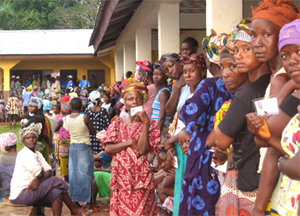 UNIOSIL-UNV
Parliamentary elections saw additional victory for the APC, which obtained 59 of the 112 “ordinary” seats, while the SLPP and the People’s Movement for Democratic Change (PMDC) received 43 and 10 seats, respectively. The 12 remaining seats were allocated to representatives of the Paramount Chiefs, elected in a separate election.
The elections were largely considered “peaceful, transparent and credible” by national and international observers,[1] notwithstanding isolated clashes between political party supporters, irregularities in some areas, logistical difficulties due to weather conditions and poor infrastructure. The 75 percent turnout rate on Election Day demonstrated the determination of the citizens of Sierra Leone to participate in free and fair elections as well as their confidence in the institution in charge of the electoral process. Earlier this year, 91 percent of the 2.8 million eligible voters (of which 49 per cent were women) turned out to register during the voter registration exercise.
Under the leadership of NEC Chairperson Ms. Christiana Thorpe, the professionalism and dedication of NEC staff, including 37,243 polling staff, were the determining factors of success in this election. Other entities, such as the Political Parties Registration Committee (PPRC), the national and district Political Parties Code of Conduct Monitoring Committees (DCMC) and the Sierra Leone Police (SLP) played a crucial role in mitigating intra- and inter-political party disputes and diffusing election-related tensions. These actions greatly contributed to the level of peace during elections.
The single biggest setback, however, was the failure of political parties to nominate an equitable number of female candidates. As a result, out of 556 candidates for the parliamentary election, only 64 were women and no female candidate participated in the presidential race. This situation directly contributed to a 12 percent decrease in the number of elected women, with only 16 deputies in the current Parliament.
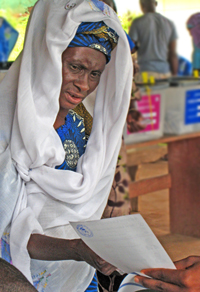 UNIOSIL-UNV Following a request from the Government of Sierra Leone, the United Nations (UN) provided assistance in preparation and execution of the elections. This was provided through the UN Integrated Office in Sierra Leone (UNIOSIL), the UN Development Programme (UNDP) and the UN Electoral Assistance Division (EAD).
A team of 51 UN electoral advisers provided technical assistance to the NEC and to the PPRC throughout the electoral process. This assistance included:
In addition, UNDP-Sierra Leone managed a basket fund aimed at supporting the electoral process. This mechanism was used by several of Sierra Leone’s development partners to channel their financial contributions to the electoral process.
Throughout the electoral process, the Executive Representative of the Secretary-General, Mr. Victor Angelo, and the NEC Chairperson jointly chaired meetings bringing together domestic and international stakeholders. During the electoral campaign, the UN radio produced election-related programmes and provided equal access and airtime to all political contestants.
The Way Forward Although Sierra Leonean electoral institutions demonstrated their ability to successfully run major electoral events, the NEC recently expressed the need for a certain degree of technical assistance from the international community for its 2008 local elections. The local elections will be instrumental in strengthening local democracy and governance in the country. To ensure sustained peace, the new government, in collaboration with international partners, should devise a programme for long-term, sustainable national electoral capacity building in Sierra Leone for the NEC and other institutions. [1] Some 8,980 domestic observers from 53 organizations and 447 international observers from 26 organizations (including the ECOWAS, the European Union, the Commonwealth, NDI, the African Union and the National Election Watch) monitored the elections. Iraq’s Election Commission Battled Fraud in 2005 Election CycleOne of the most important elements of a post-conflict election is public trust in the process. If citizens and rival groups have confidence that an election has been free and fair, they are less likely to reject the election and turn to violence to secure outcomes they view as just. Unlike some of Iraq’s other public institutions, the country’s Independent Electoral Commission (IECI) successfully delivered its services—three elections in 2005—whose outcomes Iraqis appeared to trust, as evidenced by their growing participation rates over the course of the year. Its ability to generate that public confidence has several causes, but its battle against electoral fraud was one important, and often overlooked, factor.
Mechanisms to Build Voter Trust in the Process
Electoral fraud not only can impact the number of votes a party/candidate receives but also (if widespread enough) can de-legitimize a post-conflict election and lead to renewed violence. The IECI recognized the importance of establishing mechanisms to protect against fraud. Just as importantly, it understood the importance of informing the public about these mechanisms and implementing a complaint adjudication process to respond directly to citizens’ concerns.
The IECI used a range of mechanisms to reduce the opportunity for fraud and identify it should it occur. These include:
Most of these mechanisms function out of the public eye, with the significant exception of the process of receiving and adjudicating complaints. In practice, complaints rarely lead to discoveries of fraud that actually impact the outcome of an election. This is generally the case because, if complaints uncover fraud, it affects fewer votes than are needed to change the allocation of seats. In Iraq, this was the case. The monitoring of polling station tallies identified problems that complaints did not, and more ballot boxes were voided as a result of that mechanism than as a result of complaints.
However, the complaint often confirmed suspicions that arose from the tally room audits, and tally sheets often definitively confirmed or negated the allegations in a complaint. The complaint process allows citizens and parties the opportunity to be part of the battle against electoral fraud and therefore can play an important role in building public trust in the electoral system. The process of collecting and adjudicating complaints—if conducted properly—accomplishes three goals that are important in the transition from conflict to peaceful governance: (1) it helps establish trust between citizens and their government, which is a prerequisite to stability,[1] (2) it demonstrates that the election administration does respond to citizen concerns, and (3) it is an opportunity for a government, by allowing an independent election process that includes complaints, to demonstrate its institutional integrity and transparency.
This is certainly not to say that an electoral complaints process can solve the ills that are endemic to failed states, but rather the process offers the public a window into the performance of a transitional institution as it seeks to build confidence in government in the midst of what is hoped will be a transition to peace.
The Election Complaints Process
The IECI faced many challenges that limited its ability to establish the mechanisms responsible for adjudicating election complaints. For example, the small number of experienced election workers available limited the IECI’s ability to process complains as rapidly as it wished. In addition, the security situation limited the number of people willing to work in the Green Zone (the heavily fortified area where the Commission is located).
However, the IECI did establish workable procedures that its available staff could carry out and achieved some notable successes. According to the International Mission for Iraqi Elections, making clear which organizations have jurisdiction over the different components of the complaints procedures is key to the success of the process. They found that the IECI had established a solid legal framework that generally defined clear jurisdictions. In addition, the legal framework gave the IECI the authority it needed to act effectively to investigate and resolve complaints.
Submitting complaints
The complaints process improved incrementally with each new electoral event in 2005. For the October referendum and December legislative elections, Iraqis were offered several methods to submit a complaint: (1) they could complete a complaints form at the polling station, which was placed with the counting forms, (2) they could submit a handwritten complaint at the governorate or national electoral offices, or (3) they could submit a complaint by email. To ensure the complaint was credible, it had to meet several conditions. First, it had to be filed by a direct witness whose name was stated (though not made public) and second, it had to be submitted within three days of the incident.
In the December elections, complaints received at the polling stations were put in a tamper-evident bag (rather than an envelope as previously) for more secure transportation to the complaints offices.
Processing complaints
Both the ratio of complaints to staff and the desire to process complaints expeditiously required that the IECI develop a method to prioritize complaints and quickly identify and investigate those that could affect a result. A team made up of an Iraqi lawyer, an international legal expert, and a translator divided the complaints into two categories: “red” and “non-red.” The team’s goal was to ensure that every complaint was seen within two hours of receipt.
“Red” complaints were issues such as interference with a ballot box before or after polling hours, which affected a significant number of ballots and therefore could impact an election’s outcome. “Non-red” complaints might be incidents that, although serious breaches of election law, impacted only a few votes and therefore were unlikely to change any results.
Corroborating complaints
Every time a red complaint was identified, complaints staff would check with the audit process, tally center staff, and observers to see if other reports from the same area could corroborate the submitted complaint. Despite these efforts, it was not easy to substantiate claims in a country where the rule of law was barely functioning.
In the December elections, 58 complaints were classified as “red” and investigated. Many of them resulted in the cancellation of polling station results and/or the punishment of election officials.
Types of complaints
The IECI received complaints covering a wide range of offenses, including ballot box stuffing/theft, tally sheet tampering, intimidation, violence, voter list deficiencies, shortage of ballots, multiple voting, improper conduct of the police and Iraqi National Guard, voting by security forces who had previously voted (on the special voting day), campaigning within polling centers, and campaigning on the two days of prescribed silence before election day.
In December, many complaints came from a few geographic areas, where local actors had learned to stuff ballot boxes with fraudulent ballots more effectively from the experience of their fellow citizens in January. By October, ballot stuffing had become more sophisticated. In several locations, people stuffed the boxes before the polling center opened. In doing so, some of them created a vote distribution that was not credible, revealing their fraud. However, in one instance, aware of this potential problem, a group ensured a ballot box had about 400 ballots “cast” for one party and about 100 for other parties (polling stations usually had about 500 registered voters). However, their activity was detected through complaints and the box in question was voided. Other less experienced con artists completed forms showing 600-nil results, an optimism that was revealing.
The benefits of good planning and experience
The IECI’s experience over the course of the three 2005 elections and its establishment of solid procedures paid off. Even in December 2005, when the IECI received 1,985 complaints, the complaints office was able to classify, investigate and act on the “red” complaints within 15 days of election day. (The marked increase in complaints, from 158 in October, does not necessarily indicate more problems with the electoral process; almost certainly, it indicated a greater public awareness of the complaints process.)
Iraq’s experience shows that a healthy complaints process that functions efficiently and quickly can result in a public feeling that the process was generally fair and that fraud was often or usually detected. Despite initial objections about the handling of complaints by losing parties, these groups eventually accepted that it had been the voters, not the handling of complaints, that had reduced their share of the vote. The degree of public trust created may be debated, but we argue that the complaints process contributed to the successful administration of Iraq’s 2005 elections.
One key to that success seems to be the speed of the process. In Iraq, the prioritization of complaints that might impact election results proved effective in moving the process forward. However, the volume of complaints and short timeline means that the IECI will need a substantial staff (clerical and legal) to register, organize, and process complaints in the future.
The complaints process cannot always offer a remedy in post-conflict settings—and the public should understand this—but it can be effective in neutralizing fraud and bias, which can be a first step towards encouraging rival parties to accept election results and move towards resolution of their difference through legal, rather than violent, means.
The International Mission for Iraqi Elections evaluated all three elections of the 2005 cycle (including their complaints procedures) and issued several reports about their conclusions. Michael Clegg is a lawyer and election expert with IFES. Langdon Miller is a Program Coordinator in IFES’ Europe & Asia division. [1] Ashraf Ghani, et al., “An Agenda for State-Building in the Twenty-First Century,” The Fletcher Forum of World Affairs 30:1 (Winter 2006). UN Offers Support to Timor-Leste for 2007 ElectionsTimor-Leste has been a sovereign nation for five years and the United Nations has been working to enable the country’s electoral institutions to mount free and fair elections. In this way, the UN is working to build public confidence in the electoral process and thereby promote the peaceful continuation of the country’s political development. Timor-Leste Develops Its Electoral Infrastructure
 The presidential elections on April 9th saw a large turnout, and voters waited patiently for their chance in the voting booth.
The local elections were the first conducted in accordance with election law adopted by Timor-Leste’s legislature. In addition, by that time, the Timorese government had established the Technical Secretariat for Electoral Administration (STAE), which was given the responsibility to organise and carry out electoral processes as well as to consult and provide support in electoral matters for all elections and referenda. Because the constitution called for an independent organ to supervise voter registration and voting, the National Electoral Commission (CNE) was temporarily created specifically to supervise the electoral registration and regulations governing the 2004–2005 local elections. (On 15 January 2007, the CNE was re-created as a permanent body.)
Since 2005, and in line with its mandate as the country-level provider of democratic governance assistance to developing countries on behalf of the UN system, the United Nations Development Programme (UNDP) office in Dili has been working with the government and electoral authorities to provide longer-term support in voter registration, voter education, electoral administration and other processes. This work was in anticipation of the 2007 elections but also aimed to help national institutions acquire the skills needed to prepare and administer elections into the future.
Violence Alters Electoral Assistance Plans
However, the UN’s assistance strategy shifted when, in April and May 2006, violence broke out in Dili. Rooted in citizens’ frustration with poverty and unemployment as well as in tensions dating back to the struggle for independence, the violence led to killings, looting and burning of private homes and public institutions. On 11 June 2006, the Timorese government requested that a “robust United Nations police, military and civilian mission” be established in their country.[1] In response, the UN Security Council established the United Nations Integrated Mission in Timor-Leste (UNMIT).
The United Nations also stated that it “further encourages Timor-Leste to enact a set of electoral legislation which provides for the 2007 elections to be supervised, organized, administered and conducted in a free, fair and transparent manner, with due respect to the need to establish an independent mechanism, and reflects general consensus within Timor-Leste regarding the appropriate modalities for the 2007 electoral process.”[2] Given the presence of both UNMIT and UNDP in Timor-Leste, the responsibility for various aspects of electoral support needed to be properly divided between the two.
UNMIT Support for the 2007 Elections
 On April 9, Timorese voters began queuing long before the polls opened.
UNMIT was charged with providing technical/logistical support to the electoral process, but it also concentrated its efforts on promoting public confidence in Timor-Leste’s electoral institutions. It considered four different methods of achieving its goals: (1) providing technical electoral assistance; (2) observing the electoral process; (3) “certifying” the electoral process; and (4) administering the elections itself. The fourth option, a UN-administered electoral process, had the disadvantage of building little or no local capacity to hold fair and transparent elections in the future. The best way to promote capacity-building as well as the integrity of the electoral process was a mix of options one and three: technical electoral assistance combined with “certification” of the electoral process.
Certification Process
Thus, the UN deploys a team of three experts to Timor-Leste at the end of each phase of the electoral process to determine whether matters are proceeding in a satisfactory manner. The following elements were considered for certification: (1) legal framework; (2) electoral authorities; (3) voter registration; (4) political party and candidate registrations; (5) campaign period; (6) polling-day activities; (7) ballot-tabulation procedures; and (8) adjudication of election challenges.
Technical Assistance
Alongside the certification process, technical assistance has been provided in the areas of general election administration and policy advice; legal framework (including regulations and procedures); voter registration and information technology; gender issues, including promoting the equal participation of women; operational planning and logistics; training; and field operations. UNMIT is also providing STAE and CNE with a total of 285 international experts in those aforementioned areas, 250 of whom are UN volunteers.
UNDP Support for the 2007 Elections
To respond appropriately to the Timorese government’s request for electoral assistance and at the same time complement UNMIT’s activities, UNDP has focused on (1) developing the institutional capacity of Timor-Leste’s electoral management bodies and (2) meeting the long-term needs of Timorese civil society groups involved in the electoral process. Its goals are to improve Timor-Leste’s ability to meet international standards with respect to legal and institutional components of the election process, strengthen the capacities of its electoral management bodies, and promote more effective donor coordination.
 A young Timorese voter makes her choice for president.
Assistance to STAE and CNE
In activities that complement those of UNMIT, UNDP has provided the STAE and CNE with international advisors knowledgeable about voter education, graphic design, political parties, international/domestic observers, and media and has supplied funding for local staff in Dili and the districts. In addition, UNDP has and will continue to (1) help procure equipment and print voter registration forms, (2) enable effective communications for CNE and STAE headquarters by supplying landlines and mobile phone cards, and (3) print voter lists.
Voter Education
UNDP’s voter education advisor has counselled STAE on strategies to increase citizens’ awareness of voter registration. For example, the advisor discussed the most effective types of voter education messages and mechanisms for disseminating them. With this assistance, STAE designed and produced posters and TV/radio advertisements that educate voters about the registration process. Arrangements were also made with the national TV/radio agency (RTTL) and community radio stations to broadcast STAE’s information about voter registration. In addition to these national channels, the UNDP advisor worked with UNMIT to ensure that voter education materials were distributed through the network of UNMIT volunteers in the districts. To develop local capacity to mount future voter education programs, 13 district voter education officers were recruited to work with STAE during these voter education activities.
Media
UNDP staff have worked closely with STAE and CNE to increase public awareness of the electoral process through widely publicized events. They have also endeavoured to increase journalists’ capacity to communicate this information effectively and impartially to the public, even working with the electoral authorities to establish a media code of conduct. To further assist the media, UNDP staff have helped establish sustainable mechanisms to distribute information about STAE and the CNE to local media in Dili and the districts, including creating a Web site that provides content to both journalists and voters.
Coordination of International and National Election Observers
UNDP’s program has also supported and coordinated the activities of both international and national election observers. Past experience in Timor-Leste suggests that between 150 and 200 international observers may come to observe parts of the 2007 election cycle. The International Observer Coordination Centre will provide them with briefings, access to logistical and demographic information about Timor-Leste’s 13 districts (geography, climate, population centres, accommodation, transport, communications, etc.), and information about the electoral process (laws, regulations, procedures, timetable, candidates, etc.). The Centre will be a place where observers can seek accreditation from STAE and security updates from the UN Police. In addition, it will provide a location where observers can coordinate their deployments to enable maximum coverage on election day.
As for national observers, contacts have been made with the principal coalition of national observers in order to plan and coordinate with reference to registration, training, accreditation, and the socialization of these processes.
Candidate and Political Party Resource Centres
As part of the UNDP effort to support candidates, parties and party coalitions competing in the 2007 presidential and parliamentary elections, resource centres will be established in Dili and three additional districts (Baucau, Oecusse, and Maliana). These centres are designed to enable candidates and parties to participate more effectively in the political process. In them, candidates/parties can find material support and training in message development, preparing campaign staff, voter outreach, and other skills and campaign issues. The resource centres provide equal access to office supplies, computers, printers, photocopy machines, land/fax/Internet lines (where possible), and professional support in the design and reproduction of campaign materials (through the Dili centre). Training is also being given to parties in each of the country’s 13 districts.
Relevant Legislation
Carlos Dinis works with UNDP’s Office in Timor Leste as a Programme Officer in Democratic Governance Unit. Linda Maguire works with the UNDP’s Democratic Governance Group (part of the Bureau for Development Policy) as an Electoral Advisor. [1] Report of the Secretary-General on Timor-Leste pursuant to Security Council resolution 1690 (2006), 8 August 2006.
. [2] Security Council Resolution 1704 (2006), 25 August 2006. . Strengthening Political Parties for Sustainable Democracy in BotswanaThe southern African region has made significant democratic achievements since the 1990s following a wave of ferocious internal conflicts in Angola and the Democratic Republic of Congo. In order for this progress to be sustained, the region requires viable political parties, which play a key role in a democracy. The majority of parties currently in power in the Southern African Development Community (SADC) region—such as the African National Congress in South Africa, the Botswana Democratic Party (BDP), the Lesotho Congress for Democracy, the Frente de Libertação de Moçambique, Zambia’s Movement for Multiparty Democracy, and Namibia’s SWAPO Party—are powerful while their opposition parties are generally fragmented and weak. There is a clear need to provide technical assistance to opposition parties so that they can pose a significant challenge to the ruling parties in elections, but even ruling parties need help to improve their ability to carry out their mandates.
It is against this background that the Electoral Institute of Southern Africa (EISA) developed a programme aimed at strengthening political parties in the SADC region. This project is currently being implemented in Botswana, Lesotho, Swaziland, and South Africa. It focuses on five key components: gender representation, intra- and inter-party democracy, outreach activities, conflict management, and party leadership. This paper presents a brief case study of the project activities in Botswana.
Intra- and Inter-party Democracy
Despite Botswana’s much acclaimed political stability, its parties have always faced the problem of establishing democratic practices that support cooperation both inside and between their organizations, i.e., intra- and inter-party democracy. Instead, its parties have suffered the impact of rampant factionalism. At independence in 1965, the two major parties were the Bechuanaland Democratic Party (BDP) and the Bechuanaland People’s Party (BPP). (These parties are now called the Botswana Democratic Party and the Botswana People’s Party.) Prior to the 1965 elections, the BPP divided into two factions, which diminished its electoral strength and thereby gave the BDP an edge (Somolekae 2002; Selolwane and Shale 2007). In 1966, dissatisfied with the BPP’s factionalism, some of its members formed the Botswana National Front (BNF), hoping it would unite the splinter groups. However, the BNF did not succeed and instead fragmented into at least seven different parties itself.
Even after these many splits, clearly Botswana’s politicians had learned no lessons about how to remedy intra-party conflicts. Over the years, they have not created any mechanisms that would allow them to circumvent party infighting. Such factionalism continues to be widely acknowledged as one of the major challenges of Botswana’s party politics.
The Mirage of Party Unity
Four decades after independence, the BDP remains comfortably in charge of the government, while the opposition has continued to fragment into smaller parties with trivial electoral impact (judging by the number of votes they received in the 2004 elections). Although part of the BDP’s dominance is attributable to Botswana’s use of the first-past–the post electoral model, this electoral system is not the only factor that makes it difficult for opposition parties to make any headway in the polls. In addition, a lack of party funding and the external regulatory framework equally affect the performance of parties.
Despite these realities, the Achilles heel of the opposition parties is their failure to cooperate and form coalitions. Had opposition parties done this in the past, they would have won some constituencies from the ruling party (judging by their combined 2004 election results). Instead, opposition parties have a history of reneging on alliance agreements on the eve of or immediately after elections. Examples include the 2004 pact between the Botswana Alliance Movement (BAM), BNF, and BPP and the 2005 memorandum of understanding signed by BAM, the Botswana Congress Party (BCP), BNF, and BPP. In both instances, the party leaders were not able to transcend their narrow self interests for the sake of broader party unity. (For a more detailed discussion of this issue, see Selolwane and Shale 2007).
Given this background of party and coalition disunity, EISA conducted a workshop for political parties in Botswana in December 2006 with the objective of providing a platform for parties to discuss issues of common interest. In addition, participants were encouraged to identify and prioritise their capacity-building needs related to the program’s five primary components: gender representation, intra-/inter-party democracy, outreach activities, conflict management, and party leadership. The following sections describe the main issues that arose during the political parties’ workshop discussions.
Diagnosing Challenges
The workshop identified a number of challenges facing Botswana’s political parties, the most important of which were (1) the complex historical role of political parties and (2) inadequate governance mechanisms. In Africa’s colonial history, parties often played one of two roles, either they were created as an instrument to transfer power from colonial regimes to the locals or they were organisations formed by locals to fight colonialism. However, once colonialism—the original reason for the parties’ creation—had ended, they came to be seen as impediments to “nation building and development” because they were seen to perpetuate ethnic differences by serving the interests of a single ethnic group rather than the interests of the country as a whole.
With respect to party governance, workshop participants agreed that political parties needed greater internal democracy in the election/selection of party leaders. Much intra-party conflict is the result of power struggles between leaders, which leads to party splits. They also suggested that parties need more clearly defined governance structures, with clear horizontal and vertical linkages. (These governance structures impact much of the party’s function, including how women and young people are represented within the party.) Participants also recognised a need for a membership database, which would let party members know how many rank-and-file members they have and help them conduct better outreach. In general, workshop attendees agreed unanimously that it was a lack of intra-party democracy that in turn created a lack of inter-party democracy.
Suggested Solutions
Political party representatives agreed that party members need to develop technical skills. These skills will be primarily developed through support and training in areas such as leadership, conflict management, fundraising, organisation/mobilisation, and negotiation (particularly with respect to forming alliances). Workshop participants also recommended solutions to the challenges described above. These proposed solutions are briefly discussed below:
Gender
Participants noted that gender inequality still exists within all party structures in Botswana. They therefore recommended that a training programme be developed on gender equality for both men and women.
Intra-party Democracy and Inter-party Relations
Participants recognised how intra- and inter-party conflict has impacted the country’s opposition parties. They therefore recommended that EISA assist parties in institutionalising party activities, developing a political education programme, and developing a code of conduct for parties.
Public Outreach
Participants indicated that outreach remains a challenge for parties. Therefore, they recommended that a training programme be developed that addressed (among other things) the design of effective mechanisms for recruitment and mobilisation. In addition, because electoral success often depends on the amount of preparatory work done between elections, participants asked EISA to help develop simple, user-friendly voter/civic education programmes for rank-and-file members across all parties.
Leadership
Participants acknowledged the lack of visionary leadership in political parties. While they indicated that in most cases leaders are born not made, they agreed that much could be done to improve a person’s inherent leadership skills. A person could learn through programmes on leadership skills, organisational management skills, project management skills, fundraising strategies, and capacity-building skills.
Conflict Management
Participants believed urgent attention should be paid to the conflict that has not only crippled parties but is threatening the country as a whole. They recommended that EISA develop a conflict management programme to help parties develop negotiation and mediation skills.
Conclusion
Overall, in uncovering Botswana’s political parties’ understanding of the challenges they face and the possible solutions available to them, the workshop was a success. It is quite likely that Botswana’s experience fairly closely resembles the experience of political parties throughout the region. In addition, these parties also face additional challenges, such as party funding and external legal frameworks, which were not a focus of this project but equally impact their political performance.
Victor Shale is a researcher at EISA. References
Selolwane, O. and V. Shale. 2007. “Inter-party relations and sustainable democracy in Botswana.” Journal of African Elections. 5(2) “Special Issue on Botswana” (forthcoming). Somolekae, G. 2002. “Botswana.” In T. Lodge, D. Kadima and D. Pottie. Compendium of Elections in Southern Africa. Johannesburg: Electoral Institute of Southern Africa. Post-Transitional Elections in the Democratic Republic of Congo
Historical Background
The DRC is emerging from decades of dictatorship and misrule, which has been worsened by years of civil war. It gained independence from Belgian rule in 1960, but its early days as a sovereign state were marred by political and social instability, which saw Colonel Joseph Mobutu seize power in a 1965 military coup. For 32 years, the Mobutu regime ruled a single-party state characterised by violent repression of any form of political opposition. In 1996, Laurent Kabila began a rebellion (backed by Rwanda and Uganda) that toppled Mobutu from power the following year.
Despite the popular acclaim that greeted their accession to power, Kabila and his government did not meet the democratic aspirations voiced by the Congolese people. In 1998, the regime was challenged by an insurrection again backed by Rwanda and Uganda (whose governments had fallen out with Kabila). Other neighbouring states, including Zimbabwe, Angola, Namibia, and Chad, entered the conflict militarily in support of the Kabila administration. In 2001, Laurent Kabila was assassinated, and his son Joseph Kabila replaced him as head of state.
The new president successfully negotiated the withdrawal of foreign forces occupying the eastern DRC and adopted a more conciliatory approach to the conflict, one based on dialogue. In 2002, the Pretoria Accord (which resulted from the negotiations of the Inter-Congolese Dialogue) was signed by all belligerent parties, the political opposition, and civil society to end the fighting and establish a government of national unity. Known as the “Global and All-Inclusive Agreement on the Transition,” the accord was a roadmap for the DRC’s transition to a stable, peaceful, and democratic state. It provided that political, military, and economic power be shared by the former belligerents, civil society, and the political opposition during a two-year transition period, with two possible six-month extensions. Within this time, a referendum on the post-transition constitution and general elections were to be held.
The Transitional Political Dispensation
The DRC transition process formally started on 30 June 2003 with the installation of a transitional government, which was a political compromise between the five main armed groups. With regard to the executive branch of government, the transitional agreement established a political system known as “1+4.” In this system, President Kabila was supported by four vice presidents, each responsible for a particular commission. Legislative powers were vested in the transitional parliament, which was inaugurated in Kinshasa on 22 August 2002 and consisted of the 500-seat National Assembly and the 120-seat Senate. Seats in these chambers were allocated according to a quota agreed upon by all signatories to the Pretoria Accord. The primary mandate of the transitional institutions was to bring the country to a democratic dispensation through competitive multiparty elections
Voter Registration
With the electoral schedule set, the next challenge was to establish a voter registry. The last population census had been conducted in 1981, making existing demographic records unreliable and outdated. This situation was made more complicated by the fact that there was no system in place to control the flow of refugees, caused by the region’s recurring wars, across the DRC’s borders.
As a result, during the transition, it was debated whether or not voter registration should be preceded by a national census. Although it was recognised that conducting a general census before voter registration would be ideal, technical and financial challenges (as well as the relatively short duration of the transition period) forced the CEI to opt instead for voter registration using strict criteria to identify and register prospective voters. To register, a person had to be a Congolese citizen and reside in the DRC during the registration process. As dual citizenship is prohibited in the DRC, only people holding Congolese citizenship (and no other) were allowed to register. The minimum voting age is 18.
Out of an initial estimate of 28 million potential voters, a total of 25,021,703 citizens registered to participate in the referendum and the general elections.
The Constitutional Referendum
The first electoral exercise was the constitutional referendum, which was held over two days, on 18 and 19 December 2005. The vote passed with relatively few security incidents, despite fears that the opposition’s call for a boycott and the volatile security situation in the eastern DRC would lead to disturbances. It is worth mentioning that opposition parties, particularly the Union pour la Démocratie et le Progrès Social (UDPS), had called for a boycott not only of the referendum and elections but also of the voter registration exercise, claiming fraud and irregularities in the electoral process.
The polling was generally free of major problems, although some technical flaws and voter intimidation were observed in the process. The size of the country posed great challenges given the lack of effective logistical, communication, and transport facilities. The final results indicated that the people of the DRC endorsed the new constitution, thus laying the foundation for the country’s first democratic elections since independence. The CEI released results that showed that 12,461,001 (84 percent) of the 15,505,810 Congolese who took part in the poll voted in favour of the post-transition constitution, while 2,319,074 (16 percent) voted against it. The post-transition constitution was subsequently promulgated on 18 February 2006.
The referendum was a momentous step towards the organisation of general elections in the country. Its success marked a significant turning point in the history of the DRC by giving the Congolese the opportunity to democratically choose their system of governance. It also gave the CEI and other electoral stakeholders the chance to test their capacity and improve their ability to deliver success in the forthcoming elections.
Post-transition Electoral System
The DRC’s post-transition constitution establishes a system in which the president is directly elected by an absolute majority for a five-year term. That is, for a candidate to be elected president of the DRC, he/she must secure at least 50 percent plus one of the total valid votes cast by registered Congolese citizens. If no candidate receives a simple majority in the first round, a run-off is scheduled between the top two candidates.
The members of the DRC’s bicameral parliament are elected through a proportional electoral system for five-year terms. They are elected from open lists, i.e., a party’s list of candidates or a list of independent candidates from which voters can select their favourite. (The DRC considered but decided against using closed lists, where votes are cast for parties rather than individuals.)
According to the electoral law, the 500 members of the National Assembly are directly elected from 169 districts by proportional representation. However, over a third of the electoral districts have only one seat. As a result, these districts elect Assembly members on a winner-take-all basis. With regard to the Senate, the electoral law stipulates that the 108 senators are elected by provincial assemblies from 25 newly designed provinces (four senators from each) and from Kinshasa (eight senators). Given that the 25 new provinces will take three years to establish, it was agreed that provincial and senatorial elections would be held on the basis of the current provincial configuration.
The General Elections
The first round of presidential elections was held concomitantly with parliamentary elections on 30 July 2006. Of the 269 political parties formally registered in the country, only 197 were able to put candidates forward. A list of 33 presidential candidates and 9,584 parliamentary candidates for the National Assembly was approved by the CEI and confirmed by the Supreme Court of Justice. Given the country’s huge size and its virtually non-existent infrastructure, this was obviously a major operation by all standards. Only President Kabila’s party, the Parti du Peuple pour la Reconstruction et la Démocratie (PPRD), managed to field candidates all 169 constituencies, while the Mouvement pour la Libération du Congo (MLC) had candidates in 160 constituencies and the Rassemblement Congolais pour la Démocratie (RCD-Goma) in 156. As for gender representation, only four of the 33 presidential candidates and 13.5 percent of legislative candidates were women.
The results of the July 2006 presidential elections indicate that of the 33 candidates, 26 received less than 1 percent of the total valid votes, while seven received votes ranging between 1 percent and 44 percent of the total. Therefore, the poll was inconclusive, with no outright winner with 50 percent +1 votes. Consequently, a second round pitting President Kabila against his main challenger, Vice President Jean-Pierre Bemba, was scheduled.
With respect to the parliamentary elections, President Kabila and his party failed to win a majority in the National Assembly; final results indicated his PPRD secured only 111 of the 500 seats. However, the broader political coalition backing him held a total of 224 seats. In contrast, Jean-Pierre Bemba’s alliance won approximately 100 seats. The Unified Lumumbist Party (PALU) garnered 34 seats, the former rebel movement RCD-Goma earned 15, and 63 seats went to independent candidates. Given that no political party or coalition won an absolute majority, small coalitions and independent candidates would join one of the two main coalitions. In the new Assembly, only 42 women held seats, making it an institution dominated by men, who held 92 percent of the seats.
The second round of the presidential election was held on 29 October 2006 at the same time as the provincial assembly elections. Incumbent President Kabila finally won the presidential race, and his arch-rival Jean-Pierre Bemba conceded defeat after several legal challenges to the validity of the results. Kabila’s election and the establishment of democratically elected assemblies at both the national and provincial levels have brought a formal end to the transition phase initiated after the Inter-Congolese Dialogue.
It is hoped that these historic elections will lead to a genuine democratic dispensation in the DRC and that they will contribute to restoring sustainable peace and achieving democracy in the Great Lakes region.
Dieudonné N. Tshiyoyo is the Senior Programme Officer of Elections and Political Processes at EISA. 2006 Yemen Elections Highlight Continued Progress
The 2006 elections were particularly complicated for three reasons. First, it was the first time that simultaneous elections were held for the presidency, the governorate councils and the councils of the administrative districts, which created significant logistical and voter education challenges for the SCER. Second, it was also the first time that the incumbent candidate of the ruling General People’s Congress (GPC), President Ali Abdullah Saleh, faced a credible opponent, Faisal bin Shamlan. Shamlan was endorsed by a coalition of opposition parties called the Joint Meeting Parties (JMP). Third, the elections were held in a political climate characterized by strong distrust of the SCER by the JMP. Although the SCER did make some sporadic efforts to promote a dialogue with the JMP, these attempts were not productive. Despite these challenges, the SCER succeeded in maintaining the technical progress it had made in the 2003 elections.
Preparing for the Elections
Yemen’s constitution requires the nine-member SCER to be independent and impartial. Operationally, the SCER conducts voter registration, elections and referendums through a series of three-member committees. Although not legally required, Yemen’s practice is for members of all these committees to be party representatives, according to proportions agreed by the parties. In 2006, the SCER appointed a supervisory committee for each of Yemen’s 21 governorates, a main committee for each of the 333 administrative districts, and a total of 27,010 male and female sub-committees for 5,620 voting centers.
The SCER’s efforts to administer the fairest elections possible were hampered by two realities in place before they began preparations. First, in 2005 the government—apparently without consulting the SCER—ruled that the 2001 election law would not be amended before the 2006 elections. This decision was very unfortunate, because it meant that issues raised after the 2003 elections (in IFES reports and elsewhere) would not be addressed in time for the new polls. In addition, the 2001 election law is not well suited to simultaneous elections and does not specifically recognize the multi-member districts used for some local council elections.
Second, the boundaries of the local electoral constituencies were not revised according to the newest census data. According to statute, the SCER sets these boundaries so that the population in each constituency varies no more than 5 percent. A population census was held in December 2004, but the final results were not issued until January 2006—too late for the SCER to revise the boundaries of all 5,620 local constituencies before the voter registration update. It is certain that the constituencies within many administrative districts do not currently comply with the statutory population requirements.
In its preparations for the elections, the SCER successfully distributed supplies, printed ballots, trained staff and registered voters, though it did encounter some unforeseen difficulties in voter registration. First, the SCER successfully managed the major logistical exercise of providing election supplies (e.g., ballot boxes, screens, forms, stationery, manuals, indelible ink, etc.) to the male and female sub-committees in each of the 5,620 voting centers. The UNDP was a major contributor of election supplies and also conducted voter education on behalf of the SCER.
Second, the task of printing the ballot papers was a major undertaking, and one tied to very tight timeframes. All ballots were printed centrally and distributed to the 27,010 sub-committees at the voting centers according to the number of voters registered with each sub-committee. The SCER contracted a private printer for the presidential ballot papers, but it printed the 333 different governorate council ballots and the 5,620 different district council ballots. Different colored security paper was used to distinguish each type of ballot paper. Despite the significant logistical challenges, the SCER was able to distribute the ballots as planned.
Third, the SCER and its staff needed to be well trained, which is a crucial ingredient in the efficient, effective and professional administration of elections. In cooperation with the UNDP Election Support Program, IFES developed, translated and implemented a SCER Professional Development Course that combined modules from IFES’ BEAT (Basic Election Administration Training) program and the BRIDGE (Building Resources in Democracy, Governance and Elections) program, which was jointly developed by UNEAD, International IDEA and the Australian Electoral Commission. International trainers conducted two workshops, each for 35 mid-level SCER staff, using Arabic training resources that can easily be adapted for use in other countries in the region. The effects of these courses were readily apparent in the much improved training program and materials the SCER implemented for the 2006 election committees.
Fourth, the SCER had to delay the pre-election voter registration update following the failure of the GPC and the JMP to agree on their proportions of relevant committee memberships. Eventually the SCER could wait no longer and appointed the committees from applicants for civil service employment. The total number of registered voters increased from 8.1 million in 2003 to 9.3 million in 2006. Following the update, 42% of registered voters were women, the same proportion as in 2003. Because there were large numbers of duplicate and under-age registrations, the SCER referred about 300,000 names to the public prosecutor, resulting in the removal of 250,000 names before the voter lists became final on July 26.
Candidates and the Campaign
While the voters had many candidates to choose from—five presidential candidates, 1,612 candidates for 431 governorate council seats, and 18,901 candidates for 6,896 administrative district council seats—a disappointingly small number of these candidates were women. Despite many pre-election statements by the GPC that at least 15% of its governorate council candidates and at least 20% of its district council candidates would be women, in fact it nominated very few female candidates. Islah (the largest party in the JMP) nominated no female candidates at all. Overall, 0.7 percent of candidates in 2006 were women, slightly more than at the previous local council elections in 2001 (though 35 women were elected in both years). This year, seven women won governorate council seats, and 28 women were elected to the district councils. There is certain to be renewed debate about legal changes to improve the participation of women as candidates before the 2009 parliamentary and local council elections.
During the campaign, the SCER is charged with ensuring candidates have equal opportunity to communicate their campaign messages through the official media. Unlike 2003, this year the SCER did ensure that opposition party presidential candidates received equitable coverage during the four-week campaign period. However, the fact that, by law, reporting of the president’s “daily activities” was not counted as part of his campaign meant that the incumbent received the most coverage by far. In addition, as in previous elections, government resources were used illegally to support the incumbent president and his party.
The governorate council and administrative district council elections were largely ignored by the media during the two-week campaign period. Candidates’ campaigns seemed to consist largely of display of campaign posters.
Voting, Vote Counting and Results
Despite some fears of violence, election day passed without major incident. On the whole, it appears that the SCER’s sub-committees did a good job, although there were reports that some members of female sub-committees were not well trained. Voters appeared able to cope with the three different ballot papers, and voter turnout was 65 percent (for the presidential election), compared to 77 percent for the 2003 parliamentary elections. However, as expected, there were anecdotal reports of irregularities and violations, e.g., non-secret voting, campaigning on election day in or near voting centers, and vote buying.
Vote counting started late and proceeded very slowly. First, all presidential ballots were counted and the results reported, then the governorate council ballots were tallied and then the district council ballots. The EU observer teams reported significant problems with counting in some areas where the counting was conducted in an extremely tense environment. There were also anecdotal reports of irregularities, such as the exclusion of party/candidate observers, the involvement of security forces in the counting process, and “creative” interpretations of the legal criteria for identifying a valid vote.
In the presidential race, incumbent President Saleh won 77 percent of the valid votes (compared to 96 percent in 1999). The JMP candidate, Faisal bin Shamlan, won 22 percent, and actually won a majority in 18 of the 333 administrative districts. The percentage of invalid votes was 3 percent (approximately the same as in 2003). In the governorate council election, the ruling GPC party won 85 percent of the seats, compared to 10 percent for JMP candidates and just over 5 percent for independent candidates (6 percent of votes were invalid). In the local council election, the GPC won 76 percent of seats, JMP candidates secured nearly 15 percent, and independent candidates got 8 percent (5 percent of votes were invalid).
Conclusion
Overall, the SCER’s conduct of the 2006 presidential and local council elections consolidates the progress it made in 2003. However, because the 2006 elections were much more technically complex, they can be seen as a significant advance over the 2003 polls. Nevertheless, some problematic issues must be dealt with before the 2009 elections. First, the election law must be amended, the boundaries of parliamentary and local constituencies must be revised (using a transparent process), and action must be taken to ensure the integrity of the voter registers. Second, ways need to be found to improve women’s representation as political candidates. Third, the SCER needs to deal with technical issues such as the counting/reporting processes and improving disabled people’s access to the electoral process. Finally, the SCER needs to be more determined to enforce the election law, to be seen as more independent, and to be more open and transparent, particularly in its relations with political parties.
Paul Harris was IFES’ Country Director in Yemen from June 2004 to December 2006. Mexico Adopts Innovations for the 2006 Federal Electionsby Carlos Navarro
The three federally elected offices—president, senator and deputy—are governed by different electoral rules. Mexico’s president is elected by simple majority for a period of six years. Presidents serve only one term as re-election is not allowed by the constitution. The 128 members of Mexico’s Senate are elected for six years using a mixed electoral system. Each of the 32 federal states elects three senators: two seats are assigned to the party or coalition with the most votes and the third seat is assigned to the party or coalition with the second largest number of votes. The remaining 32 seats are assigned according to the principle of proportional representation using a national list of candidates from each party or coalition. Congress’ 500 deputies are also elected using a mixed electoral system, though their terms of office are only three years. Three hundred deputies are elected in 300 single-member districts (each state is assigned a certain number of districts according to its population) using the principle of plurality (the candidate who receives the most votes wins). The other 200 deputies are elected using proportional representation: candidates on party lists compete for 40 seats in five multimember districts. Mexico’s July elections are expected to be highly competitive. Only registered national political parties are allowed to present candidates, and currently, there are eight registered political parties. Six of them already have parliamentary representation: PAN, PRI, PRD, PVEM, PT, and PC (see box for party descriptions). The other two parties—PASDC and PANAL—obtained their registry for the next elections only last year. PAN (National Action Party): center-right party of current President Vicente Fox and historically the leading opposition force to the PRI. Seats won in 2003 Chamber of Deputies election: 151 PRI (Institutional Revolutionary Party): left-of-center party, which won all presidential elections between 1929 and 2000. Seats won in 2003 Chamber of Deputies election: 224 PRD (Party of the Democratic Revolution): left-of-center party, founded in 1988 by a wide array of leftist parties and organizations, and former members of the PRI. Seats won in 2003 Chamber of Deputies election: 97 PT (Labor Party): formed in 1990, its roots are in a network of community organizations. Seats won in 2003 Chamber of Deputies election: 6 PVEM (Green Ecological Party of Mexico): first registered as a party in 1991, this party has allied alternately with PRI and PAN over the past 15 years. Seats won in 2003 Chamber of Deputies election: 17 PC (Convergence Party): describes itself as a “social democratic party”; first registered for party status in 1999. Seats won in 2003 Chamber of Deputies election: 5 PANAL (New Alliance Party): registered in 2005. PASDC (Social Democratic and Peasants Alternative Party): registered in 2005. While PAN is fielding its own presidential candidate, the PRI and the PVEM have chosen to form an alliance—the “Coalition for Mexico.” Likewise, the PRD, the PT and the PC have formed the “Coalition for Common Wellbeing,” and each of these coalitions is offering voters a single candidate or list. Newly registered parties are not allowed to form coalitions to present common candidates. As a result, the PASDC and the PANAL are running their own candidates. To maintain their party registry and the right to participate in the allocation of seats by proportional representation, a party must receive at least 2 percent of the votes in any federal election. The 2006 elections include significant innovations and present some important challenges for election administrators. First, between 2004 and 2005, the IFE conducted a redistricting process, redrawing the country’s 300 electoral districts. The review and adjustment of electoral boundaries was designed to ensure that each district had equal populations and therefore granted Mexican voters equal political representation and equal power at the ballot box. This new electoral geography corrected disparities created by significant social and demographic mobility; now, all districts vary no more than 10 percent from a pre-established average. In addition, 29 districts have been created—for the first time—with a predominantly indigenous profile. This redistricting will impact all races, but particularly those of the 300 deputies. Second, voting by Mexicans living abroad will be allowed for the first time. As approved by Congress in June 2005, expatriate Mexicans will have the opportunity to exercise their right to vote in the 2006 presidential elections. In addition, they will do so by mail, and the postal vote has never been used before in Mexico. To prepare for these new voters, registration was conducted abroad between October 2005 and February 2006. During this time, more than 40,000 Mexicans registered to vote abroad in the next elections. Third, because there had been concern about going further in establishing a level playing field among candidates, creating equitable campaign finance rules and disclosing political accounts, the IFE’s General Council recently approved a group of political finance regulations that represent an important step forward in this matter. These new regulations set more detailed guidelines for the oversight of national political parties’ financial resources and, for the first time, made clear political parties’ obligation to report on their campaign expenses before the election. For the 2006 elections, presidential candidates are required to report three times (March 30, May 30 and July 31), while candidates for deputy and senator must report twice (June 15 and July 31). The IFE will make all reports available to the public. These new political finance regulations were approved in November 2005 and were met by unanimous approval and supported by the political parties. In addition, the political parties are required to authorize the National Bank and Securities Commission to deliver information about their bank balances to the IFE—should it be necessary—in order to ease the exercise of its oversight responsibilities. In another step to increase political finance transparency in the upcoming elections, the IFE signed an agreement with the National Chamber of the Radio and Television Industry (CIRT) and the Special Prosecutor for Electoral Offenses (FEPADE) in January 2006. This agreement stipulates that all stations affiliated with the CIRT will provide the IFE with a copy of all service contracts signed with political parties between January and July 2006 as part of a campaign for federal office. This information—as well as the account information and party reports mentioned above—will give the IFE more tools for conducting oversight of campaign expenses, and consequently, will guarantee greater integrity and certainty in the electoral process. Carlos Navarro is the director of electoral studies of the International Affairs Unit (Director de Estudios Electorales de la Coordinación de Asuntos Internacionales) of Mexico’s Federal Electoral Institute (IFE). Parliamentary Elections in Moldova: Assessing the Results and their Implications for Democratization Interviews with John Todd Stewart, Igor Botan and Angela Sirbu Interviews with John Todd Stewart, Igor Botan and Angela SirbuGiven the proliferation of civic revolutions in regions of the former Soviet Union in the last two years, elections there command more attention than they once did. However, in Moldova’s March parliamentary elections, the Communist Party won in a poll that international observers considered to fairly represent the voters’ choices. In April, Elections Today spoke with John Todd Stewart—former U.S. Ambassador to Moldova and election observer during the recent elections—and Igor Botan and Angela Sirbu—both of whom are members of Coalition 2005, an association of 150-200 Moldovan NGOs set up to ensure free and fair elections—to find out more. Was the Communist victory a surprise? STEWART: Hardly. The Communists had a great deal going for them that the electorate could not ignore. First, they ran on an impressive economic record, at least by Moldovan standards. Moldova’s gross domestic product has grown by at least 6% a year since the Communists took over in 2001, the only period of significant growth since independence. Consumer prices had risen more than 30% in both 1999 and 2000, and after the Communists took over, the price increases fell to the low teens or lower. Moldova’s 662,000 pensioners now benefit from regular cost-of-living increases and receive their payments in a much more timely fashion. Critics correctly point out that the country’s improved economic circumstances are due in large measure to (1) the economic reforms pushed through by previous governments, (2) the large volume of remittances from Moldovans working abroad and (3) the energy-fed economic boom in Russia, which takes almost 40% of Moldova’s exports. However, analogous arguments are often heard in U.S. politics, where they fall equally flat. Second, the Communists remain the best-organized political party in Moldova. There were an impressive number of political party observers at the polling places I visited, but I cannot recall one in which there was not at least one Communist representative. Where personal contact is the most important means of political persuasion, a well-oiled machine is crucial. It appeared, moreover, that there was good, disciplined communication in one Russian-speaking village we visited between the Communist Party organization and the leadership in Chisinau. When the Communist mayor, a garrulous sort in his late 50s, heard that I was from the United States, he was quick to note that he stood with President Voronin and America against Russia! Third, the Communists benefited from the inertia, mixed with nostalgia in many cases, of older Moldovans who are accustomed to voting for the hammer and sickle—the Moldovan equivalent, if you will, of “yellow dog Democrats” in the American South. Both are dying breeds with diminishing political importance, but they still have a lingering effect on electoral outcomes. For example, our fellow observers commented that the returns from mobile ballot boxes, taken to shut-ins unable to come to the polls, had an exceptionally high share of votes cast for the Communists. Finally, the Communists had the benefit of incumbency, which they used wisely. Good examples were the meetings President Voronin held in the run-up to the election with Presidents Yushchenko of Ukraine, Saakashvili of Georgia, and Basescu of Romania, which were extensively—and properly—reported by the Moldovan media to the benefit of the Communists. However, the gold nugget was the signature of the EU/Moldova Action Plan shortly before the parliamentary elections. This agreement clearly indicates a path to membership in the European Union—provided Moldova complies with its provisions. To any voter interested in the country’s future in Europe, it was evidence that President Voronin could lead them into the promised land. During the election campaign, did the Communists take unfair advantage of their control of the government to win votes? STEWART: This is a more complicated matter, and here I must rely on the reports of the ODIHR long-term observers who arrived in time for the campaign, rather than just for the election itself. These observers reported instances in which local government authorities (presumably Communists or allies of the party) prevented the posting of campaign material, interfered with opposition party activists conducting legitimate campaign activities, prevented the lawful assembly of opposition meetings, forced civil servants to attend Communist campaign rallies and provided preferential access to public space for Communist activities. I believe these reports are accurate and represent a regrettable erosion of the standards upheld in the 1998 parliamentary election campaign, which I witnessed while ambassador. Still, I doubt that they materially affected the election results. However, the main charge leveled by ODIHR in this area concerns preferential access for Communist candidates to the electronic media. The facts provided in the preliminary findings of the International Election Observation Mission, which included several European groups in addition to ODIHR, are too complicated for me to present in detail, but the gist is that restrictive and sometimes ambiguous regulations on campaign coverage limited voters’ access to information and that coverage by Moldova 1, the public television channel, was “clearly biased in favor of the ruling party.” These findings are accurate, I’m sure, but I would argue that the real problem was not so much the election regulations or political influence at Moldova 1 but the generally poor quality of the country’s electronic media. Moldovan TV viewers watch “First Channel in Moldova,” which rebroadcasts Moscow’s ORT channel plus some local programming, 71% of the time as compared to a mere 8% for Moldova 1. This huge difference is not rooted in Russophilia but rather in the considerably superior production standards of ORT. Unfortunately, “First Channel” elected not to cover the campaign from a journalistic standpoint and did not even accept paid advertisements. Hence, unless voters sought out election programming on Moldova 1, they only received whatever ORT coverage was rebroadcast by “First Channel.” That coverage was an inadequate basis for voters to reach informed judgments. The final count against the Communists in this area concerns the spurious charge made by their executive secretary, Victor Stepaniuc (endorsed by President Voronin), that the Civic Coalition for Free and Fair Elections—”Coalition 2005” —was supporting an opposition party. The Coalition was, in fact, a grouping of almost 200 civil society organizations that monitored the campaign, especially media reportage, and published findings that were not to the Communists’ liking. Following the Communist broadside, the foreign embassies and missions in Chisinau rallied to the Coalition’s defense and the Communists had the wisdom to back off. Coalition 2005 went on to conduct an extensive observation effort at polling stations, appearing at well over half of those my partner and I visited, a percentage consistent with the country-wide figure reported by the International Election Observation Mission. They made a significant contribution to proper conduct of the voting. What do the results mean for the future of Moldova? STEWART: When we talked after the election, former President Lucinschi commented that the remarkable development in Moldovan politics was the reorientation of the Party of Communists toward Europe. I agree. Moldova now has a parliament where all three parties avowedly support the country’s Europeanization and have an excellent road map to guide them westward in the form of the Action Plan signed with the European Commission. It should now be possible to reduce the inter-party bickering that frustrated progress in past parliaments and approve the decisive measures necessary to transform Moldova into a truly European state. Two such measures come immediately to mind. The first is the creation, with adequate financing, of an independent, sophisticated and unbiased public national television service that Moldovans would want to watch. Assuming that the necessary expertise and ethos could be developed, Moldovan television could provide the broad but unbiased political coverage so lacking in the past campaign. Second, there must be a parliamentary consensus on a strategy to end the secession of Transnistria, another issue in which all three parties supposedly agree. The single biggest reason for the continued existence of the secession has been the lack of political will on the part of Moldova’s political elites to deal determinedly with the problem. A firm, united stand could also have a positive effect on Russian policy toward Transnistria. To sum up then, I am encouraged by the Moldovan election results—but only if the winning parties can now pull together in the national interest. If they can, Moldova could become a remarkable example of revolutionary progress without a revolution— and a model for other states in the region. From the perspective of Moldovan civil society, were the March 6th elections in Moldova free and fair? BOTAN: The elections were not fair. However, I could say that the elections were partially free, because there were no impediments for Moldovans residing in Moldova to participate in the elections. However, the government did little to ensure Moldovans abroad were able to vote. According to the electoral code, the government is obliged to ensure the right to vote. Their explanation was that they had no money and legislation does not provide very clear directions. We in civil society proposed absentee voting, but their answer was no. The result was that the most educated and active Moldovans (who are working abroad) could not vote. They only opened polling stations in embassies and consulates abroad. This means they had a polling site in the Washington, DC, embassy, which served the United States, Canada and Mexico. The same situation occurred with some European countries, and it’s obvious that this impacted the results. For example, in Moldova, Communists have 46% support while Christian Democrats have 9% and the Democratic Moldova Bloc has 30%. Abroad, the Communists generally earn 12% and the Christian Democrats and Democratic Moldova each receive 44%. So obviously it was not in the Communists’ interest to allow significant participation of Moldovans living abroad. SIRBU: When we talk about elections, we have to make clear that there are different stages. Election Day was fairly smooth, though there were many unanswered questions. But if we talk about the election campaign, there were serious problems. The mistakes observed in the 2003 elections were not corrected, and there was little education for Moldovans about the electoral process. The rules kept changing—in most cases at the last moment—so this created a lot of confusion and people did not understand what their rights were and what they should do to vote legitimately. For example, the Central Election Commission adopted a new rule stating that, after voting, each voter must receive a stamp in his or her passport in order to avoid double voting. But people reacted aggressively to this request because they didn’t understand it, and the officials offered very little explanation of how important this is and why it was necessary. How might the results of these elections change the political landscape in Moldova, particularly the relationship between the Communists and the opposition? BOTAN: Certainly the results of this election will have an important impact on politics in Moldova. The Communist Party lost 15 seats in this election; they have now 56 versus the 71 they had before. This time, they are unable to pass constitutional change without the support of the other parties. The news is that the Communist faction in parliament is no longer a monolithic bloc; they will have to negotiate with their new partner [the Democratic Moldova bloc], and this has inspired some confidence that the democratic process could get better. It is important, though, to note that all major parties had similar messages during the election campaign: European integration, a sound market economy, establishing social protections in Moldova, increasing salaries and so on. I think that civil society should remain vigilant but there are some good signs. SIRBU: We can talk about improvements only if we believe that the Communist Party’s new orientation is not just an electoral slogan but is actually politically real. Do you think President Voronin’s pro-Western stance is genuinely held? BOTAN: I think this is the most interesting question. In Moldova, the so-called political elite were educated in Soviet times. The majority of them are former Communists, many of whom, after the transition, just changed their label: Communist to Social Democrat, Liberal, etc. I believe that the great majority of them were relatively sincere. Their main concern was to remain in power so they could participate in the privatization process, the transformation of state property into private property. They formed clans around political parties and competed over said property. In between their struggles, there was some room for democratic development because they needed the support of the mass media, civil society, and so on. This is the essence of transitional progress in Moldova. The Communists came to power four years ago, and they promised to re-build socialism and communism but half a year later they realized they could not do it because Moldova is a small country that would be destroyed by “international imperialism” (as they used to call it), which could not stand a communist regime. So they decided to integrate into the European community. But Voronin emphasized that social protection mechanisms were very important to maintaining the electorate. The number of pensioners in Moldova four years ago was some 700,000. The number of voters for the Communist Party was 800,000. When Voronin realized that Russia was not interested in helping him [to solve the Transnistrian conflict, facilitate Russian access to Moldovan goods, etc.], this pragmatic politician switched allegiances. Why do I mention all this? Voronin changed pro-Russian slogans into pro-Western ones only on a rhetorical level. No laws were adopted that changed anything real. To the Communists, principles are not that valuable. For them, the main principle is to remain in power because remaining in power means their businesses will flourish. However, they understand perfectly that Moldova is a small country that needs international support. When the Communists realized that they wouldn’t get that support from Russia but they could get it from the European Union and the United States, they made a strategic choice and launched this idea of European integration. I will not trust their campaign promise until I see the law adopted by Parliament that obliges the government to undertake measures that orient Moldova towards European integration. Circumstances lead me to encourage the opposition and civil society to maintain a kind of intelligent pressure on the Communists to do what is needed. If the Communists want Moldova to be integrated into the European Union and steer Moldova in this direction, I would welcome it, though I would have to say to them “Okay, you’re doing a good thing for the country, but you are destroying yourselves because you cannot remain Communist and promote liberal values.” SIRBU: This [Voronin’s genuineness] is the crucial point here because in the last three years what we have seen is a double standard. There are two separate messages: one for the West and one for the people in Moldova. Even before the election, politicians made statements about the importance of becoming a member of the European Union, and at the same time, the government put political and economic pressure on the media. It even attempted to close down the alternative media. In Moldova, there is an imitation of a democracy. The government continues to use state media to discredit representatives of civil society who criticized them. This is reality. The members of the Communist Party in the parliament now are the same as before. Therefore, until we see things changing in reality, I’m skeptical that democratic standards will improve in Moldova. The most important thing now is to insist that democratic norms be respected in Moldova. This is the main challenge, I think: for civil society and for all people in Moldova to really ask for their rights and their lives to improve. John Todd Stewart served as U.S. Ambassador to Moldova between 1995 and 1998 and served as an election observer during the recent elections. He is now retired from the Foreign Service and does not, as a result, speak on behalf of the U.S. Government. Igor Botan is the executive director of the Association for Participatory Democracy “ADEPT” in Moldova and Angela Sirbu is the executive director of the Independent Journalism Center in Moldova. See http://e-democracy.md for an update on recent political events following the March election. First Female Legislator Takes Office in Ebonyi State, Nigeria
Although the 1979 and 1999 Constitutions underscored the equality of all Nigerian citizens, women’s participation in Nigerian politics is limited and political parties do not tend to put forward female candidates. Several domestic and international NGOs have been working to promote women’s political empowerment in Nigeria. One domestic NGO, DOVENET, hosted seminars on enhancing women’s participation in politics in Ebonyi State, which spurred participants to put what they had learned into action. Women rallied behind Obasi, helping her win by an overwhelming margin. In a post-election interview, Obasi said, “I honestly believe that DOVENET provided the motivation for women in Ebonyi State to campaign on my behalf and get me elected.” While the government has yet to put into force several international treaties protecting women’s rights (including the Beijing Declaration), President Olusegun Obasanjo has kept his promise to give 15% of federal appointments to women (though this falls far short of Beijing’s recommended 30%). However, women still lack representation in elected offices, and NGOs in Nigeria continue to work to replicate Ms. Obasi’s success in other states. For more information on women’s participation efforts in Nigeria, visit www.ifes.org/reg-activities/africa. Anatomy of a Civic UprisingAkayev had always seemed the most liberal of Central Asian leaders, but when his government’s carefully constructed façade of citizen involvement unraveled and uncovered his strongman tactics, it meant his political end. by David Mikosz The events of March 24, 2005, pushed Kyrgyzstan onto the world stage for a few brief days. Comparisons with the recent “civic revolutions” in former Soviet Republics like Ukraine and Georgia were inevitable but facile. Like all real political change, the Kyrgyz revolution was very much rooted in the details of Kyrgyz political life in the period since independence. It was not, as many observers have suggested, simply rooted in the discontent caused by poverty. While Kyrgyzstan is, indeed, a very poor country, the World Bank reports that its level of poverty is decreasing (it fell 10.9 percentage points between 1999 and 2002) and that, generally speaking, the poorest of the poor (i.e., those living in rural areas) have benefited. Instead, a key factor in the so-called “Tulip Revolution” was the cynical attempts by the former government to exploit civil society for its own benefit.
Elected as Kyrgyzstan’s first president in 1991, Askar Akayev initially appeared to be the most liberal of CIS leaders, and he allowed multiparty elections to continue. However, in the late 1990s, he began to limit—though not end—political and economic liberties. An accomplished politician (a fact too rarely noted), he thought that he could manage civil society without destroying it. But he was wrong. Akayev’s techniques were most often used to dilute or limit the messages of civil society (and thereby flummox the opposition) through GONGOs (government-organized nongovernmental organizations) and control of the media. Using these tools, the Akayev regime confused the public by creating an artificial dichotomy: when the opposition criticized the government, “others” were ready to stand up and support it. One Akayev GONGO was the Association of Non-commercial and Nongovernmental Organizations (or “the Association”). While authentic NGOs (like the Coalition for Democracy and Civil Society, or “the Coalition”) criticized the government, the Association condemned Kyrgyz NGOs’ use of foreign funds, even as it accepted money from the World Bank. In the 2003 referendum in which Akayev successfully increased his presidential powers, the Association played a vocal role and even “monitored” the election. Not surprisingly, the Coalition was critical of the conduct of the election, while the Association defended it. The Association provided Akayev a useful front though which to legitimize his political actions (for example, it sponsored a petition drive asking him to run again). Akayev also silenced opposition media through purchase, regulation or outright harassment. Some media outlets were bought by Akayev supporters, while Kyrgyzstan’s only independent publisher suffered mysterious power outages. Radio Free Europe lost frequencies from its Kyrgyz language version, and independent radio and television stations leasing government equipment fi rst abruptly lost and then regained their licenses. The government also used its position as an employer to compel state employees to demonstrate their support for the administration. For example, state employees (like teachers) had to attend pro-government demonstrations in order to receive their salaries. In 2003, my wife saw one of her primary school teachers in tears in the main Bishkek square “voluntarily” handing out leaflets in support of the President’s referendum. This compulsion was also present during the pro-government demonstration on March 22: teachers were told they would receive a salary only if they showed up. This sort of coercion was almost habitual, and the regime little realized that such public support was built only on a foundation of sand. So what went wrong? How could this accomplished politician— who had managed to confuse and outmaneuver the opposition for several elections—fail so completely in March 2005? The house Akayev built First, the public was deeply shocked at the disclosure by an opposition journal of pictures of a large house said to be for the president along with a clever poem listing all businesses supposedly owned by his family. A necessary fiction for many in Kyrgyzstan was that Akayev was a modest scientist (perhaps maneuvered by his smart family) who wanted nothing more than to guide the country in the right direction. The publication of photos of his palace exposed Akayev’s personal wealth, and Akayev himself seemed truly thrown by the intensity of the public’s disgust and anger. A run-off election Second, the government did all it could to promote the success of Akayev’s daughter in her campaign for a parliamentary seat in Bishkek’s University district, even eliminating strong competitors using administrative means and deploying university rectors to campaign for her. An exit poll conducted during the election (Kyrgyzstan’s fi rst) predicted that Akayev’s daughter would win the election with more than 55% of the vote. However, the actual count put her votes in the low 40th percentile and set the stage for a run-off. This news spread quickly and students in the district realized that they could vote for whomever they wished as long as they told the pollster they voted for the government candidate. Thus, they did not have to be part of Akayev’s civil society myth. This reality became clearer in one university, where rather than demanding or threatening them, the rector apparently beseeched and cajoled the students to vote the “right” way. More and more students began to see that they really could vote as they wished. In the end, students played a key role in the March demonstrations. The second round of elections in the University district was riddled with imperfections. Many people complained about fraud, such as people filming the casting of ballots and people cheating outright. In short, anti-opposition forces were obliged to turn to brute force to win rather than relying on their façade of civil society promotion. March 24th The detailed history of the events of March 24th remains for future writers. Too many questions are still unresolved. But a rough chronology of the events that day can demonstrate how the kinds of missteps described above prepared the way for Akayev’s departure. The demonstrators began their rally on the outskirts of Bishkek. They included people who had seen the candidates of their choice disqualified from the election, people who had purchased the opposition’s newspapers or people who were tired of government pressure. The group peacefully marched down the main street, Chui Avenue, past the Kyrgyz White House to the main square. The Kyrgyz White House was ringed by hundreds of riot police, but they peacefully let the demonstrators march by. Once inside the square, the demonstrators were confronted by government thugs who attempted to provoke a fight. (These strongmen were a revealing mutation of the GONGO idea mentioned above: rather than pretending to be civil society advocates, for the first time, the regime was using thugs—a sign they felt they were losing control.) Initially successful, the pro-government thugs were driven off by the numerically superior crowd. But this confrontation changed the mood of the crowd. They were angry, and they wanted to show their displeasure at the seat of power. Turning back, they walked the short distance to the Kyrgyz White House and began to demonstrate. In front of the Kyrgyz White House, the demonstrators and the security forces engaged in a dialogue and seemed to reach a compromise. However, a sudden cavalry charge of some 50 horsemen dispersed the crowd. It appears that Akayev chose this moment to flee the presidential residence in an armored truck. Surprised and afraid, the crowd poured back into the square, but moments later, realizing their strength, turned around and began to stone the horses and riders. The transition begins Despite Akayev’s initial democratic promise and many political gifts, this then was his political end. Unlike President Karimov in Uzbekistan, he had not relied on a powerful army or security services; unlike his President Nazarbayev in Kazakhstan, he did not have the support of numerous oligarchs who benefited from a growing economy; and unlike President Rakhmonov in Tajikistan, he couldn’t vilify his opposition as Islamic extremists. In the weeks following March 24, 2005, it was clear that whatever would come next, this was the end of the Akayev era for Kyrgyzstan. David Mikosz is IFES’ Country Director in Kyrgyzstan. For more information, visit www.ifes.org. Election Observation in West Africa: The ECOWAS Experienceby Tim Bittiger Election observation is a key element of building a stable democracy. In states that are undergoing democratic transition, election observers can build citizens’ confidence in the electoral process; while in states holding elections following a conflict, observers can help conflicting parties trust the election will be conducted fairly even if they do not yet trust each other. Since democratization began in Africa in the 1970s, international actors have observed elections (and provided electoral assistance) throughout the continent.1 However, recently African players have started to become more involved in the observation of African elections. They began as early as 1980, with the independence elections in Zimbabwe, but their work did not gain momentum until 2002, with Zimbabwe’s heavily observed presidential elections. Regional groups—like the Organization of African Unity (OAU), the Southern African Development Community (SADC), and the Economic Community of West African States (ECOWAS)—have moved election observation (and election assistance) to the core of their mandates in order to better enhance democracy, good governance and conflict prevention in their member states.2 This movement is important because, in the future, international observers and donors will hand over responsibility for election observation to Africans, who will choose their own approach in light of their thorough understanding of the African context. However, before this time, they will have to overcome a number of challenges in order to bring their practice of election observation in line with international standards. Some recent African observation missions have generated controversy over their effectiveness and credibility. For example, Western and African groups developed widely divergent assessments of Zimbabwe’s 2002 elections.3 More recently, ECOWAS’ report following observation (by 150 observers) of Togo’s 2005 presidential elections provoked international criticism for sanctioning a flawed election process.4 In fact, ECOWAS’ experience with election observation illustrates the challenges African organizations must overcome in pursuit of free and fair elections. The main issues facing ECOWAS are gaps in their observation methodology, conflicts of interest, inexperience and the absence of coordination with other electoral players.5 Methodology ECOWAS has not yet decided on a single approach to election observation that would be valid for each of its missions.6 Selecting a single methodology would give ECOWAS the means to consistently identify (1) minimum circumstances under which they would agree to observe an election; and (2) the scope of their mission, in terms of length of time in country and focus of observation efforts. The ECOWAS Protocol on Democracy and Good Governance does set out general principles for ECOWAS election observation.7 However, the document does not provide clear enough criteria and operational guidelines to serve as a checklist for observers. ECOWAS also lacks standard operating procedures that could facilitate the planning for observation missions in difficult terrain or challenging security environments. Finally, ECOWAS does not have a code of conduct that binds its observers to common rules and standards and ensures consistency in their work. In this respect, ECOWAS lags behind other African organizations, such as SADC, which have developed methodologies that are viable, albeit not always fully implemented.8 What hurts ECOWAS’ credibility the most is its lack of a long-term approach to observation. It is now generally recognized that observers must observe the electoral process—which can take up to two months—not just Election Day. ECOWAS currently sends missions for about 10 days, which is insufficient to make a credible assessment. While most western organizations now take a long-term approach, African organizations are generally still struggling to send observers for more than the two weeks surrounding Election Day.9 Consequently, the findings and assessments of African observers are often neither sufficiently detailed nor credible. Conflicts of Interest ECOWAS must address a conflict of interest between its dual roles as mediator and election observer in its 15 West African member states—as both roles are important aspects of its mandate to build democracy and ensure stability in the region. For example, in Togo earlier this year, following the death of long-time President Eyadema Gnassingbe, ECOWAS diplomats successfully negotiated a nine-step plan to hold presidential elections and then oversaw its implementation. However, an ECOWAS observation mission was also charged with making an independent assessment of the election process and all its players. Critics have accused ECOWAS of whitewashing the election outcome for the sake of maintaining stability in Togo and have questioned the credibility of its observer declarations. Similar scenarios could emerge in ECOWAS’ current mediation efforts in Liberia and Ivory Coast, where elections are imminent. Other organizations have faced similar problems—for instance, the Organization for Security and Co-operation in Europe (OSCE) in Bosnia and Herzegovina— but have since been systematically addressing conflicts of interest. Experience and Capacity Another reason why ECOWAS is still struggling to field an observation mission that meets international standards is its lack of experience and capacity. At the moment, the ECOWAS Secretariat in Abuja does not have an elections unit and therefore lacks the capacity to plan, mobilize and manage election observation missions. In addition, the organization does not have an adequate pool of trained, experienced observers from member states. Finally, ECOWAS has not taken full advantage of the recognized African expertise in the election administrations and civil societies of its member states. In view of the fact that ECOWAS has only recently undertaken observation missions, a lack of experience is not surprising. However, the organization might not have the time to let its ability grow gradually. West Africa has a busy election calendar and many countries in the unstable region will require outside observation of likely difficult polls. Regional Cooperation African observation of elections would be much improved if ECOWAS and other African organizations took a common approach to election observation.10 All too often, various observer groups have different standards for what they consider democratic elections. When—as a result—several groups issue diverging statements about the same election (as was the case in Togo in 2005), doubts are raised both about the competence of these groups and the fairness of the election. Such a situation also allows political parties in the host country to play one observer group off another for their own benefit. The good news is that ECOWAS and other organizations have committed themselves to cooperating with each other.11 In fact, in 2004, the United Nations initiated discussions on a global Declaration of Principles for International Election Observation. Most African organizations, foremost the OAU, are committed to signing the final document. However, as long as different groups have differing methodologies, capacities and expectations—as well as diverging political agendas—it will be difficult to reach agreement on a common line without compromising the position of individual partners. Moreover, ECOWAS and other international bodies should cooperate to a greater extent with local observer groups who represent civil society and know the local political scene and traditions intimately. Although much needs to be improved, the recent increase in election observation by African organizations is generally a positive development. ECOWAS and other African organizations have a clear mandate in this respect and should continue to take a comprehensive approach, integrating elections into wider conflict prevention strategies, albeit it with due care to avoid a conflict of interest for themselves. Assuming a role in elections gives African institutions the chance to take democracy building on the continent into their own hands and, with time, prove that they can do this in a responsible and coordinated manner. Clearly, African organizations understand the continent’s traditions, cultures and politics in a way that outsiders never will. Therefore, African observer organizations must receive all the support and encouragement they need to assume an increasingly central role in the observation of African elections. Tim Bittiger is a consultant for election assistance and organizational development. He has recently worked with ECOWAS to improve their conduct of election observation. Notes: 1 A standard publication on the topic is Jon Abbink and Gerti Hesseling (eds.), Election Observation and Democratization in Africa (London and New York, 2000). 2 See African Union - African Charter on Human and People’s Rights; Organisation of African Union/African Union - Declaration on the Principles Governing Democratic Elections in Africa – AHG/DECL.1 (XXXVIII); Norms and Standards for Elections in the SASDC Region – Adopted by the SADC Parliamentary Forum Plenary Assembly on 25 March 2001, Windhoek, Namibia; ECOWAS Protocol A/SP1/12/01 of December 2001 on Democracy and Good Governance, Supplementary to the Protocol relating to the Mechanism for Conflict Prevention, Management, Resolution, Peacekeeping and Security of December 1999; Harare Commonwealth Declaration, 1991. 3 Denis Kadima, African Election Observer and Monitoring Missions: Towards Best Practices and Common Standards (Electoral Institute of Southern Africa, Pretoria: 2000). 4 Serena Parker, “International Monitors Say Election Observer Guidelines Needed,” Voice of America News (30 April 2005). 5 These shortcomings characterize African observation efforts generally. See for example: Musa Abutudu, Monitoring and Observation of Elections in Africa (Pretoria, 2002). 6 Similarly, the OSCE’s Office for Democratic Institutions and Human Rights started observing elections in 1991 with only limited capacity and took until 1997 to develop the consistent methodology that has cemented its high reputation. Hrair Balian, Ten years of international election assistance and observation (Office for Democratic Institutions and Human Rights, Warsaw: 2001). 7 Abutudu, Monitoring and Observation of Elections in Africa. 8 SADC Principles and Guidelines Governing Democratic Elections, Mauritius, 2004; African Union - Guidelines for African Union Electoral Observation and Monitoring Missions – EX/CL/35 (III) Annex II. 9 O. Van Cranenburgh, “Democratization in Africa: The Role of Election Observation,” in Election Observation and Democratization in Africa, p. 29. 10 This, too, is a familiar challenge. Coordinating observation efforts among European organizations has not always been a common practice. 11 See for example, ECOWAS Protocol A/SP1/12/01, Section II, Article 16. Out-of-Country Voting in Post-Conflict Electionsby Ben Goldsmith Increasingly, elections are viewed as a crucial peace-building tool in post-conflict states. While the transition from non-democratic to democratic political traditions is rarely smooth, it is particularly challenging when the transition follows a war. However, post-conflict elections can jump-start the democratization process by offering all citizens the opportunity to be involved, and their involvement is critical to giving elected institutions the legitimacy they need to govern in often difficult circumstances. For this reason, post-conflict elections are often held earlier than some think they should be, sometimes even when widespread insecurity means that they cannot be genuinely free and fair.
Beyond financial and logistical concerns, the decision to organize external voting can also be politically difficult, especially when the external population is substantial in number. A large external population could change the outcome of the election, which may not be politically acceptable in-country. While it is rarely possible to enable all of the external population to vote, politically it may be easier to exclude all rather than include only some. Despite these challenges, there are often strong pressures to include external communities in post-conflict elections. Given the ongoing instability in the period immediately following the end of the conflict, those who wish to return home are often unable to do so even though they may have a great desire to be involved in post-conflict developments. Diaspora and refugee communities have often suffered greatly; in addition, they may maintain significant influence in their country of origin. Including external populations in post-conflict elections can also serve to re-establish ties between them and citizens in-country, which can be very beneficial for the reconstruction process. Diaspora populations have often developed financial resources and professional qualifications in exile that can be useful during rebuilding. Engaging them in the political process makes more likely their return and active participation in reconstruction. (The complexity and financial burden of external voting also affects the sustainability of such programs. While many post-conflict elections are heavily supported by the international community, once the initial elections have been conducted, this support diminishes. This can leave post-conflict countries financially and institutionally challenged to continue delivering external voting programs. However, it can easily be argued that external voting is more important in the immediate post-conflict elections and that subsequently, when a real opportunity for return exists, there is less reason for such external voting options. This reality mitigates the arguments on sustainability, although once a decision has been taken to enfranchise the external populations, it may be politically difficult to retract later on.) The OCV operations conducted in the recent Afghan and Iraqi elections were, in many ways, very different, but the experiences of these voting programs serve to identify many of the issues surrounding the conduct of OCV programs in post-conflict elections. Timeline Both the Afghan and Iraqi electoral administration bodies made the decision to enfranchise their external voting populations very late in the process. In each case, these complex programs had to be set up in approximately 80 days—an extremely tight timeline. With the Afghan Joint Electoral Management Body and the Independent Electoral Commission of Iraq already challenged to run their respective in-country elections—and there being no other domestic organization with the capacity to conduct an OCV program—the decision was made to contract a strategic partnership between the International Organization for Migration (IOM) and IFES to conduct both OCV programs. Due to the time constraints, both programs were led by large numbers of international electoral experts, which unfortunately gave Afghans and Iraqis little opportunity to build their capacity to manage the process themselves in future elections. The budgets for both OCV operations were large (US$92 million was budgeted in the case of Iraq), and in many ways money was used to mitigate the time constraints on the operations. Security was a concern in both in-country elections, and the threat of violence extended to the OCV operations. A considerable part of the budgets for both operations went to efforts to ensure security at the polls. Scope of Operations The short timeline impacted the scope of OCV operations as well. Due to the dispersed nature of the Afghan and Iraqi external populations, it was not possible to provide polling services for everyone. Instead, OCV operations focused on the largest concentrations of expatriates. This meant that a significant part of the diaspora community (in both elections) was not provided for, but it was determined that to enfranchise some was better than none at all. While it was very difficult to estimate the exact number of expatriates living outside of either Afghanistan or Iraq, both countries have sizeable populations of eligible external voters. Large Afghan refugee communities exist, primarily in Pakistan and Iran. Best estimates indicated that there were 500,000 eligible refugees in Iran and 1.2 million in Pakistan (all Afghan nationals over the age of 18 were eligible), although government and UNHCR estimates varied. Similarly, many Iraqis had fled the regime of Saddam Hussein and sought refuge in countries around the world. Iraq’s election commission asked the IOM to operate in 14 countries with significant Iraqi diaspora populations. 2 Again, population data was difficult to come by as the Iraqi diaspora was in many cases well integrated into the host countries; often its members had been there for many years and had been granted citizenship. Best estimates indicated that there could be as many as 1.2 million eligible Iraqis living in the chosen 14 countries. However, from an operational perspective, it was important that the higher estimates were used for planning purposes in order to be prepared to deal with all potential voters. The tight timeline had a particular impact on which Iraqi expatriates were able to vote. The Iraqi diaspora was particularly spread out, and a number of countries outside of the designated 14 claimed larger populations of Iraqis than those living in the 14—including Switzerland, Norway and Lebanon. In addition, the distribution of Iraqi expatriates within the 14 countries made locating the registration and polling centers there a controversial issue. For example, in the United States, a large community of Iraqi Kurds lives in Nashville, Tennessee— which did have a voting center—while a large community of Iraqi ChaldoAssyrians (who are Christian) lives in San Diego—which did not have a voting center (though there was one in Los Angeles). Many groups demanded that centers be established in many additional cities in the 14 countries, but operationally it was not possible to meet all of these demands. After establishing the territory in which OCV operations would be held, the next hurdle involved negotiating with governments of the host countries to conduct external voting programs in their territories. In the Afghan case, memoranda of understanding (MoUs) already existed for both the Iranian and Pakistani governments that covered the activities of the OCV program. Despite this, a number of issues arose. Visa approvals in Iran were problematic, and as a result, many staff arrived very late in the process, leaving them little time to implement the program. The Pakistani government had a number of interests in the OCV operation. Among other things, it wanted access to the voter registration data so that it could identify subversive elements who might attempt to disrupt the electoral process. However, the OCV program was unable to support this request as it would have been in violation of data protection principles and contrary to international external voting standards. In the Iraqi case, no MoUs were in place with any of the 14 countries. In some instances, this MoU negotiation process was smooth; in other cases negotiations were difficult, with considerable demands being made on the OCV operation. Some countries were reluctant to allow in-person registration and voting because of security concerns but were persuaded when it became clear that there was not sufficient time for the alternative: postal registration and voting. Ironically, it was most difficult to conduct the OCV program in some of the more established democracies as agreements between central governments did not necessarily translate into support from local government institutions. In more authoritarian countries, once the central approval for the operation was obtained, all levels of government actively supported the OCV program. During Afghanistan’s 2004 presidential election, refugee voting services were provided through eight field offices in Pakistan and seven in Iran. In total, 180 international staff were recruited and deployed; 16 separate offices established (15 field offices and a headquarters); 260 core Afghan, Pakistani and Iranian staff employed for the duration of the program; and over 20,000 registration and polling staff employed and trained over a short period before Election Day. For Iraq’s 2005 parliamentary elections, more than 400 international elections staff and more than 7,000 local staff were employed during the registration and polling periods. Registration and voting operations took place in 74 centers in 36 cities across 14 countries. Determining Eligibility In both operations everyone involved accepted that the pre-registration of voters was essential to the integrity of the process. In any election, it is very important that only eligible voters be allowed to participate. In the context of external voting, identifying eligible voters is a particular concern—given that you are operating outside of the country holding the election— as you cannot assume that residence indicates eligibility. At pre-registration, potential voters demonstrate their status using approved documents. However, to combine determining eligibility with the act of voting would make the transaction time in the polling station too long, slowing the processing of voters on Election Day and limiting the number of people who could vote as a result. In addition, the list of registered voters generated by the pre-registration process can be reviewed by members of the voting community and examined for possible errors or the registration of ineligible people. The opportunity for community review is an important element of the electoral process and one possible only with the pre-registration of voters at a time prior to Election Day. The short timeline of both Afghan and Iraqi elections meant that registration had to be conducted quickly. It was not possible to conduct this process of registration and voting by mail, even in the countries in which a secure postal system existed. Instead, a short period of intensive registration was conducted in the same locations where polling would take place. Afterwards, hard-copy voter lists were assembled, made available for review and challenges, and remained onsite for polling on Election Day. This was the procedure in all OCV locations for the Afghan and Iraqi elections with the exception of Iran in 2004. In Iran, many Afghan refugees had already been registered and issued an Amayesh card (indicating their refugee status), and initially OCV officials decided to accept this card as proof of eligibility to participate in the Afghan election. However, the Amayesh database proved to be out of date as many refugees had returned home since registering and some still in Iran had never collected their cards after registration. In the end, it proved necessary to allow Afghans living in Iran to use other forms of documentation to prove their voting eligibility. In Pakistan, as no register already existed, eligible Afghans went through pre-registration.
Assessment of OCV Operations in Afghanistan and Iraq Overall, the OCV programs in Afghanistan and Iraq should be considered a success. Given the incredibly challenging timelines and significant operational complexities, the fact that they happened at all is evidence of considerable success. That functioning institutions—institutions that were able to plan and implement complex electoral processes in challenging environments—were created from nothing in approximately 80 days represents incredible achievements. Approximately 850,000 Afghan refugees participated in the election of their president through the OCV program in Iran and Pakistan, which represented about 10% of those voting in the election and about 50% of the estimated eligible population. Much of this success can be attributed to a comprehensive voter education campaign conducted through local community structures to inform Afghan refugees about the election. Participation rates in Iraq’s OCV program were much lower, with only 265,000 of the estimated 1.2 million eligible Iraqis living in the 14 designated countries taking the opportunity to vote—about 22% of the estimated eligible population. Turnout was particularly low in countries like Jordan, Syria, the UAE and Turkey. In analyzing this outcome, a number of reasons for this lower-than-expected rate of participation were discovered. In the listed countries, the Iraqi diaspora is subject to fears of repatriation, and many felt that participation in the election might be used to return them to Iraq. In addition, many saw the election as a U.S.-sponsored event and, as a result, did not want to participate. Others complained that they did not know many of the more than 100 political party or candidate entities on the ballot and therefore could not be expected to make a choice among them. Voter disinterest was also a major factor; many Iraqis had left Iraq decades ago and were well integrated in their new homes. This fact limited their interest in returning to Iraq and hence in the electoral process there. Given this context, the lower-than-expected turnout is more understandable. Conclusion Irrespective of the advantages and disadvantages of enfranchising external populations in post-conflict elections, the decision to do so should not be left as late as was the case in these two recent OCV programs. While ultimately both OCV programs were implemented successfully, the compressed timeframe made the possibility of failure too great, and such failure could have had negative consequences for the perceived success of the wider electoral processes. Nevertheless, the symbolic value of including such populations cannot be underestimated. The joyful celebrations that were seen amongst the Iraqi diaspora and Afghan refugees when given the opportunity to be part of the post-conflict electoral process cannot be denied, and this human dimension to external enfranchisement is a powerful and abiding memory for many of these electoral events. Ben Goldsmith is an international election expert who has been engaged in elections in the UK, Bosnia, Kosovo, Georgia, Iraq and Afghanistan. He is currently the Deputy Chief Electoral Officer of Afghanistan. Notes: 1 In October 2004, Afghans elected their president and, in January 2005, Iraqis elected a National Assembly, Governorate Councils and a Kurdish National Assembly. 2 The 14 countries selected were Australia, Canada, Denmark, France, Germany, Iran, Jordan, the Netherlands, Sweden, Syria, Turkey, the United Arab Emirates, the United Kingdom and the United States. The Transition Ends and the Work Beginsby Homeyra Mokhtarzada On September 18, Afghan men and women headed to the polls, marking an important milestone in their country’s transition to democracy. It was the second time Afghans had the opportunity to vote in less than a year (though these were the first local elections held since 1969). In 2004, Afghans had elected President Hamid Karzai and this time, they were electing members of a new lower house of the National Assembly (the Wolesi Jirga) and of 34 provincial councils. Despite predictions of election-day violence, 6.4 million of Afghanistan’s 12.5 million registered voters cast ballots and, on November 12, the certification of results completed the process laid out in the Bonn Agreement in 2001 following the fall of the Taliban. Months of planning and preparation culminated in an election day that, by official accounts, was credible and its results accepted. But the challenges the new elected bodies will face are far greater and more complex. Organizing the Elections With just six months of lead time, Afghans—working in concert with international donors and consultants—took on the task of organizing one of the most complex post-conflict elections in history. The price tag: US$159 million. To make the elections a success, at least two intangible elements had to result from the tangible preparations. First, there had to be buy-in and understanding on the part of the Afghan populace. With this in mind, a civic education and outreach campaign was launched. Through face- to- face sessions, about 8 million Afghans heard and discussed information about the election process and the new representative bodies. Both traditional and innovative techniques were used to communicate voter and civic education messages. These included mobile cinema and theater as well as a Voter Information Center that fielded over 110,000 election-related calls from the Afghan electorate on a toll-free number. Second, Afghans needed to perceive the election process as credible. Just a few of the measures taken to promote fair treatment of all electoral participants included reviewing candidate nominations, designing a complicated series of ballots for the 69 separate elections and establishing an Election Complaints Commission to adjudicate complaints in Afghanistan’s volatile environment. On Election Day, Afghans voted for the 249 members of the Wolesi Jirga as well as members of 34 provincial councils. The number of representatives to come from each province depended on provincial population estimates. However, even if their region was to send several representatives, Afghans could only vote for one candidate for parliament or council, rather than (for example) a slate of candidates from the same party who shared the same political platform. Afghanistan’s president and cabinet decided on a Single Non-Transferable Vote (SNTV) system. One reason for the choice was President Karzai’s known distrust of political parties, due to their disruptive role in Afghan political history (in fact, Karzai himself has refused to establish a political party). A second reason was the desire to maintain a strong executive branch. The SNTV system proved problematic. Because individuals ran as independents, the list of candidates (each with name, number, symbol and photograph) was typically long and the final ballots unwieldy. In Kabul for example, 400 candidates vied for 33 Wolesi Jirga seats. Rough estimates put the time required at seven minutes for a voter to identify his/her candidate and cast a ballot. In most districts, because of the sheer number of candidates, the total vote was so fragmented that many candidates were declared winners with percentages of the total vote in single digits. In the long-run, the lack of blocks or parties in the new National Assembly will make it very difficult for the institution to organize and counterbalance the power of the executive. The Winners Among the multitude of candidates, there were some notable winners. Nearly 600 women ran as candidates, and in a country where—until just a few years ago—women were virtually forbidden from appearing in public, this in itself was a great marker of political change. Despite intimidation and harassment, Afghan women candidates also beat the odds. The constitution calls for just over 25 percent reservation for women in the National Assembly, and women captured 27 percent of the seats, several winning their contests outright. In Herat province, the top vote winner was a woman: Fauzia Gailani. A candidate for the Wolesi Jirga, she won 16,885 votes, or 3.6 percent of the provincial total. A mother of six who started a chain of fitness clubs in Herat after the fall of the Taliban, she has become well known for her rhetoric on equal rights and against child marriage. Gailani will be joined in the National Assembly by conservative religious leaders, former Mujahedeen (including top vote-getters Younus Qanooni, a Tajik, and Mohammad Mohaqeq, an ethnic Hazara), and a 100-person strong Pashtun contingent (among whom tribal factions are strong). Even four former Taliban will join the ranks of new parliamentarians. But while there were no major disruptions on Election Day, there were clearly some areas of concern. Ballot boxes from approximately 4 percent of 26,000 polling places were set aside for investigation into charges of fraud, including ballot boxes with broken seals and evidence of ballot box stuffing. The Joint Electoral Management Body (JEMB) took a strong stand on attempted fraud. In the end, 3 percent of ballot boxes were excluded from the count. In addition, the JEMB dismissed 50 election workers who were implicated in attempted fraudulent activities. Among voters, cases of proxy voting were noted as well as possible intimidation of voters to influence their choices. Nevertheless, international organizers and monitors insisted that the integrity of the election was not affected by these problems. Analysis At 51 percent, turnout was lower than in last year’s presidential election but still higher than that in many so-called “developed democracies,” like the United States. This lower-than-expected turnout can possibly be attributed to three main factors: (1) Afghan disenchantment with the slow pace of development and accompanying widespread corruption; (2) the security concerns of Election Day; and (3) the overwhelming multitude of choices on the ballot. The problems encountered and the challenges overcome in mounting these elections are important steps in the process of Afghanistan’s democratization, but the real test will be in how the National Assembly and provincial councils will function and the role they will play in this country’s nascent democracy. National Assembly The effectiveness of the newly elected Wolesi Jirga will be determined by the answers to the following questions:
Once the Wolesi Jirga convenes, which is expected in mid-December, the answers to these questions will begin to emerge. Many of them depend on how the new body’s power structure evolves. If leaders emerge who are able to forge working alliances then perhaps the Wolesi Jirga will be able to influence the national agenda and provide the democratic check on Karzai’s power envisioned by Afghanistan’s constitution. Any coalitions are likely to form around three principal groups: (1) the opposition National Understanding Front—a coalition of Islamic and former Mujahedeen parties—headed by Younos Qanooni, a former Minister of Education and Northern Alliance commander who also ran against Karzai last year; (2) the National Democratic Front, which includes about a dozen groups that support Karzai and come in large part from the Pashtun ethnic group; and (3) the Kabul Agreement, seen as the swing vote camp, made up of liberals and leftists. With women making up 27 percent of the new body, it would be shortsighted not to mention that they, too, could play a key role if they are able to organize themselves into a caucus. However, this coalition-building faces real challenges. First, because each elected member ran as an individual (rather than as part of a party), they don’t have the loyalties one would see in a traditional parliament. Second, most of the legislators are unfamiliar with the functioning of a National Assembly. They will need training on their individual functions as well as the procedures of the Wolesi Jirga. In addition, a civil service staff must be trained from scratch. These are just two reasons why there is real danger that the Wolesi Jirga may not be able to take on the executive in any meaningful way. With respect to whether candidates will be able to deliver results to their constituents, there is likely to be a great deal of disappointment on this front. Some candidates promised to build roads or schools or to bring electricity to local communities. Others campaigned on platforms that promoted disarming armed groups and fighting corruption. However, these priorities will require time, money and a member who can deliver funds to his/her local communities. As the government remains severely cash-strapped, these challenges are not small. Given this circumstance, and the fact that a number of candidates financed their campaigns through opium revenues, the possibility that new National Assembly members will turn to corruption or the illicit narcotics trade is real. Revenue from narcotics in Afghanistan is about six times the government’s budget, and—in this decentralized country—it is not a stretch to say that narcotics is a primary source of local revenue and will continue to be so. Provincial Councils The signatories of the Bonn Agreement had envisioned that district elections would be held when provincial and national elections took place. Correspondingly, they had expected that the upper house of the National Assembly (the Meshrano Jirga) would be composed of representatives chosen by the provincial councils, district councils and the president (1/3 each). However, logistical problems prevented these elections from being held. After some debate, it was decided by the cabinet, after consultation with the Supreme Court, that rather than convening an incomplete Meshrano Jirga, 2/3 of its seats would be filled by representatives from the provincial councils until district council elections are held. The role of the provincial councils is defined only vaguely in the Afghan constitution, which states that they should “take part in securing the developmental targets of the state and improving its affairs in a way stated by the law” and give “advice on important issues falling within the domain” of each province. In the immediate term, though, they have little on their agenda besides selecting representatives to sit in the Meshrano Jirga, and the danger exists that these councils will be toothless bodies with little relevance—particularly since they will not receive the attention, funding or training that the National Assembly will to promote their empowerment. In conclusion, the new Meshrano Jirga, Wolesi Jirga and provincial councils have a difficult path ahead. Expectations of these bodies should be tempered because, following post-conflict elections, newly formed legislatures take time to develop into fully functional institutions. The success story is that Afghans once again succeeded in surprising the international community. But the last year’s sprint toward the elections, and the victory they represent, should not be a signal to those who have helped this shattered country come this far to now turn their attention to the next “hot zone.” Afghanistan will continue to need international assistance and expertise if it is to complete its marathon toward democracy, prosperity and stability. Homeyra Mokhtarzada is an IFES Program Officer. New Tools for Today's Election Practitionersby Thérèse Pearce Laanela and Jeff Brady In the 1990s, a whirlwind of democratization swept the world, producing a flurry of elections in long-time authoritarian countries in Eastern Europe, Africa and elsewhere. In these nascent democracies, newly minted electoral policymakers and administrators had to start from scratch as they wrote legislation, procedures and manuals to get their countries’ first elections off the ground. Faced with short time frames and incredibly high political stakes, international electoral advisors and indigenous election officials had to rely on manuals from other democracies, usually sent through slow postal services or faxed through unreliable telephone services. As frustrations grew, a team of election practitioners came up with an idea to support these election pioneers with a tool that could categorize the existing knowledge from around the globe about democratic elections—and make it readily available on the Internet. In 1998, a partnership composed of International IDEA, UN-DESA and IFES (with funding from USAID)—released the Administration and Cost of Elections (ACE) Project. ACE became one of the most valued and best-known international depositories of knowledge on managing elections, focused on the administrative and cost implications of the choices available. With more than 2.4 million annual visitors and wide acclaim, the ACE project has provided election professionals with critical information in over 700 elections worldwide. However, the original partners realized that ACE could be strengthened by drawing on the expertise of the thousands of election professionals that now existed. To that end, new partners joined on and a new idea emerged: the ACE project is now the ACE Electoral Knowledge Network, a series of new informational products brought together in one portal that aims to provide a ready environment for professionals to generate, share and apply knowledge on managing elections and, ultimately, offer capacity development services.
A Unique Partnership Approach In 2004, the founding partners—along with Elections Canada, the Electoral Institute of South Africa’s EISA, Mexico’s IFE and the UNDP—reviewed the ACE Project’s overall vision and sought out the collaboration of associate members, such as universities and regional/national electoral organizations. In February 2005, the University of Calgary became an associate member, helping to grow an ACE network that now includes vibrant relationships among more than a dozen international organizations (i.e., the ACE partners, the University of Calgary and 10 regional associations and local civil society organizations).
Commitment to Community: Election Administration as a Profession The ACE Electoral Knowledge Network is driven by a fundamental belief that election administration should be seen as a profession in its own right, requiring specialized knowledge and practical experience. Given this aim, the intended outcomes of the 2006 ACE Electoral Knowledge Network are:
Enhancing Knowledge Services To create an environment for information exchange, the partners expanded, updated and improved the core content of the ACE Project. The result is a comprehensive and authoritative collection of highly readable, informative and practical documents covering management approaches, alternative methods, cost considerations and policy issues in electoral administration. Second, ACE added new features to improve the user’s experience, including:
and continuously updated collection of materials such as sample ballots, election posters and administrative manuals.
Towards a Practitioners’ Network Unlike other fields, election administration has very little codified knowledge for best practices. ACE provides this service by (1) creating a rich information resource, (2) providing a workspace for election practitioners to generate new knowledge and (3) coordinating the provision of specialized technical advisory services. For election practitioners, two kinds of peer support are of primary value. The first is information from people around the world who are grappling with similar issues—dealing with boundary disputes, developing voter registration software or finding creative and constructive ways of liaising with political parties. The first kind of practitioners’ network is therefore topic-based and information-rich and, in time, should become a mechanism of mutual support and professional development, a source of expertise in the field and a quality-control mechanism for the knowledge services section of the ACE Project. The second type of support is for those who seek to network with colleagues who share a common (or similar) cultural, geographical or historical background. Building on a model that has worked successfully for the EPIC Project (which collects comparative data on elections), entities as diverse as regional organizations, professional associations of electoral administrators, electoral management bodies and nongovernmental organizations that promote democracy will serve as hubs to offer high quality regionally specific information to election practitioners. These organizations are also the most effective sources of data and research, country case studies, sample materials, up-to-date news and other resources relating to how elections are run.
Building Capacity The ACE partners view the growing global demand for capacity development services for electoral management bodies, as well as a need to offer opportunities for training and professional development of officials involved in election administration in developing countries and transition economies. ACE places a particular emphasis on the power of training, professional advisory services and peer partnerships—especially among electoral management bodies—to increase their capacity to administer free and fair elections and to deepen their professional standards. Overall, the objective of this third component is to capitalize on the wealth of materials and networks generated by the ACE network, so that member organizations have a menu of capacity development services. As this is a more exploratory (as well as potentially resource-intensive) initiative, the intention is to begin with a pilot. With ACE partner EISA as the host and manager, capacity development services will be threefold: technical advisory services, training and the promotion of peer partnerships. The methodology and structure that prove successful in the pilot will form the basis for a model. The basic concept is to support the capacity of regional organizations to strengthen delivery of quality electoral services to their respective constituencies. The ACE partners believe that the value of this information resource and professional network is determined by its users and grows through conversation—especially between those who manage, study and shape the legal, policy and regulatory frameworks for free and fair elections. As professionals engaged in elections administration, we continually examine our own work and hope that as we move forward you help ensure that we meet your needs. Thérèse Pearce Laanela is the ACE Project Coordinator with International IDEA in Stockholm. Jeff Brady is a senoir program specialist with the F. Clifton White Applied Research Center at IFES. This article is adapted from an article in Electoral Insight, published by Elections Canada in 2006. The Genesis of the ACE Projectby Antonio Spinelli As the month-long voter registration campaign drew to a close, I asked my friend Sabah if he had registered. “I don’t believe in the value of my vote,” he replied. “Nothing will change, whether I vote or not,” he added, with a sense of resignation that nearly overwhelmed me. An upper class citizen educated abroad, Sabah passionately believed that his vote would not make a meaningful difference. He simply couldn’t trust the system and institutions of governance in his country, despite the legislative and structural reforms that were underway at that time. He believed his only choice was to abstain from exercising his political voice. Even though Sabah felt his remarks were justifiable, I was struck by his attitude. Perhaps I felt so uncomfortable because of the years I had worked to support and promote the values of democratic elections in various regions of the world—and because I believe in those values. Or perhaps because I had worked in many countries where the right to vote was not taken for granted but, rather, it was the result of long-term struggle and sacrifice by people who had been arbitrarily stripped of fundamental rights. Whatever his reasons, Sabah’s perception of voting as an exercise in futility left a deep mark on me, so deep that, today, I still think of him and of his words. Since then, I have been confronted many times by the question of how to reverse the spreading of the resigned attitude of people choosing not to choose. Why is voter confidence — and consequently voter turnout — relentlessly declining both in emerging and established democracies? How could Sabah’s confidence in the value of his vote be regained? In looking for answers, and possibly for a solution, we have to step back a few years. New Democracies and the "electoral knowledge gap" While the aftermath of the Cold War was characterized by a sharp increase worldwide in the number of pluralistic elections, their meaning, value and legitimacy varied significantly from case to case. In addition, many electoral processes failed to provide citizens with a real opportunity to choose their representatives freely. A number of adverse factors worked to limit their voting opportunities, such as inadequate electoral frameworks, the inadequate or untimely funding of elections, a politically biased or unprofessional election administration, electoral fraud, unequal access to media, political restrictions, intimidation and violence, to name just a few. The widely varying electoral practices and standards of emerging democracies attracted unprecedented levels of attention from the world community, which began to address the conditions necessary to hold legitimate elections. As a result, emerging democracies saw a sharp increase in the demand for both technical electoral assistance and the required “stamp of approval” delivered by electoral observation missions. With the field of electoral administration growing dramatically and changing in its scope, in the 1990s, electoral practitioners found themselves confronted with new and complex challenges. In most cases, governments, political parties and governance bodies found themselves unprepared to go through democratic transitions that relied heavily on the holding of credible and competitive elections. Not possessing the necessary experience and knowledge to guarantee the fundamental conditions necessary for legitimate elections, many countries failed to respond appropriately to the emergence of these new challenges. The Erosion of Public Trust At the turn of the millennium, a shift in the nature of these new electoral challenges turned the knowledge gap into a deficit of public trust in the election process. Elections in Georgia, Ukraine and Kyrgyzstan demonstrated—as never before— the importance of stakeholders’ confidence in the electoral process and the consequences when it is lacking. Public trust in the electoral process is crucial to its success because such confidence legitimizes the process and connects citizens to the institutions that represent them. Today, election practitioners and institutions face the significant challenge of rebuilding the confidence of key stakeholders in the electoral process—stakeholders such as the electorate, political parties, civil society, the media and observer groups. So how do we address the credibility problems emerging on almost all continents and the mistrust of citizens like Sabah, who are resigned to the choice of not choosing? These problems can be solved by creating a more professional and sustainable electoral administration that, in turn, can promote enhanced credibility and strengthened public trust in the democratic process at large. The ACE Project: Meeting the Credibility Challenges The Administration and Cost of Elections Project (www.aceproject.org) was first made publicly available in 1998 as a collaborative effort to help developing democracies address the gap in electoral knowledge. An electronic encyclopedia covering all aspects of election administration, the ACE Project initially encouraged the use of best practices worldwide; promoted transparency, accountability, professionalism and efficiency in electoral processes; and provided alternative frameworks and guidance to election officials and policymakers seeking to strengthen national electoral systems. Over the years, it became apparent that the ACE Project and its many resources represented an invaluable tool that could be employed to enhance the professional capacities of electoral practitioners to administer more efficient and credible elections. It also became apparent that, to effectively address the new credibility challenges, ACE had to be transformed into a more active and dynamic tool. The new ACE Electoral Knowledge Network, to be officially launched on May 4, 2006, is the result of a transformation that has taken the original ACE Project to an entirely new dimension, through a networking process that generates value from its intellectual and knowledge-based assets, maximizing the use, dissemination and application of such assets. This process is founded on the establishment of an electoral “community of practice,” a community of election professionals and practitioners from different regions of the world. Members of this group share common interests, professional responsibilities and goals, and have an instrumental role in implementing the three fundamental elements of the ACE Electoral Knowledge Network, namely:
The concept of the ACE Electoral Knowledge Network is innovative and powerful, something that has never been attempted before in the field of election administration. The electoral knowledge generated by and disseminated through the ACE Project—as well as the application of its resulting principles—is likely to have a significant impact in decreasing the widespread public mistrust and disillusion affecting many of the world’s regions. I hope this innovative project will serve to motivate my friend Sabah, along with others who think like him, to reclaim the indisputable value of their votes. Antonio Spinelli is a senior program officer at the Electoral Processes Programme of International IDEA in Sweden and a member of the ACE Electoral Knowledge Network Project Team. A Step Towards Peaceby Boaz Paldi Voters in the Democratic Republic of Congo (DRC) go to the polls on July 30, 2006, and the United Nations Development Programme (UNDP) and the United Nations Mission to Congo (MONUC) are contributing to the international effort to ensure those elections will be fair and transparent. For the upcoming presidential and parliamentary elections, UNDP and MONUC are ramping up civic education, security and media-development efforts in what should be the climactic stage of the largest and most complex electoral-assistance mission ever. An Important Step Towards Peace
The elections are a crucial step in a peace process aimed at ending the DRC’s five-year civil war, which has affected six adjacent countries and killed four million people. To this day, fierce fighting continues in some of the country’s 11 provinces, but a peacekeeping force 17,000 strong stands ready to help maintain order and stability in a nation whose location and size make it a bellwether for Africa as a whole. The DRC has been riven by conflict throughout its history. The country’s first prime minister, Patrice Lumumba, was assassinated just four months after the country achieved independence from Belgium in 1959. A series of coups in its first years of existence led to the three-decade reign of Mobutu Sese Seko, which was notorious for pervasive corruption. In 1997, rebels took the capital and installed Laurent Kabila as president. Shortly afterward, the nation plunged again into civil war, with factions supported by neighboring countries facing off against Kabila’s forces. Joseph Kabila, the current president, took the reins of power when his father was assassinated in 2001. UNDP/MONUC’s Technical Assistance to the Elections In the past year, UNDP and MONUC have been a major force in registering 25.7 million Congolese to vote in a country the size of Western Europe with few passable roads and minimal infrastructure. The task required ingenuity, technology and hard work. Eighty-kilogram (176-pound) registration kits—each containing a laptop computer, fingerprinting materials and a digital camera—were distributed throughout the DRC by means ranging from light aircraft and trucks to dugout canoes and litters hand-carried through dense rainforest. The mobile kits made possible the immediate issuing of photo identity cards, an important tool for safeguarding citizens’ rights and access to public services. However, most Congolese have never participated in a democratic process before. So UNDP, in collaboration with local partners, is ramping up its efforts in civic education, a crucial component in preparing citizens for the nation’s first free election. For example, the Bam Bam group, supported by UNDP and a local NGO, Francophone D’appui au Développement, performs civic-education plays for local communities in Kinshasa. One play tells the story of a candidate—nicknamed Drunkard—who says he will legalize drugs and send everyone to Europe and America if they simply give him money. The performers then talk with the audience about democratic choice and politicians’ responsibilities to their constituencies. Other performances take on issues like women’s roles in the election, the importance of youth participation and how one goes about voting on polling day. UNDP Civic-Education Officer Renzo Hettinger said UNDP has programs like this in all 11 provinces of the DRC. “It is very important for UNDP and for the electoral process to reach the population at the grassroots level, with activities that are simple, short and have a sure hook for the population.” Setting the elections in motion has brought its share of challenges, particularly in logistics. Shortly before the December referendum on the DRC’s new constitution, the company bidding to provide salaries to the country’s electoral workers pulled out of the process, putting the referendum at risk. In a matter of days, UNDP arranged to pay 240,000 election workers and police in 10,000 locations. “It was not easy, but we succeeded in doing it on time,” said Simone-Pierre Nanitelamio, head of operations for UNDP in the DRC. “It’s a payment mechanism that we’re going to improve for the next phases of the electoral process, namely for future voting, but that’s the greatest challenge, to try to dispatch the material across a territory that is as vast as the European Union.” Another aspect of UNDP electoral assistance is fostering independent media. UNDP and the UN Department of Public Information jointly fund and run a radio station based in the capital. In addition to music and pop-culture broadcasts, the station invites representatives from all political persuasions to hold public debates on the airwaves. UNDP also holds seminars on the media’s place in the elections, and the role and contributions of women in journalism. Malu Malu, president of the Independent Electoral Committee, says he is optimistic about the future of Congo after the elections but says much work remains in building public confidence in the institutions of government and law. “It is essential to consolidate democracy on the basis of respect for the wording of the constitution and the laws, and to ensure that the latter are applied totally impartially. The system of oversight has to be a system binding on everybody, not just a certain category of people, because very often we have experienced a system that covered the lower ranks while the higher ones, the ones that ought to have been subject to oversight, escaped,” he said. Building Legitimate Institutions for a Better Future UNDP support for democratic elections has grown rapidly in recent years. The organization supports, on average, one election every two weeks, in 46 countries around the world. By far the largest demand comes from Africa, where in 2005 UNDP worked with 20 different countries on elections, including the critical post-conflict election processes of Liberia, DRC and Sierra Leone. However, UNDP’s work goes far beyond election day in building the foundations of sustainable democracy. Indeed, what happens before—and long after—the event is just as important as the vote itself. Increasingly, UNDP works to help countries build capacity and stable institutions over a longer term. This includes establishing independent electoral-management bodies, strengthening or revising electoral laws and supporting long-term election planning, monitoring and budgeting. As UNDP Administrator Kemal Derviş stated recently, human development cannot take place without an electoral process. Building legitimate institutions, he maintains, is the basis for any country’s development—and that is the crux of any democracy-building mission. “There is increasing agreement among economic historians and analysts that institutions that …are supportive of development, [and that] are legitimate vis-à-vis the people of the country, are … factor[s]. Without these institutions, without governance, nothing works…. Electoral legitimacy is a very important part of governance and that is why supporting that kind of legitimacy is so important…for development,” Derviş said. To be sure, challenges remain before the DRC goes to the polls in July. And it is far from certain that these elections will succeed in bringing change to this troubled land. Still, the hope of the international community and the UN is that the democratic process will gain a foothold. And although this may not cure all of the troubles facing the nation, it will be a first step on the path to recovery. Boaz Paldi is a broadcast specialist with UNDP. Feature Articles
The MMP Electoral System Faces Political Challenges in Lesotho
Over the past 10 years, Lesotho has been struggling with exactly these challenges. Its government hopes it has found the solution in a mixed-member proportional (MMP) electoral system, which combines elements of first-past-the-post (FPTP) and proportional representation (PR) systems. In comparison with other systems, MMP electoral systems are said to keep legislators more accountable to the electorate and to maximise the representativeness of the legislature. However, doubt was cast on Lesotho’s 2007 elections as the result of political infighting, and its MMP system may need further reform before it can fulfil its promise of better political accountability and representation.
The Prompt for Change
Following its independence from Britain in the 1960s, Lesotho inherited the British electoral system, which is the majority wins, first-past-the-post system. However, in 1998, this system came under intense scrutiny when the governing Lesotho Congress of Democracy (LCD) won 78 of the 79 contested seats but only 60% of the valid votes cast. In contrast, opposition parties—who earned 40% of the vote—won only one seat (1.25%). The resultant public outcry was followed by violent protests which left 75 people dead. As a result, Lesotho’s constitution and electoral law were amended (following discussions among national stakeholders) to introduce a mixed-member proportional system with 120 legislative seats (adding 40 seats). Eighty of those seats are filled using FPTP (and are tied to specific constituencies), and 40 are filled using PR in order to ensure each party’s number of legislative seats more or less reflects its proportion of the national vote (as indicated by the PR ballot). That is, they compensate for the FPTP system’s tendency to over- or underrepresent political groups.
How the System Works
On election day, voters receive two ballots. They use one to elect the Member of Parliament for their constituency using the FPTP system, and they use the other to vote for their preferred party. The second (or party) ballot is used to determine the number of seats each party would receive if the system was fully proportional and thereby determines the proportion of the 40 compensatory seats each party receives.
The total number of valid votes cast on the party ballot is divided by the total number of seats at stake in the national assembly in a given election (open constituency seats as well as the 40 compensatory seats). The resulting number is the quota or “price” of each assembly seat. The number of votes each party received on the party ballot is divided by the quota to determine how many seats it deserves to receive. This process is known as the provisional allocation.
For example, if party A won 35 seats in the FPTP election, but the provisional allocation shows that it deserves 45 seats then it receives 10 of the compensatory seats to give it its full complement of 45 seats. This process is repeated for each party. If, at the end of the first round, all seats have been allocated, the process stops. However, the law anticipates certain complications, such as a situation in which a party wins more constituency seats than it is entitled to according to the provisional allocation or where the first round of the provisional allocation gives parties more compensatory seats than are available. Instead of automatically adding these extra seats and potentially changing the size of the national assembly each time there is an election (as in Germany), Lesotho electoral law handles this challenge by excluding the seats for those parties which had won more than their fair share in the FPTP. In 2002 one such constituency seat was won by a party that was due compensation: the Lesotho People’s Congress. As a result, the number of seats used to determine the quota was 41.
Lesotho’s 2002 Elections Show Improvement
Following the 2002 elections, the seat allocation in the National Assembly was as shown in Table 1.
As can be seen from this table, the use of the MMP system greatly improved proportionality and broadened representation of political parties in Lesotho’s legislature when compared with the 1998 results.
The 2007 Elections Yield New Controversy
Unfortunately, the country’s next election (in 2007) did not go as smoothly. In late 2006, floor crossing in the national assembly reduced the LCD majority from 79 to 61 (of 120) seats. This slim majority proved difficult to manage and led to the calling of elections in February 2007.
In an attempt to gain political advantage, the LCD allied with the National Independence Party (NIP) while the LCD’s newest and strongest rival, the All Basotho Convention (ABC), entered into a coalition with the Lesotho Workers Party (LWP). In an MMP system, the more constituency seats a party wins, the fewer compensatory seats it earns (which is why the LCD won no compensatory seats in 2002). The NIP and LWP are both smaller parties, and the coalitions between them and larger parties were clearly designed to take advantage of this aspect of MMP systems.
According to their agreements, the LWP and NIP did not contest the constituency elections rather ran only on the party ballot (though one NIP faction did run in some constituencies). In turn, the larger LCD and ABC did not run on the party ballot. However, members of the LCD and ABC who ran for constituency seats were also included in the party lists for the NIP and LWP respectively. As a result, some people represented two different parties in different aspects of the election. Nevertheless, the four parties used different symbols and registered separately for the elections. Clearly, the larger parties aimed to earn compensatory seats through the “back door” provided by the smaller parties, and the smaller parties were attempting to “piggyback” on the strength of the larger parties to gain access to the legislature for at least some of their candidates.
Following the election the total number of party votes was 442,963. The first round allocated 119 seats (an election in one constituency did not take place) on the basis of a quota of 3,723 votes per seat (442,963 divided by 119), as shown in Table 2. In this round, the ABC and LCD were not included in the provisional allocation (because they had not participated in the PR ballot). As Table 2 shows, this resulted in the provisional allocation of more compensatory seats than the 40 seats available. Therefore, the allocation had to go to a second round (shown in Table 3), which excluded the 78 seats already won by parties not listed on the party ballot and the one constituency seat which was not contested. One of the parties which had run on the party ballot had also won one constituency seat, therefore this seat was added to the 40 compensatory seats to make a total of 41 seats to be considered. In the second round, the quota was 10,804 votes per seat (442,963 divided by 41), and it was applied only to those parties that had participated in the party election. This round determined how the 40 compensatory seats were allocated. The final allocation, including the constituency seats, is shown in Table 4.
The Parties Challenge the Seat Allocation
After the allocation process, several political parties contested the manner in which seats had been distributed, alleging that the Independent Electoral Commission (IEC) should have taken into consideration that LCD and NIP were in fact acting as one party (as were ABC and LWP) and should be treated as one party. They argued that treating these coalitions as a single entity would have significantly changed the seat allocation (as shown in Table 5). The smaller parties would have more seats and the LCD would control fewer seats.
This allocation issue has created a new political impasse in Lesotho and has prompted a mass job stayaway in March 2007, violent attacks against top political leaders, and the continued recalcitrance of the opposition parties. Taken together, it has created political instability and has in fact negated the consensus the MMP system was designed to promote. Some people in Lesotho do not see the election results as legitimate, and the system itself has been compromised in the eyes of observers both inside and outside the borders of Lesotho. Some argue that the current allocation of seats looks more like a parallel electoral system, in which the calculations for the FPTP and PR seats are made separately and do not have any effect on each other.
Implications for the MMP System and Future Electoral Reform in Lesotho
Despite its current political turmoil, Lesotho’s experience should not be taken to signify fundamental flaws in the MMP system. After all, this system has been used successfully by countries such as Germany, New Zealand, and Mexico. Those who designed Lesotho’s system acted with the understanding that political actors would respect the system and not abuse it, and it is possible that they did not even consider the ways in which the system could be manipulated. If they had, the system could have included safeguards to prevent the situation in which Lesotho finds itself. Lesotho’s experiences stands more as a cautionary tale than a condemnation of MMP systems.
Any reforms of MMP systems should consider making explicit the legal status of alliances and coalitions, particularly when it comes to the calculation of quotas. The law should guide election administrators as to how to allocate compensatory seats in cases in which coalitions are not officially registered or when the parties listed on the constituency ballots are not the same as those on the party ballots. Some have argued that parties that do not participate in the constituency ballot (as the LWP and NIP did not) should not be eligible for compensatory seats, and the law should resolve this issue. Some argue that the law should compel parties to participate in both ballots. (Such a law raises questions about whether parties that do not have the same level of support across the country should be forced to field candidates in constituencies in which they would be at a disadvantage from the beginning.) Because Lesotho’s law is silent on these issues, it is difficult to legally fault the election administrators for allocating these seats as they did.
The fact that some well-known members of the LCD and ABC have entered the legislature (and indeed the executive branch) on the ticket of the NIP and LWP respectively raises another problem. It defies common political sense that a person can stand for two parties in one election. The law should specify that a person can only appear on constituency or party ballots representing a single party. Reformers could also consider introducing a threshold requirement (according to which parties must have some minimum percentage of the national vote in order to qualify to run), though this has the potential to decrease the diversity of representation in Parliament (where, in Lesotho’s case, some parties only have one seat).
There is no doubt that Lesotho’s electoral law should be reformed not only to safeguard the compensatory mechanisms but also to address as much as is legally possible other loopholes in its MMP system, such as issues related to seat allocation and the nature of coalition politics. Such reform will be closely watched not only by those contemplating introducing an MMP system of their own but also by those who currently operate an MMP system, with the goal of avoiding the instability that has arisen from the manipulation and misunderstanding of the system in Lesotho.
   At the End of the Day: Diary of an International Election Observer in Tokelau
The trip to Tokelau involved a stop in Samoa, which sits on the edge of the International Date Line. Fiji, its neighbor to the west, lies on the other side of the Date Line and the one hour flight connecting the two, can depart Fiji on Tuesday evening and arrive in Apia, Samoa’s capital on early on Tuesday morning, a bit reminiscent of Groundhog Day. It was a bit less confusing for me, as I had left Los Angeles around 11:00pm on Tuesday 16 October and traveling in an easterly direction, arrived, some 9 hours later, at the end of the day at 5:00am on 17 October.
The Referendum briefing was scheduled to start at 11:00am on 19 October. Team Tokelau, as the General Manager of the Tokelau referred to us, was a diverse group consisting of folks from the Tokelau authorities, the New Zealand Government, the Tokelau office in Apia, the New Zealand Electoral Office, the UNDP office in Apia, Florentine from UNDSS in Apia, the foreign press, the visiting UN delegation which also included my colleague Walter a seasoned election expert.
We were briefed on the training and voter education activities, and given an overview of preparations for the referendum, including actions taken on the recommendations of the February 2006 referendum UN monitoring report. These included portable, waterproof ballot boxes that had been designed specifically for the Tokelau referendum process. It consisted of a lightweight collapsible shell with a zipper for the slot, and another zipper to seal the lid. Attached to the shell was also a handle for to facilitate portability. A collapsible wall made of four sections of stiffer material which is held against the inside of the shell by Velcro supports. We were also given copies of the draft constitution, drafty treaty with New Zealand, and the referendum rules, in preparation for the first day of voting on 20 October.
The next day, armed with the checklists that we would use for the process, Walter and I went to the polling station which was located at the Tokelau Apia Liaison Office (TALO). Our first task was to observe the sealing of the empty ballot boxes. The polling station was then officially open for business, and some of the polling staff were the first voters. The total voters list for Apia was only 59, and the voters thus trickled in through the course of the day….certainly no need for crowd control!
Toward the end of the day, I accompanied part of the polling team as they made visits to one voter at the hospital and another at his residence, as they were unable to come to the polling station to cast their ballot. The patient at the hospital had just had a baby boy 15 hours before, but was happy to vote in what she viewed as an important process for the Tokelauans.
By the close of the polls, 57 of the 59 voters on the roll had voted, as well as 6 Tokelauans from the atolls who would be able to vote at their place of residence on the appointed polling day. It all went quite smoothly, and I was happy to have completed my first day as a monitor!
Later that night we got the wharf at about 9:00pm and found the cabin with the bunks where we would spend the night of the passenger ship, the Lady Naomi. These were some claustrophobic double-decker spaces separated by narrow passages with absolutely no room to change one’s mind. I followed Walter’s lead and went upstairs to the dining room and found a comfortable space below one of the dining tables. Fortunately, the Tokelau office provided us with mattresses, thin but quite wide, as well as a couple of pillows, and after standing outside catching the fresh air, chatting and watching the Apia skyline disappear into the night.
I awoke at about 5:00am and wandered outside to greet the morning sun, happy that I did not have need for my “sea legs” or motion sickness pills. I had heard so much about this 26-hour voyage, which according to my colleagues, was much rougher the previous year. During the day, as I looked out onto the rolling sea with the painted sky and the silhouetted clouds, I understood where some of the inspiration for the wonderful Pacific tattoos might have come from.
A small aluminum boat was sent out to bring us ashore and we clambered in, trying to keep our balance on the swaying boat as we stepped across the wooden palettes on the floor of the small craft. The ballot boxes and polling material were loaded into the boat, and it was then that I first caught sight of the Tokelauan policemen, dressed in the whitest of uniforms: white British colonial police hat; white policeman’s shirt; and white lavalava (traditional skirt).
We came ashore at about 8:00am and made our way with the crunch of coral under our feet to the polling station. This was a beautifully decorated “fale” as large as a volleyball court. I decided to take a walk around the atoll before settling down to begin our first day’s work.
Later in the afternoon, I left Walter at the polling station and set out with the mobile polling team to the larger island of Fanuafala. We used the “school bus” that takes the children from Fakaofo to the school there. We visited about four elderly voters at their homes; they cast their ballots and wished us well in our work and travels. As we walked along the coral paths, past solar-powered street lamps in the 40-degree sun, the Tokelauans greeted us with big smiles and their customary salutation “malo”.
Following the close of the polls, there was the usual round of speeches by the Tokelauan and international dignitaries, followed by some traditional dancing and singing by the men of Fakaofo. Back on board the Lady Naomi, everyone was happy that the day’s events had gone well.
The next day we made our way downstairs to board the aluminum boats that came to whisk us away over the shallow coral beds to the wharf at Nukununo. Following the now customary welcome ceremony and opening of the polls, the spacious polling station came alive with the steady flow of voters, many of whom bore features much different from those of the Atafu residents. It was no surprise that many families carried surnames like Perez and Perera. It seems that, in the 18th century, some Portuguese landed in Tokelau and never left.
One of the first things that a visitor to Nukununo notices is that the turquoise blue sea is the ubiquitous backdrop for every scene on the island. Even the poorest house is framed by the amazing gradations of blue that surround this paradise of smiling and friendly people. Later, I again accompanied the mobile polling team carrying the special ballot box to the infirm and the elderly, and took the opportunity to take some of the best photos of the trip up to that point, including of some lads playing cricket with a hard rubber ball in the burning sun.
By the time four o’clock rolled around, the number of voters coming into the polling station had slowed to a trickle, but 181 of the expected 182 voters had managed to show up. After the polls closed, we caught the small boat that would take us back to the Naomi.
The following morning, we got ashore at Atafu, and immediately set about our respective tasks: the Tokelau authorities holding their meetings; the electoral folks preparing the polling station; the media getting set up with their internet connections. Here we were on this possibly historic day…the place was abuzz with excitement and activity.
After the time the polling station opened at 9:00am sharp, more than 30 persons voted in the first half an hour, and we were thinking that the polling would be over by lunchtime. This was not to be the case, as the pace eventually slowed to about 15 persons each hour. In any case, 195 persons had voted on Atafu by the close of polls, and preparations immediately began for the count. At this point the Tokelauan authorities, the foreign dignitaries, and the press, began assembling around the counting area.
Walter and I observed the breaking of the seals and the opening and emptying of the ballot boxes, which was followed by the count. The whole affair was exceptionally smooth which was the result of the hard work of the Tokealauan polling team, trained and supported by the Alofa from the New Zealand Electoral Office. As the respective “Approve” and “Reject” piles of ballots grew, it was apparent that the affirmative votes were not an overwhelming majority. The question was, would they be enough to get the two-thirds majority of the total 692 valid votes?
In the months following the referendum, there have been discussions among the Tokelauans and the New Zealand government on the future of Tokelau. It appears; however, it will be quite some time before the question of self-government is again put to a referendum.
Tokelau Referendum on Self-Government (2007)
In 1961, the General Assembly created the Special Committee on Decolonization, the focal point for implementation of the 1960 Declaration on decolonization. The Committee monitors the political, economic and social situation in each of the remaining Non-Self-Governing Territories identified by the United Nations. During its annual sessions, the Committee hears petitioners from the Territories, who speak of the concerns and aspirations of their people. Taking into account all the available information; the Special Committee recommends and the General Assembly adopts resolutions aimed at protecting the interests of the peoples of Non-Self-Governing Territories. Today, there are sixteen Non-Self-Governing Territories remaining. One of these is Tokelau which, from 1926, has been a Non-Self-Governing Territory administered by New Zealand. Over the past 31 years, there have been a series of discussions, consultations and ongoing experimentation with variousgovernance and public service systems, as the people of Tokelau grapple with the question of its future political status. Tokelau consists of three atolls, islands of coral that encircle a lagoon partially or completely, located about 483 km north of Western Samoa. Atafu is the northernmost atoll, 92 km north of Nukunonu, which in turn lies 64 km north of Fakaofo. Fakaofo has the largest population of 597, followed closely by Atafu with 543 and then Nukunonu with 437. In November 2003, Tokelau’s parliament, the General Fono, took a formal decision by consensus and with support of all three Village Councils (representing each of the atolls), to endorse self-government in free association with New Zealand as the choice to be actively explored with the New Zealand Government. That decision was based on a recommendation of the Special Constitutional Committee of the General Fono, which in turn was based on extensive consultations held on each atoll earlier in that year. Agreement on the steps to be taken to give effect to this decision was reached at the General Fono held in January 2004. At its meeting in August 2005, the General Fono approved a draft treaty of free association between Tokelau and New Zealand as the basis for an act of self-determination. An overall majority of two thirds of the valid votes cast in a national poll would be required for a change in Tokelau’s status and the voting should take place sequentially in Apia and on the three atolls. The question of self-government was first put to a referendum in Tokelau in February 2006. At that time, 60 per cent of the Tokelauan voters supported the option of self-government in free association with New Zealand. However, this percentage was insufficient to meet the two-thirds majority and thus Tokelau’s status remained unchanged. The 2006 vote was conducted in the presence of a United Nations electoral monitoring mission, which deemed the election process credible and reflective of the will of the people of Tokelau. The Tokelauan authorities took a decision to hold a second referendum in late 2007. The referendum was conducted from 20-24 October, under the observation of the Electoral Assistance Division and the Decolonization Unit of the United Nations. Polling was overseen by a Referendum Commission with representation from each of the three atolls. Technical assistance for the referendum was provided by the New Zealand Chief Electoral Office. Referendum Preparations
During the August 2005 General Fono assembly, a set of rules for the first referendum in February 2006 was enacted. According to the Rules, the referendum was to be conducted by a referendum commission. As the second referendum was held only 20 months after the first, a great deal of information on the referendum process had already been distributed to all households as well as placed on the Tokelau Government website. These initial documents included a number of fact sheets covering the following topics: “Tokelau’s self-determination referendum”; “Have your say on the future of Tokelau”; “Tokelau’s self-determination”; and “What will self-determination mean for Tokelau”.
In July 2007, a civic education assessment was conducted on each atoll to determine the level of understanding of the population on the issues related to the overall referendum process. This assessment identified priority target groups (the 18-30 age group and mothers) and issues that needed more focus (the draft constitution and the draft treaty). Civic education activities were then conducted on a weekly basis to address any deficiencies in the overall understanding of the process.
In September 2007, a three-day voter education campaign covering the mechanics and logistics of the referendum was conducted on each atoll, through power point presentations. It was during this period that colourful T-shirts with the words “Referendum 2007” printed on the back in Tokelauan, together with the booklet entitled “TOKELAU — self determination package”, were distributed to members of the Tokelauan community who came to the meetings. A series of consultations were also held by the Council of Ongoing Government with the villages to further reinforce the civic education campaign.
Following a meeting of the Referendum Commission in Atafu in June 2007, and a subsequent report to the General Fono, the Commission decided that the referendum planning would proceed on the same basis of voting as in 2006: four locations, on 20 October in Apia and on 22, 23 and 24 October on the atolls of Fakaofo, Nukunonu and Atafu, respectively. As in 2006, a two-thirds majority of valid votes cast would be required to change Tokelau’s status.
According to the agreed rules, Tokelauans who resided overseas were not entitled to vote unless certain criteria were met. Criteria were established to ensure the referendum be logistically viable and the decision be made by those directly affected. The estimated number of Tokelauans living overseas is 12,000, while the total population of Tokelau is around 1,500.
The United Nations team was present for voting on each of the four days of polling, on 20 October 2007 in Apia (for eligible Tokelauans based in Samoa), and on the 22nd, 23rd and 24th of October on the atolls of Fakaofo, Nukunonu and Atafu, respectively. Voters were informed of polling station locations in leaflets distributed directly to registered voters, as well as through the Tokelau Government website. The leaflets described how to vote and provided an illustration of what the voter would expect to see on the ballot paper. These were made available to voters at the entrance of each polling station. The polling stations were open from 9 a.m. to 4 p.m. at each location. At each of the four different polling locations, a ballot box for special votes (including postal votes) was taken around by issuing officers and United Nations staff to hospitals and homes of people who could not travel to the polling stations. This was done to ensure all voters who would otherwise have been unable to do so were given access to vote.
The counting of votes for all four polling locations and postal ballots was conducted immediately after the scheduled close of the poll on Atafu on 24 October 2007. It was generally considered to have been conducted in an open and transparent manner and in accordance with the procedures prescribed in the rules. In terms of numbers, 64.4 per cent of those registered voted in favour of self-government in free association with New Zealand. However, that percentage fell just short of the two-thirds majority required to effect a change in Tokelau’s status. A total of 697 voters turned out, with 446 voting in favour and 246 against (there were five invalid ballots). Overall voter turnout was 88 per cent. The United Nations monitoring team deemed the referendum process credible and reflective of the will of the people.
Tokelau will now remain on the United Nations list of Non-Self-Governing Territories. Given the extensive dialogue and consultations that took place on Tokelau’s future status over the years, there has been some degree of surprise expressed at the outcome of the referendum. The referendum result had been expected to come out overwhelmingly in favour of self-government. Tokelau, like all places, clearly has its own internal political dynamics. The challenge for Tokelau’s leadership now is to consider and address, in a spirit of lessons learned, the concerns of the 35 per cent of Tokelauans who voted “no” in the referendum, so as to unite the small Tokelauan population in its future course of action. Nepal: Constituent Assembly Elections (2008)On 10 April 2008 the people of Nepal went to the polls, undoubtedly hoping their country continues toward peace and reconciliation. Recent steps began in November 2006 when six major political parties[1], and leaders of the Maoist movement, brought an end to 10 years of armed conflict and committing themselves to a democratic process by signing a Comprehensive Peace Agreement (CPA). The CPA includes a commitment to June 2007 elections for a constituent assembly (CA) following the formation of an interim legislature and government including the Maoists. The constituent assembly should be elected through a mixed first-past-the-post and proportional system and be charged with deciding the future structure of the country and the fate of the monarchy. Following failure to meet the original June 2007 target for the Constituent Assembly elections, the rescheduled 22 November date was abandoned on 5 October 2007. The much anticipated elections finally took place on 10 April 2008. The elections were held in a generally peaceful atmosphere, although election day violence claimed at least four lives.
The election had the highest number of observers in Nepal’s history with more than 60,000 national and over 800 international observers spread across the country. Public statements by major international observer groups, including the European Union, the Carter Centre, the Asian Network for Free Elections (ANFREL) and the Japanese observer mission all concurred that the election was conducted in a relatively peaceful manner and the administration of polls was well executed. All observers, and the UN, praised the efforts of the Nepali Election Commission (NEC).
The NEC estimated that about 60 percent of Nepal’s 17.6 million eligible voters cast their ballot, with a high number of women participating. Re-polling was conducted in 106 of nearly 21,000 polling stations. These figures are not considered high under the circumstances. Final election results are expected in the coming days.
The UN Role
Nepal has considerable election experience. General elections in 1991, 1994 and 1999 were regarded as well managed considering logistical challenges and had high turnout.[2] This occasion, however, was the first time Nepalis were to elect a constitution-drafting body; hence a request for UN assistance to respond to a perceived need for a widespread UN electoral presence to build confidence in the process. The UN Mission in Nepal (UNMIN) was established by the UN Security Council under Resolution 1740 (2007) at the request of the Nepali authorities. It was mandated to support the peace process in Nepal, including by assisting in the conduct of the Constituent Assembly election and in creating a free and fair atmosphere for the election. UNMIN was also requested to work closely with the well established and respected programs of the UN agencies and the UNHCHR Mission.
The UN played five specific roles in assisting the NEC and Nepalese authorities:
Others, including particularly IFES, provided much appreciated material and technical assistance to the NEC, while many other partners and donors supported directly the efforts to conduct democratic elections in Nepal. Results and the New Constituent Assembly The election was held under a mixed system of first-past-the-post and proportional representation for the 601-seat Constituent Assembly. Of the total seats, 240 were elected in the first-past-the-post race and 335 through the proportional system, with the remaining 26 appointed by the future Council of Ministers. The first results have shown substantial support for the Maoists, who with 220 seats will become the largest single party in the Constituent Assembly. The Maoists are, therefore, expected to lead the new national unity government during this transitional period. However, under an interim constitution, the leading parties are supposed to remain together until the new constitution is written. In addition, no single party will secure a majority in the Assembly, which will not only draft a new constitution but also serve as the legislature-parliament until the next election.
When Nepal's 601-member constituent assembly sits for the first time, three weeks after the announcement of final results, it will look very different from any previous parliament. Twenty five political parties will be represented in the Constituent Assembly. There will be more representatives from Madhesis, Janjatis, indigenous groups and Dalits, and about 30 percent of representatives will be women. It is hoped the increased representation of previously marginalized groups will create a new and positive environment for a more inclusive political culture and a broader coalition in government.
The Constituent Assembly Members have two years to craft a new constitution. There are some difficult issues to settle: the status of the monarchy, integration of Maoist combatants with the former Royal Nepal Army and deciding on constitutional models. Prior agreements among the leading parties determined a republic would be declared in the first meeting of the Constituent Assembly. The Constituent Assembly election has been a key moment in the peace process, although it certainly will not be the end of it. UNMIN’s current mandate will expire on 22 July 2008, after being extended following the second postponement of the Constituent Assembly election. UN support to the electoral cycle will continue, however, primarily through ongoing UNDP programming. [1] The six parties were the Nepali Congress (NC); Communist Party of Nepal (Unified Marxist-Leninist, UML); Nepal Sadbhavana Party (Anandidevi, NSP (A)); Janamorcha Nepal; Nepal Workers and Peasants Party (NWPP); and United Left Front (ULF). [2] Voter turnout was 65.15 per cent in 1991, 61.86 per cent in 1994 and 65.79 per cent in 1999, Election Commission at www.election.gov.np/EN/prevelection.html. IFES and Pakistan Election Commission host national electoral reform workshopOn June 21, 2008, the Election Commission of Pakistan (ECP) and IFES successfully hosted the National Stakeholder Workshop on Electoral Reform in Pakistan. The event elicited direct feedback and recommendations from political parties and civil society organizations involved in electoral reform. This was the first time the ECP directly and collectively engaged stakeholders; a significant step forward for the ECP.
The morning session focused on political parties and the afternoon focused on civil society organizations (CSOs). Nine political parties, including all major parties, were represented by senior officials. Eight CSOs were also represented. The ECP Secretary, two Joint Secretaries and all four Provincial Election Commissions (PECs) were present. Each political party and CSO had 15 minutes to present recommendations to the ECP. The ECP listened intently, while offering few comments.
ECP Secretary Kanwar Muhammad Dilshad noted, “We have gathered here to achieve our common goal of making our national institutions stronger, thus paving the way for a true democratic culture in the country.” Briefly referring to the newly-established Electoral Reforms Committee, constituted to study and recommend amendments to electoral laws and related policies, he stated the Committee welcomes input from political parties and CSOs. He also stated, “by working together for the cause of democracy, I am confident that we will be able to achieve the desired goal in the near future.”
Key reform recommendations centered on: · Appointment of the Chief Election Commissioner · Independence of the Election Commission of Pakistan · Independence of the Judiciary · Voter registration (process, ID card requirements, improving the register, NADRA-ECP collaboration) · Election Tribunals (exceeding statutory period for resolving petitions) · Campaign financing · Interference of security agencies in the electoral process · Code of conduct for political parties · Voter education · Vote rigging · Polling schemes · Vote counting procedures / transparency · Management & publication of election results · Media bias · Candidates’ running in multiple constituencies
Michael Hryshchyshyn, Director of the USAID-Pakistan Office of Democracy and Governance and Sanja Vukotic-Hodzic, USAID Project Specialist/ Deputy Contracting-Agreement Officer also attended the event. Mr. Hryshchyshyn encouraged the ECP to maintain the good momentum borne from the one-day workshop. The ECP agreed to hold a similar event in the near future.
The ECP has the constitutional mandate to plan, prepare and administer elections in Pakistan. Accordingly, it is essential the ECP drive the reform agenda. To embark upon a successful reform process the ECP must actively seek input, advice and consultations with other key stakeholders, such as responsible sub-committees in the National Assembly and Senate, political parties, civil society and the electorate at large. Assisting elections in Georgia – UNDP project for fair electoral processes and active civil participation
The electoral administration faces the challenging task to conduct elections in an environment of high political polarization, lack of trust and allegations of multiple violations.
UNDP’s approach
UNDP has been supporting electoral processes in Georgia since 2003. In July 2007, UNDP’s Georgia Country Office launched another project to help the Central Election Commission (CEC) of Georgia prepare for the 2008 presidential and parliamentary elections. Speaking in Tbilisi at the official launch of the project in July 2007, Robert Watkins, UNDP Resident Representative in Georgia, said, “We closely worked with the Central Election Commission to identify the needs and draw up a project that would help the Commission undertake its mission of holding free and fair elections.” With more than $3 million (USD) in funding from the European Commission, Government of Georgia and UNDP’s own resources, the project addressed immediate electoral needs, such as professional training for the electoral administration throughout the country, as well as works to develop long-term capacities for fair electoral processes. Four major components of the project serve as the basis for ensuring free and fair elections: qualified electoral administrations, well-informed voters, a stable Unified Electoral Code and increased civil participation.
Training/Capacity Building
Before the extraordinary presidential elections of January 2008 and parliamentary elections of May 2008, the project provided assistance to the CEC in planning procedural training strategies and schedules, developing manuals and instructions and training for permanent and temporary members and support staff of the Electoral Administration.
With presidential elections forthcoming, training was provided to approximately 50,000 members of the Electoral Administration, including 76 District and 3,447 Precinct Electoral Commissions. The training plan was revised and adjusted for parliamentary elections. Training format and modules reflected changes to the Unified Electoral Code and the increased number of the District Electoral Commissions members. The updated plan concentrated on improving training content in counting, tabulation, complaints and results transmission processes, as well as instituting proper monitoring to ensure credible results. Overall, 1,964 training sessions were conducted for Precinct Electoral Commissions and 75 for District Electoral Commissions.
Special long-term training modules based on the internationally recognized methodology “Building Resources in Democracy, Governance and Elections” (BRIDGE) will be developed after parliamentary elections to benefit the permanent electoral administration.
Voter Education/Information
To promote informed citizens’ choices and encourage adequate and balanced reporting on the parliamentary elections, UNDP supported the CEC in improving its pre-election communication campaign. The information and education campaign covered the country, including rural areas and regions populated with ethnic minorities. The programme also included professional training for media in reporting on elections by the Reuters Foundation.
In the future, UNDP plans to expand voter education activities to form a broader civic education campaign to include public debates and information campaigns on values of democracy and active citizenship.
Sustainability of the Unified Electoral Code
After parliamentary elections, UNDP focused on advocating for a stable Unified Electoral Code to avoid constant changes that, based on political expediency, usually happen close to the election date.
UNDP will support political debate on basic concepts of the law. This includes round-table discussions attended by members of the Electoral Administration, local experts, NGOs, representatives of the Government, Parliament and all relevant stakeholders. The process will be in close cooperation with local and international partners, including the Council of Europe, the Venice Commission and the OSCE. For that purpose, UNDP will provide the Central Electoral Commission with legal expertise. This work will start by fall 2008 after planned elections in an autonomous region of Georgia – Ajara.
Public Awareness Campaign and Promotion of Civic Participation
The Georgian Young Lawyers Association, a local non-governmental organization, implemented a public awareness campaign before the parliamentary elections in 2008 which increased citizen understanding of electoral standards and procedures. Media campaigns and bus tours were arranged throughout the country. TV/radio ads in national and regional broadcast media informed voters on procedures and promoted participation in the elections. The bus tours involved distribution of promotion materials, such as information leaflets, T-shirts and caps, and role plays on election simulation. This served as another tool for informing the public about procedures and increasing motivation to vote. A hotline was also arranged where young lawyers provided legal advice to the population at large.
Similar activities will continue for the upcoming Ajara Elections. In addition, the advocacy campaign will address citizens to ensure civic engagement and participation in decision-making. Issues of concern identified at the community level will be discussed with representatives of central and local government, newly elected majoritarian MPs, media, NGOs and international organizations.
U.S. Electoral Systems - State and Local GovernmentState LegislaturesAlmost all states have bicameral legislatures modelled after the federal legislature. In general, members to both bodies are directly elected in single-member plurality districts, but there is variation across states. Several states use the block vote for at least one chamber with district magnitudes ranging from two to six. Some states use variants on the two-round system. State GovernorThe chief executive of each of 40 states is directly elected state-wide in a single-member plurality district. In 10 other states, governors are directly elected under two-round systems with thresholds ranging from 35 to 50 percent. Local OfficesElectoral rules for local government vary significantly across states. Local government includes cities, towns and counties. While there is a variety of local elected bodies with different functions, in general, each locality elects some executive official (a mayor, for example) and a lawmaking body of several members (a city council, for example). Executives and councils may be directly elected, or a directly elected council may indirectly elect an executive. Electoral systems currently used at this level are generally from the plurality/majority system though some examples of proportional representation exist. Specific systems used include: single-member plurality, block vote, two-round, alternative vote, single non-transferable vote, cumulative vote, and single transferable vote. There is further variation in nomination rules. For example, candidates in Louisiana’s two-round system do not need their parties’ nominations to appear on the ballot. In Connecticut towns using the block vote, on the other hand, no party may nominate to more than two-thirds of the seats. Presidential Elections in Iran 2009An ACE & BRIDGE Hub for West Africa: the Gorée InstituteBy Ibrahima Amadou Niang When the ferry arrives on Gorée Island, a stunning atmosphere of confusion and excitement confronts visitors in the remaining ghosts of the slave trade. There is no need to turn back, but rather face this history and its dark pages upon which new hopes of peace are written. As most visitors rush to the Slave House, others serenely move towards an old ochre building which the indigenous people take pride in calling the Gorée Institute. With a mission to build open and self-reliant societies on the African continent, the Gorée Institute is the major link between the Pan-African intelligentsia and the rest of the world. From March 23 – 27, 2009, the Gorée Institute hosted the very first Building Resources in Democracy Governance and Elections (BRIDGE) training course in Senegal specifically for west African civil society Organisations (CSOs) working in electoral processes. This five-day training facilitated by both Theophilus Dowetin of IDEA and Ibrahima Amadou Niang of Gorée completed the following set of BRIDGE objectives:
At the end of the BRIDGE training hosted by the Gorée Institute, all participants expressed a willingness to see this curriculum introduced to more west African civil society organisations. They believe BRIDGE is the most comprehensive and participant oriented course on elections they have attended and expressed a wish to see more Train the Facilitator courses organised for West African Civil Society Organisations. Since July 2007, Gorée Institute has been the ACE Regional Electoral Centre for West Africa and has been working closely with the International Institute for Democracy and Electoral Assistance (IDEA) to implement the ACE project in the region. Thanks to this dynamic partnership, the Institute accomplished many necessary goals over the course of 20 months:
Under the Gorée Centre for Electoral Processes project, the Gorée Institute launched the first network of West African Civil Society organisations working in electoral processes on January 30, 2009. About 15 west African civil society organisations agreed to establish a network to share best practices, develop capacities of their staff and increase the quality of civil society work in elections. This new network is called the West African Centre for Elections. Along with complete synchronization between all electoral process projects currently managed by the Gorée Institute, ACE is the knowledge sharing channel through which best practices and information are disseminated. BRIDGE is the capacity development course used by the Gorée Centre for Electoral Processes project to build the capacities of west African civil society organisations working in electoral processes. The steering committee is composed of seven member organisations out of which six have been already designated: West African Civil Society Forum (WACSOF), the Gorée Institute, the Institute for Democratic Governance (IDEG) in Ghana, ADG in Burkina Faso, La Rencontre africaine pour la défense des droits de l'Homme (RADDHO) and REDEMEC Cape Verde. This centre will soon be fully operational, basing the coordinating secretariat at the Gorée Institute. _ A Primer on Iran’s Presidential Election SystemBy Homeyra Mokhtarzada Iran has had an election of some type almost every year since the 1979 Islamic Revolution. The administration of these elections is decentralized and a grass-roots operation. Iran’s various elections are governed by both the constitution and specific electoral laws. According to the Presidential Election Law, Iran has two main bodies involved in the electoral process – the Guardian Council and the Ministry of Interior (MoI). The MoI is responsible for administration of elections while the Guardian Council is mandated with a broad supervisory role.
Election AdministrationApproximately three months prior to the presidential election, the MoI’s Election Centre becomes operational. Iran is made up of 669 districts forming 330 counties that make up the 30 provinces of the country. Each district is headed by a District Administrator, each county is headed by a Governor. At each level, appointees of the MoI are responsible for the grass-roots organization that implements elections. In addition, prior to the election, Election Executive Committees are formed at each level. By law, these Committees are constituted of a Governor/District Administrator (who chairs the Committee), the county/district prosecutor, the head of the civil registration office and eight members of the public. Election Executive Committees are responsible for:
The full Election Executive Committee at the district level assigns poll workers for each polling station. The polling station team is composed of a chief, a deputy and 3 secretaries. In addition to this five-member team, the Governor of each county assigns a sixth person to each polling station. Election SupervisionFor each presidential election, the Guardian Council establishes a Central Supervisory Committee made up of two members of the Guardian Council and five individuals chosen by consensus by the Council. The Central Supervisory Committee selects a supervisor for each county and together they:
Meantime, the Guardian Council reserves the right to nullify or suspend the election throughout all of Iran or just in a specific region or polling station if the election or components of the election are deemed to have been fraudulent. Becoming a candidateIran’s president serves a 4-year term. There are general requirements for candidacy which include: the candidate be of Iranian origin, they be a citizen of Iran, they be reputable and qualified to be care-takers of the Republic, they be thoughtful and possess management abilities, they believe in Islam and the principles of the Islamic Republic and lastly, they be persons with a record of religious and political affiliation. Because additional requirements such as age or education are not specifically mandated, there are typically hundreds, if not thousands, of people who register to be a candidate in the presidential elections. However, registration does not guarantee the ability to run for the office. Once candidates register with the MoI, the Ministry sends the list of names to the Guardian Council. The Guardian Council then vets the list according to the requirements laid out in the law. In this way, many people can be disqualified for lacking the requisite qualifications. While the Guardian Council is vetting the candidate list, candidates also have the opportunity to submit information or testimonials that confirm their eligibility and qualifications. Once the Guardian Council completes its vetting, a final list of candidates is sent to the MoI, which publishes the list. CampaigningThe publication of the names of the candidates marks the start of the official campaign period. Campaigning ends 24 hours before Election Day. Some provisions governing campaigns include:
Voting in IranIn Iran, there is no voter registration or roll. Iranians can vote anywhere as long as they present their national identification book, or Shenasnameh. The system is set up to prevent fraud at a number of levels, starting with voting procedures.
The voter’s information, consisting of basic biographical data, is then entered onto the stub portion of the ballot. It is important to note that the stub, once detached from the ballot, cannot be matched to the ballot. There are no serial numbers or any other markings that tie the two parts together. Thus, it is realistically impossible to know for whom a voter cast a ballot. Once the stub portion of the ballot is completed and the shenasnameh stamped, the stub is separated from the ballot and deposited into a box where all the stubs are collected. The voter then proceeds to the voting station, fills in the name of their desired candidate, folds the ballot in half and casts their ballot in a ballot box. The CountPolling stations in Iran are typically open from 8am to 8pm. These hours can be extended by the MoI if the turnout warrants it. Once the polling station is closed, the counting process begins. Polling station officials first count the ballot stubs, followed by the ballots. If the number of stubs and ballots are equal, then the actual vote count begins. If there are more votes than ballots, then the difference is randomly selected from the ballot box and the votes cancelled, then the ballots are counted. In cases where there are more stubs than ballots, the discrepancy is reported and the votes are counted. Once the votes are counted and results tallied, the official results are certified, all ballots are returned to the ballot box, which is then sealed and officially transferred to the Executive Committee. It is important to note that neither the general public nor outside entities are permitted to officially monitor the elections. However, candidate agents may be present at every polling station during the voting hours and during the vote count. Additionally, they may attend every Election Executive Committee meeting during the election period. Determining the WinnerThe Iranian President is determined through an absolute majority. In other words, the person with 50%+1 of the votes is the winner. However, in cases where there is no absolute majority, the law calls for a runoff election between the top two vote getters. The runoff election is mandated to take place within one week of the first round of elections. Once a winner is determined, the Guardian Council approves the election process and the Supreme Leader signs off on the Letter of Presidency. The new president takes the oath of office before the Iranian Majles (Parliament). Homeyra Mokhtarzada is a Programme Manager with the International Foundation for Electoral Systems. She specializes in the Middle East. Guinea Struggles to Register VotersBy Elizabeth Côté This new biometric system was chosen following years of negotiations between political parties and the Government of Guinea, as well as the repetitive postponement of the June 2007 legislative elections. Despite the obstacles, a two-phased project to support the electoral process in Guinea was finally formalized in July 2007. The first phase consisted of the organization of the voter registration process. The second phase consisted of assisting all aspects of the electoral process.
The Voter Registration process is funded chiefly by the European Union (EU) and managed by the United Nations Development Programme (UNDP) through a trust fund. 11 companies competed to be the providers of the biometric registration kits. Of these, three finalists (ZETEC, SMARTMACT and SAGEM) were selected to participate in a pilot test. SAGEM emerged as the winner of the contract to provide the necessary equipment, training and technical assistance to the first ever biometric voter registration in Guinea. After months of delays and arduous negotiations between the EU, UNDP, the GoG and SAGEM, 1000 kits were delivered, 1,800 operators trained and deployed, over 900 administrative commissions set up to receive an estimated 5 million potential electors. Voter registration, officially launched on August 28 2008, is now scheduled to end April 16. The voter registry process faced many obstacles. Slow downs and delays have been costly. Initially planned to last 1 month, we are now entering the 5th month of registration on the ground. The cost in salaries alone is valued at approximately 350,000$ a week, a situation that has affected the timely payment of salaries. This caused many kit operators and local staff to abandon their posts and affected the distribution of materials and the ability to coordinate and supervise operations adequately on the ground. In many instances materials such as ink, gas coupons, CDs and paper were diverted and sold on the market. By the end of October, the registration process had come to a halt in most localities due to lack of material and/or human resources.
Government funds to this day are still blocked and over 3,000 local election officials and 10,000 members of the administrative commissions have yet to be paid for their extra time. An assessment carried out in February indicated that almost 50% of eligible voters had registered making it clear that much more work remains to be done. A rescue mission of over 100 people (CENI, Ministry, IFES, UNDP, civil society and political parties), sponsored by USAID and the French Embassy is currently being deployed throughout the country to boost the process on these last days of registration and help Guinea meet its objective. This includes delivering funds and materials to on site operators and an extensive media campaign to inform Guineans of the proceedings. There is a great deal of speculation as to how long the military transition will last and exactly when the next election will take place. Political parties and civil society have agreed on a timeline for the transition that was accepted by the President Dadis Camara. However growing support for the new president’s actions against corruption, drug trafficking and overall bad governance could push elections back to 2010. Hopefully, this new registration process will help build trust and confidence amongst stakeholders and contribute to peaceful and credible elections. Elizabeth Coté is Chief of Party in Guinea for the International Foundation for Electoral Systems. She has been based in Conakry, Guinea since 2001. Open Source Software and the Electoral Assistance Communityby Ajay Patel Software is the hidden building block of election administration. At nearly every stage of the process there is a program in a datacenter taking raw information and turning it into something useful. Be it voter rolls, ballots, or results, man gathers the information while machines do the real work. The trust we apportion these machi Election missions build their critical software with little rigour or methodology, surprising given its importance. Open source software development is a proven approach with a focus on sharing, innovation, and strengthening programming community capacity. It is a way to bring better designed, more professional, sustainable products to both the missions and, more significantly, national election institutions. International assistance missions spend hundreds of thousands of dollars and thousands of man-hours on software development to build and manage these mission-critical systems. Data integrity, critical functions, and significant investment; all are good reasons to expect that there are modern, effective products underpinning this work. In fact, oftentimes this is not the case. Chances are an assistance missions’ election software was built a long time ago; by a programmer who has reused the same code, mission after mission, stretching it to try and fit new needs. New name, new logo, same old code It is tempting to think this is a good thing, that a program that has worked election after election has become richer with time, proved its sturdiness. This is not so. These programs are built with old, rigid technologies that were never designed to be dynamic or reusable. This means that the recycling of old code is neither quick nor easy, and rather than code being strengthened by each iteration, it becomes increasingly fragile. Deeply hidden remnants of elections gone by can create unexpected results, wreaking havoc and taking days to find and purge. Programmers hired on a project-to-project basis have little time and motivation to develop a stronger overall product, only enough to get the job done and go home. This points to an even greater issue within the electoral assistance IT community. Software and systems development has traditionally been conducted in an ad-hoc and non-collaborative manner, leading to systems with no standards and oversight, a lack of institutional development, and generally unremarkable products. The election software development process is opaque. Inside missions, programmers do as they please, as few mission staff know enough to challenge or guide the software development process. Observers may try monitoring datacenter processes, but are often limited to lingering in tally centres watching data entry while the real work is done behind the scenes, beyond their reach and technical understanding. A lack of collaboration has hampered the international election communities’ efforts to build capacity in the national institutions they are assisting. Because international advisors falsely believe their value lies in the code, rather than their specialised knowledge, they resist sharing in a bid to protect future employment. IT advisors will often leave without handing over editable software to their national counterparts, and will rarely share these assets with their organizations or the international community. Although the ACE website offers nearly every other electoral resource you could think of, from budgets to stickers to manuals, election software in noticeably missing. The isolationist approach to building software does not lend itself to innovation. Collaboration is key to creating better products, and the open source movement has shown us that software lends itself to being build collaboratively. Open source software is developed using methodologies and standards that put collaboration, flexibility and reuse at the heart of the software. The resulting product is distributed freely, usually under a free software license, so it can be taken by others; used, improved and re-distributed, creating an effective development cycle with a community of programmers invested in the project. This design approach has had extraordinary success. The Firefox web browser is an open source product that is used on nearly a quarter of computers worldwide. Linux is an open source operating system that powers 13% of the servers in the world, with support from sources as diverse as the Brazilian government and Nokia. Even the CIA uses open source software, to organise and search its data. Election software is simple by comparison. Notably, many of these projects been developed by world-class programmers working as part-time volunteers. Development can take place remotely, or in concentrated ‘geek meets’ and code sprints. These programmers have various motivations: exercising technical talent, building prestige, or simply having an impact in the world. A number of open source projects are already involved in monitoring and crisis mapping elections. There would be tremendous interest within the open source community if given the opportunity to contribute to actually making elections happen.
If the election assistance community were to migrate to an open-source approach, the resulting software products and community would serve not only international assistance organisations, but also the institutions they strive to build. Open source software could be customised in-house by local developers or tailored by a network of global contributors. Communities have worked on similar projects for decades, they can be trusted to provide the skills for free support and development to national bodies long after international consultants move on and the attention spans of donors expire. Would this mean the end of international IT election experts in the field? Almost certainly not, but it would encourage a shift in responsibilities towards coordination and oversight of projects, managing installations, testing, training and troubleshooting. Capacity building of national staff might finally get the attention it requires. There would an opportunity to modernise electoral assistance missions operations, using IT to update logistics, field coordination and public outreach; areas of standard practice outside the field of election assistance. Introducing open source products and philosophies to the electoral assistance community is an opportunity to inject some much needed innovation to its IT solutions. If open source software has provided better products, transparent solutions, and cheap community support to the other industries, perhaps it’s time to see what it can do for international elections. Ajay Patel is an election technology and observation consultant with the United Nations and the National Democratic Institute. He is currently observing the Afghanistan elections. Roadblocks to the 2010 Palestinian ElectionsBy Vladimir Pran
The challenges faced take on a special urgency as the 2010 elections would be an important step for the continuation of the Palestinian government that was formed as result of the 1993 Oslo Peace Accords. In Oslo, the Palestine Liberation Organization (PLO) and Israel negotiated the formation of the Palestinian National Authority (PNA), which was led by Yasser Arafat until his death in 2004. Presidential elections were then held in 2005, and legislative elections were held in 2006. These elections resulted in the presidency of Mahmoud Abbas and a majority-win in parliament for Hamas. The 2010 polls would be the third set of elections for the Palestinian government. Of even greater importance, the Palestinian population feels that a government must be democratically elected in order to be valid. Recent opinion polls suggest that Palestinians believe the government must go through elections in January 2010 to retain legitimacy. This article presents a brief overview of the roadblocks to the 2010 elections: Political or "Constitutional" Framework Once the various Palestinian factions and the President agree to hold the elections, they have to agree on a political/constitutional framework under which to conduct them. The 1996 elections were conducted as a result of the Oslo Accords. When President Arafat died in 2004, Palestinians carried out a ballot to elect a president and members of the Palestinian Legislative Council (PLC). They did this without a political agreement with Israel, following the Basic Law and the 2005 intra‐Palestinian Cairo Agreement. It is, however, very difficult to conceive that in light of the current intra-Palestinian conflict both Hamas and the PNA can agree on Hamas’ participation without a new intra-Palestinian political agreement. This agreement will likely require some concessions on Hamas’ side regarding its stance toward PLO commitments. International Community In 2006, the international community supported an electoral process in which Hamas took part. The financial and technical support of the international community was essential for the Palestinian Central Elections Commission (CEC). It supported the CEC’s outreach and voter education activities; aided political factions in campaign organizing; and funded international observation missions. The large number of international observers contributed greatly to the credibility of the electoral process. However, similar support for the new elections under the same 2006 framework is uncertain. In the three years since 2006, the rules of engagement (especially for the EU and the US) have changed to become stricter to ensure that no assistance is provided to Hamas. Israel Israel's support is crucial for the elections to take place. Even a passive Israeli rejection of the Palestinian elections would render the implementation of the electoral process impossible. Israeli authorities must facilitate implementation in several ways, including:
Fatah Fatah’s situation has not improved much since its 2006 election defeat. Fatah’s political program is unclear and the transition from a national movement into a political party is not going smoothly. The leadership remains divided and cannot agree on a formula for the (s)election of delegates of the long overdue 6th Fatah General Conference. Demands of the party base that the delegates be selected through internal elections processes have been largely ignored and lead to friction between the leadership and the party base. As it stands, Fatah’s position in any electoral process is far from desired. President Abbas must call for elections for them to take place. He might be unwilling to do so while his party is in disarray. Legal Framework In September 2007, President Abbas issued an election law under the pretext of an emergency government. Any piece of legislation issued by decree must be ratified at the end of the rule of the emergency government by the Palestinian Legislative Council for it to be legally binding. For this reason, Hamas disputes the validity of the 2007 Elections Law. There are two main areas of contention in the 2007 Elections Law: the system of representation and the “PLO requirements.” If Hamas and the PNA agree on these two topics, it is safe to assume that legality of the law will not be an issue. The CEC is refraining from taking sides, choosing not to interpret either law. Instead, the CEC designed operational plans for either scenario. From the operational perspective, a Proportional List system of representation (as proposed in the 2007 election law) would be much easier to implement than the system used in the 2006 PLC elections. Election Operations In 2005 and 2006, the Palestinian CEC successfully defied domestic political pressures and Israeli occupation and organized several large‐scale operations. This helped prove the CEC’s independence and capacity to conduct sound elections. After the legislative elections and voters’ list were updated in 2007, the CEC reduced its staff but preserved its core infrastructure. Since the last elections the CEC has been actively working on building the capacity of its staff, reforming some aspects of the electoral process and fine‐tuning operational plans. However, despite the fact that the CEC has begun to prepare, it will face a challenging situation if the elections are called without sufficient time for expansion of infrastructure and staff. These are needed to carry out the most demanding immediate task: the registration of voters. While the CEC was developing a plan to introduce continuous voter registration, the plan has not been rolled out because of the intra‐Palestinian conflict. The CEC needs at least three months notice before polling begins to implement voter registration, as registration centers must open directly following the call for elections in order to update the list Another challenge for the CEC is uncertainty over the system of representation. The registration of candidates, ballot printing, polling procedures and election materials all depend on the system chosen: the current system or a pure List Proportional Representation system. The CEC will also have little time to make arrangements for matters pertaining to Jerusalem, which have to be negotiated between the PNA and Israeli authorities. The Commission will have to invest substantial efforts to provide the best possible voting conditions to Jerusalemite Palestinians. For more information, or to see the briefing paper on which this article is based, please click here. Vladimir Pran is Chief of Party for IFES - West Bank/Gaza where he advises and provides training to the Palestinian Central Election Commission Political Finance Regulation: The Global Experience
It was in recognition of this influence that the United Nations Convention against Corruption (UNCAC) came to include an appeal that all countries should strive to “enhance transparency in the funding of candidatures for elected public office and, where applicable, the funding of political parties” (article 7(3)). As the question of what role money plays in the affairs of political parties and the conduct of election campaigns has received increasing attention worldwide, much experience has been gathered through practical involvement, regulation or monitoring of political finance, and by scholarly attention and international assistance to such activities. In their efforts to learn from experience, several organizations have developed lists of key lessons learned and understandings relating the issue of political finance. While each such list reflects different experiences and approaches to the issue of political finance, there are recurring themes. In the below table, the various key understandings have been categorized under common headings, and we have subsequently reached the following synthesised common understandings that have influenced the project and this publication; 1. Money is necessary for democratic politics, and political parties must have access to funds to play their part in the political process. Regulation must not curb healthy competition 2. Money is never an unproblematic part of the political system, and regulation is desirable 3. The context and political culture must be taken into account when devising strategies for controlling money in politics 4. Effective regulation and disclosure can help to control adverse effects of the role of money in politics, but only if well conceived and implemented 5. Effective oversight depends on activities in interaction by several stakeholders (such as regulators, civil society and the media) and based on transparency In spite of these good intentions, much work remains to be done. Of the 136 countries that were parties to UNCAC by 1 September 2009, sufficient information is available to judge their compliance regarding candidate disclosure in 107 countries. Of these, 61 countries or 57% do not have formal disclosure requirements for the income and expenditure of candidates.[2] We also need to acknowledge the often significant gap between formal rules and practical application and note that the number of countries that de facto lack effective oversight mechanisms is much higher. Indeed, no country can be said to have finally overcome all difficulties related to political party and campaign finance disclosure. With regard to enhancing transparency through disclosure, the first step that countries should take is to decide what their normative goals are: more informed voters, more equal footings on which parties and candidates compete, or more equitable access to politics across socioeconomic groups, for example. From this decision, reformers can envision an ideal disclosure system in terms of key regulatory dimensions: what is disclosed, who discloses, how often, and to what type of regulatory body. Finally, one must consider what requirements make sense in the country context and what will be feasible for regulators, political parties and campaign actors to live by, given the resources available to them. The process of developing these procedures should as much as possible be conducted in dialogue both with those who will be required to submit reports and with those who will be the intended users of the disclosed information (regulators, media, civil society, and ultimately the electorate). Given that different regulatory frameworks foster different normative outcomes, there is no model political finance disclosure system. Formal political institutions have further implications for each of the key system variables, such as variation in constitutional designs and the characteristics of electoral systems. Beyond that, levels of technology, literacy, social peace, and civil society development will vary. Every context has its own set of best practices. One aim of IFES’ study of political finance regulation has been to start thinking about practical solutions, the place of political finance reform in a hierarchy of needs, and its implications for reform priorities. Some countries may need electronic disclosure while others need more far-reaching reforms of accounting conventions. On examining the variables in disclosure systems and how they might operate in different countries, we learn that the list of best practices is fairly short. To ratify a generic disclosure law is simple. Meaningfully implementing the UN Convention against Corruption, however, requires identifying country specific goals and problems. Once those are agreed upon, reformers can design disclosure systems that maximize their goals and minimize the pitfalls.
The article above is an extract from Political Finance Regulation: The Global Experience, edited by Magnus Öhman and Hani Zainulbhai. The book draws together experiences from over 2 years of IFES work on a project funded by the United Nations Democracy Fund aimed at working towards global standards for political finance. This book is available for download on IFES.org. Print copies available upon request.
[1] Office of Democracy and Governance (2003) Money in Politics Handbook: A Guide To Increasing Transparency in Emerging Democracies. Technical Publication Series. U.S. Agency for International Development, Washington. p 5. [2] The situation is somewhat better for political party disclosure. Data is available for 120 countries, out of which 39, or one-third, lack formal reporting requirements. The situation for each country and data sources are available in the concluding chapter of this book. Experts Gather in Ghana to Develop Improved Standards for African Elections
The Colloquium on African Elections: Best Practices and Cross-Sectoral Collaboration focused on Ghana’s 2008 elections, which were universally viewed as credible despite heated political tensions and a razor-thin margin between the candidates. Participants drew on lessons from the experience in Ghana, where for the second time in less than a decade, political power has changed hands from the ruling to an opposition party through the ballot box. Effective collaboration among all sectors of the electoral process helped ease tensions, enhanced transparency and built voter confidence in the election results. Drawing on this example, the participants identified the following as key prerequisites for peaceful, participative and credible elections: inclusiveness, transparency and accountability. Participants also explored the differences between the Ghanaian experience and elections in other countries such as Kenya and Zimbabwe, which experienced gross irregularities, fraud and conflict. They identified the factors that contributed to different outcomes in each of these cases and discussed how to foster credible elections on the continent based on these case studies. “This is an opportunity for Africans to reflect on our own experiences and build upon our successes. As a regional initiative, this conference will bolster electoral reformers, and civic and political stakeholders on the continent,” said Kwadwo Afari-Gyan, chair of the Electoral Commission in Ghana, ahead of the event. Participants deliberated on best practices of elections in Africa and recognized the importance of cross-sectoral collaboration, trust and effective communication between all election stakeholders as essential ingredients for peaceful and credible elections. Participants shared concrete experiences and mechanisms, including inter-party dialogue platforms/multi-party liaison committees and cross-sectoral codes of conduct and their enforcement mechanisms. During the Colloquium, participants recognized the need for a holistic approach to elections that includes all sectors of society in their conduct, including civil society, the media, election management bodies, security services and political parties. Participants acknowledged the yearning and demand for democracy from the populations of countries across Africa, and believe that the political will exists to advocate for credible elections, even if the electoral process in many countries continues to fall short of citizens’ expectations. Participants also assessed the successes and the challenges of competitive elections in Africa over the past two decades. In many countries, successful elections strengthened democratic institutions and enhanced opportunities for economic growth and political development. In other countries, credible elections paved the way for national reconciliation and return to civilian rule after decades of armed conflict and civil war. But flawed elections in other countries resulted in violence, further polarized divided societies and eroded public confidence in the political process. Finally, participants discussed the importance of the African Union’s Charter on Democracy, Elections and Governance, adopted in 2007. Article 17 of the Charter “reaffirms the commitment to holding transparent, free and fair elections in accordance with the 2002 OAU/AU Declaration on the Principles Governing Democratic Elections in Africa,” and calls on states to take concrete actions to fulfill their responsibilities. Article 22 of the Charter commits governments to “create a conducive environment for independent and impartial election monitoring or observation mechanisms.” At the conclusion of the colloquium, participants released a communiqué summarizing these discussions. The communiqué shared recommendations for election standards in Africa including recommendations to African governments, election management bodies, political parties, domestic and international election monitoring and observer groups, the media and security and military services. Co-organizers of the colloquium include the National Democratic Institute, Africa Center for Strategic Studies, International Foundation for Electoral Systems, Netherlands Institute for Multiparty Democracy, Open Society Initiative for West Africa and United Nations Development Programme. Two Decades Later: Democratic Progress and the Fall of the Berlin Wall
The 20th anniversary of the fall of the Berlin Wall is receiving the attention it deserves: ceremonies, books, and scholarly conferences acknowledging the historical import of the event which marked the end of communism’s grip on the countries of Central Europe and the beginning of the end of communism in the Soviet Union. Yet, as the fall of the wall was only part of a decades long struggle to expand democratic processes in Eastern Europe and beyond, this anniversary also compels us to assess the legacy of the revolutions of 1989 and rededicate our efforts in support democratic freedom. Two decades have now passed since the fall of the Berlin Wall. The event remains a powerful symbol for those of us dedicated to supporting the expansion of democratic processes to ensure respect for fundamental human rights and enable human development. The people power which resulted in the destruction of the wall that literally and figuratively divided a nation continues to stand out as a poignant demonstration of the human urge for self-determination and freedom. We recall the exhilarating images of the cheering crowds of Berliners that celebrated as the wall came down around them. We shared their euphoria then and we are buoyed by the recollections of their triumph. For an organization like IFES that is involved in supporting the institutionalization of democracy and political freedom, the fall of the wall provided an impetus for change and reform across the Soviet bloc and beyond. The inevitability of democratization in the absence of a competing system, propelled the expansion of public space, the development of free media, the blossoming of civil society, and the institutional development required for open, democratic societies in country after country. The fall of the Berlin Wall was clearly just the beginning of a process of social and political change across the former Eastern bloc that continues to this day. The fall of the wall unleashed forces of change that continue, in starts and fits, to provide open democratic societies for citizens of countries ranging from Moldova to Mongolia and from Estonia to Albania. In hindsight, the reunification of Germany and the expansion of the European Union were, while formidable outcomes, the easy part. In most instances the raw materials needed to promote change— institutions, aptitude, and political will—were readily at hand. Not surprisingly, the transition towards more liberal economic and political systems has not been smooth or easy, even for those infused with the euphoria of 1989As a recent public opinion research by the Pew Foundation reveals, two decades of reform have taken a toll on attitudes toward democratic freedom in Central and Eastern Europe. While majorities of people in most former Soviet republics and Central European countries are pleased with the emergence of multiparty systems and free markets, enthusiasm about these changes has diminished in most of the countries surveyed by Pew.[1] This is especially true in Russia and Ukraine, and other parts of the former Soviet Union, where a longer history of communism have made advancing democracy more challenging. An uneven and rocky transition to democracy in many former Soviet republics has confronted the promise and potential unleashed by the fall of the Berlin Wall. The struggle to undertake dual economic and political transitions upon the wreckage of institutions designed to serve a command economy and a one party state has illustrated the complexity of the liberalization process. The starting point, or the antecedents, for transforming institutions of governance and the relationship of a citizen to the state, were varied and thus results have differed. As we marked this important anniversary, its significance as a force for change and the expansion of freedom is undisputed. The occasion also reminds us that the transition to greater democracy is complex and requires constant attention and support in order to succeed. The democracy movement remains indebted to the events of 1989, but they also mindful of the work that remains before us both within Europe, the former Soviet Union, and beyond.
Michael Svetlik currently serves as IFES’ Vice President of Programs, responsible for IFES’ technical assistance and democracy promotion programs. His areas of expertise include political change, institutional development, election system design, civic awareness and activism, and project management, evaluation and design.
[1] Two Decades After the Wall’s Fall: End of communism cheered but now with more reservations, http://pewglobal.org/reports/pdf/267.pdf ACE reaches 1 000 000 visitors!
As you may have noticed, technical improvements and new features have been implemented throughout the ACE website over the past few months. Among other things, the ACE website now offers an RSS news-feed function for easy access to the latest electoral news, a new and highly advanced search function, newly updated comparative data from around the world and regional pages displaying regional electoral news and events and provides direct access to country pages. A new design of the ACE website will be launched first half of 2010. In the lead up to this launch new technical improvements, such as structural changes and new features, will be systematically implemented. We hope that you enjoy the developments of the site and look forward to receiving your feedback at [email protected] so that we can continue our efforts to always improve ACE. BRIDGE Strategic and Financial Planning Workshop in MoldovaBy Pavel Cabacenco, IFES Moldova and Member of the ACE Practitioners' Network. A BRIDGE workshop on Strategic and Financial Planning took place in Chisinau, Moldova from March 29 to April 2. It was conducted by the Moldovan Central Election Commission (CEC) and the UNDP Electoral Support to Moldova Project. The workshop became an integral part of the strategic planning process undertaken by CEC and facilitated by International Foundation for Electoral Systems (IFES).
This workshop was provided in the framework of the Electoral Support to Moldova Project Funded by the European Union, co-funded and implemented by the United Nations Development Programme.
More information is available at: - CEC: www.cec.md - BRIDGE website: http://bridge-project.org/news/europe-cis/832-strategic-a-financial-planning-workshop-in-moldova
Pictures by the courtesy of the BRIDGE project. Donor Strategy for Electoral AssistanceDONOR STRATEGY FOR ELECTORAL ASSISTANCEBY Hadija Miiro
|
 Elections Canada
participated in the conference by organizing a workshop on Aboriginal electoral
participation in Canada. The objective of the workshop was to deepen the
knowledge base on Aboriginal turnout in Canada and examine factors that engage
Aboriginal electors in voting.
Elections Canada
participated in the conference by organizing a workshop on Aboriginal electoral
participation in Canada. The objective of the workshop was to deepen the
knowledge base on Aboriginal turnout in Canada and examine factors that engage
Aboriginal electors in voting.
 With approved constitutional reforms, to be followed shortly by important adjustments to the electoral law, Congress honored the commitment it made last December to integrally review and adapt the legal framework for elections in Mexico. In order to support the reform process and encourage productive deliberations within Congress, the IFE conducted a national survey on electoral modernization and reform.
  It is important to note that given the interest Mexicans living abroad showed in participating in this survey, the workgroup decided to issue a special notice. The special notice allowed Mexican ex-patriots to present their diagnostics and suggestions for reform and modernization of the Mexican electoral system. Mexicans living abroad had July 27, 2007, as their deadline to e-mail proposals to IFE.
 The 7th Global Forum on Reinventing Government: Building Trust in Government, held in Vienna, Austria, from 25-29 June 2007, facilitated a workshop on electoral dispute resolution mechanisms. The workshop was attended by distinguished participants such as chairpersons and members of Electoral Commissions from countries and regions around the world as well as well as representatives of international organizations such as OSCE/ODIHR, UN, UNDP, International IDEA, NDI, IFES, EISA, IDASA, ACEEEO, ENEMO and ERIS.
 Discussions
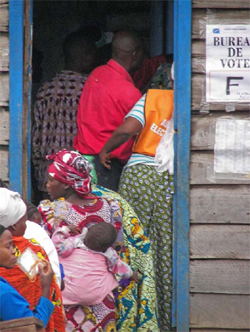 Last year, the Democratic Republic of the Congo (DRC) completed its transition from war to peaceful democratic rule. Because the DRC is the third largest country in Africa and is populated by as many as 250 ethno-linguistic groups, it was no easy feat to overcome the challenges of voter registration and mounting elections there. However, despite some initial disputes over election results, the DRC successfully conducted its first democratic poll in almost four decades.
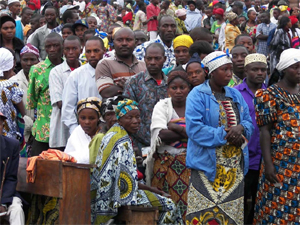 The transition was initially scheduled to be completed by 30 June 2005. But at the request of the electoral commission (the Commission Electorale Indépendante or CEI), the Parliament extended the transition period to 30 June 2006. The resulting electoral schedule allowed the CEI to call for a constitutional referendum on 18 December 2005, to be followed by legislative and presidential elections before the end of June 2006.
 Since 1990, Yemen’s electoral commission—the Supreme Commission for Elections and Referendum (SCER)—has gained experience through the conduct of three parliamentary, two presidential and two local council elections. Following the 2003 parliamentary elections, international NGOs reported that—despite inevitable violations and irregularities—the SCER had shown major technical improvements in its conduct of the elections as compared with earlier polls. In 2006, the major challenge facing the SCER was to maintain these gains, despite the fact that the country’s September elections were to be the most complex it had ever mounted.
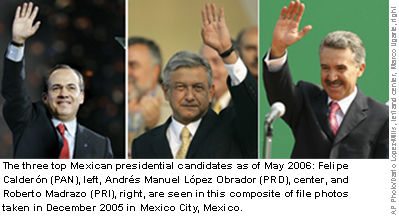 On July 2, Mexico will hold its
next federal elections. More than 71.5 million Mexican citizens are
registered to vote, and they will elect a new president, 128 senators
and 500 deputies (the latter two make up the National Congress). This
election
will be the sixth organized at the national level by Mexico’s Federal
Electoral Institute (IFE)
since its creation as an independent, public organization in 1990.
However, it
is the first federal elections to follow the historic 2000 elections,
which saw
the PRI party cede the presidency to another party for the first time
in 70
years. In addition, it will be the first election since nine new
members took
the reigns of the IFE’s governing body, the General
Council, after being appointed by Congress in October 2003.
On July 2, Mexico will hold its
next federal elections. More than 71.5 million Mexican citizens are
registered to vote, and they will elect a new president, 128 senators
and 500 deputies (the latter two make up the National Congress). This
election
will be the sixth organized at the national level by Mexico’s Federal
Electoral Institute (IFE)
since its creation as an independent, public organization in 1990.
However, it
is the first federal elections to follow the historic 2000 elections,
which saw
the PRI party cede the presidency to another party for the first time
in 70
years. In addition, it will be the first election since nine new
members took
the reigns of the IFE’s governing body, the General
Council, after being appointed by Congress in October 2003.
 Dorathy Obasi, the first woman legislator to be elected to the State House of Assembly in Ebonyi State, Nigeria, was sworn in to office on April 25.
  Hoisted on his own petard


 One key decision officials make when organizing a post-conflict election—like those held recently in Iraq and Afghanistan1— is how to deal with a country’s external populations. These populations may include refugees who fled a conflict for neighboring countries and members of national diasporas (who may have left the country for political or economic reasons, have since settled elsewhere, but retain ties to their homelands). Will they be eligible to vote? In the post-conflict elections held in Bosnia, Kosovo and East Timor, refugees were allowed to vote. However, setting up out-of-country voting (OCV) for external populations is a lot more complex than organizing in-country polling, and taking on this logistical and financial burden in the challenging environment of a post-conflict election is rarely without risks. In the end, it could even endanger the credibility of the wider electoral process.
 As no register of eligible Iraqis existed in any of the 14 designated countries, a registration process was required that took place over nine days. Initially, Iraq’s electoral commission required that eligible Iraqis provide two documents to prove their identity, their nationality (eligible voters must be Iraqi citizens, entitled to reclaim citizenship or eligible for Iraqi citizenship), and their age (eligible voters must have been born before 31 December 1986). As the registration period began, it became apparent that many Iraqis were struggling to provide the required documents and, in the end, certain single documents that proved all aspects of eligibility (such as an Iraqi passport) were accepted.
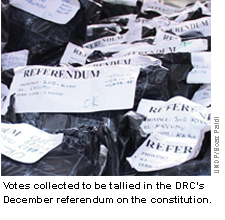 The US$422.9 million initiative is of historic importance, according to William Swing, UN Secretary-General Kofi Annan’s Special Representative in the DRC. “This is the closest that the Congolese people have been to a credible election since independence in 1960,” he said. “They have the largest and most sustained international support since independence, including the largest UN peacekeeping mission in the history of UN peacekeeping. We are encouraged simply because of the sheer enthusiasm of the people, who are determined to get back to conditions of stability and legitimacy of institutions.”
  Selecting the electoral system that best suits a given country is a delicate balancing act (as is explored in depth in the

 I once had an Aussie boss who wasn’t one for a lot of words, and summed up most issues with the phrase, “At the end of the day…” I somehow never thought that I would actually end up there.
 We awoke to see Fakaofo (pronounced “Hahaoho”), the first of the atolls that we would visit in the coming days. Even though I had been reading about atolls in the months prior to the mission, I still had no clear idea of what one would actually look like in terms of size and layout. But here it was: a ring of coral islands, enclosing a lagoon, formed by the protruding perimeter of a submerged volcano.
 After the counting team rechecked their initial tabulation, the count manager came over to the observer table and we verified their arithmetic. The result was then passed to the Referendum Commission. The Ulu then slowly rose and announced that the 446 votes in favour of the free association proposal had not met the required majority. There was a stunned silence across the room. For some, all the hard work over the past year and a half had not paid off. Tokelau would remain under New Zealand’s administration.
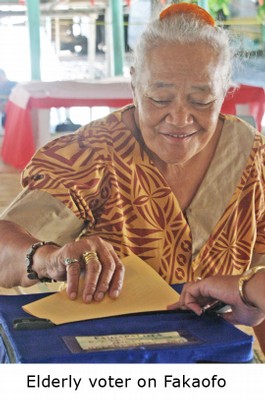 When the United Nations was established in 1945, 750 million people - almost a third of the world's population - lived in non-self-governing territories dependent on colonial powers. Today, fewer than 2 million people live in such territories and more than 80 former colonies have gained independence. Chapter XI (Articles 73 and 74) in the Charter of the United Nations established the principles that have guided United Nations decolonization efforts, including respect for self-determination, since the Organization’s establishment.
  In order to increase the sense of ownership of the referendum process and garner buy-in of Tokelauan villagers, village referendum committees were established with responsibilities for the design and implementation of civic education/public awareness campaigns at the village level. In January 2007, a training workshop was held in Apia for the members of the village referendum committees, as well as for the issuing officers of the referendum. The village referendum committees then returned to their respective communities to develop and implement atoll-specific civic education action plans. These plans were approved by village elders and then used to encourage full participation. The committees organized meetings, workshops and radio programmes and reported fortnightly to the referendum project manager in Apia.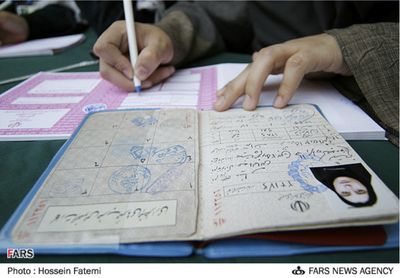
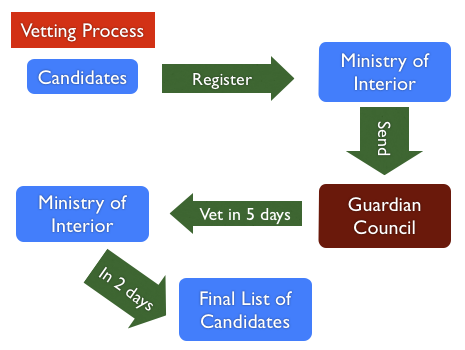
 Iran has a two-part ballot – the ballot itself and a stub portion. When a voter enters the polling station, there is a check of their shenasnameh for authenticity to ensure the voter is eligible to vote (the voting age in Iran is 16) and that the voter has not already voted in the election. For every election in Iran, there is a unique ink stamp which is stamped into a voter’s shenasnameh. This latter check is based on an examination of the shenasnameh to ensure there is not already a stamp from the current election in the booklet.
 The government was ready to remedy some of these problems by releasing promised funds when President Lansana Conté died on December 22. The military coup that followed a few hours later did not help to speed the process, even though the junta and new self-proclaimed President asked that the registration process continue as planned.
  “Political finance is a vital issue for democracy,
governance, and development. No matter how flawless are the country’s
elections, how active its civil society, how competitive its political parties,
and how responsible its local authorities, the role of money in politics
undeniably influences the quality of democracy and governance. Only through
greater transparency will one fully understand the extent and nature of this
influence”
“Political finance is a vital issue for democracy,
governance, and development. No matter how flawless are the country’s
elections, how active its civil society, how competitive its political parties,
and how responsible its local authorities, the role of money in politics
undeniably influences the quality of democracy and governance. Only through
greater transparency will one fully understand the extent and nature of this
influence” Leaders of civil
society, the media, election management bodies, security services and political
parties from 25 sub-Saharan African countries gathered in Accra, Ghana from November
12 to 14, 2009 to assess recent elections across the continent and develop
recommendations for raising standards of professionalism among election
administration officials, political parties, civic groups, security services
and media in order to mitigate conflict and improve electoral processes.
Leaders of civil
society, the media, election management bodies, security services and political
parties from 25 sub-Saharan African countries gathered in Accra, Ghana from November
12 to 14, 2009 to assess recent elections across the continent and develop
recommendations for raising standards of professionalism among election
administration officials, political parties, civic groups, security services
and media in order to mitigate conflict and improve electoral processes. by Michael Svetlik
 ACE reaches 1 000 000 visitors! The ACE website has now reached over one million individual visitors per year, representing virtually every single country in the world. This is an increase of 70% as compared to the same period last year. New and more accessible content, improved Google rankings and translations of key material in Spanish, French and Arabic are likely to be the main reasons for the increase. The ACE server will be updated in November to meet the new demands and increase the speed of the website.
 This is the first time the Central Election Commission is engaged in such a planning exercise. The main purpose of the strategic planning process is the optimization of the management practices and creation of a modern institution capable to face challenges of the current political and economic situation in Moldova. Besides the uncertainty surrounding the electoral process generated by repeatedly failed attempts of Moldovan Parliament to elect a president, Moldova is experiencing many problems of a country in transition: economic crisis; lack of vision and long-term planning; poor implementation of legal and administrative decisions; lack of transparency in decision-making and finances; need for training and education.
  The five day workshop was run by lead facilitator Skye Christensen of UNDP, facilitator Olya Azatyan of the
  planning workshop in summer. Given the current unsettled nature of the Parliament of Moldova and possibility to have snap parliamentary elections in autumn 2010 or spring 2011, it is critical for the Central Electoral Commission to draft a strategic plan, which will also take in consideration immediate future;
